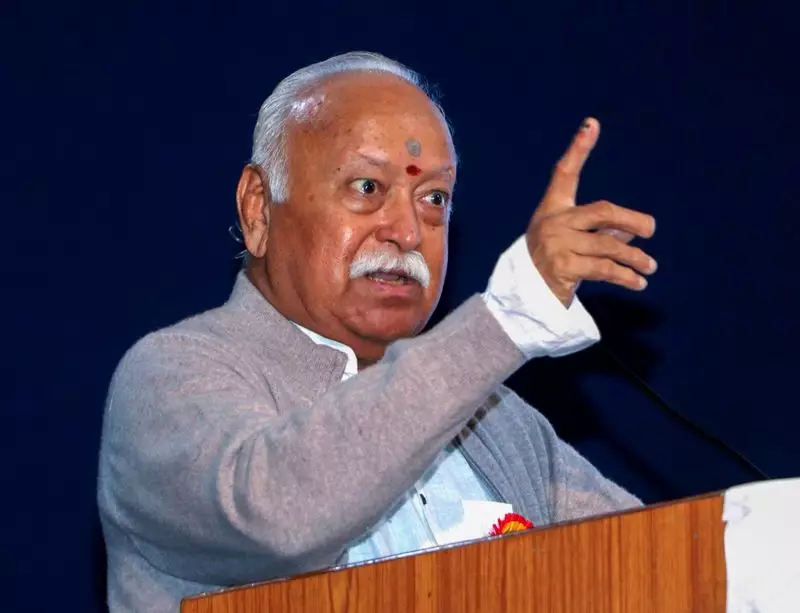
In a significant historical revelation that sheds new light on India's religious landscape, Rashtriya Swayamsevak Sangh (RSS) chief Mohan Bhagwat has declared that Guru Nanak Dev Ji was the first Indian saint to use the word 'Hindu'. This groundbreaking statement was made during a recent event that highlighted the profound connections between different faith traditions in India.
The Historical Context of Guru Nanak's Terminology
The RSS chief made these remarks while addressing a gathering where he emphasized the deep-rooted spiritual connections between Sikhism and other Indian religious traditions. Bhagwat specifically pointed to Guru Nanak's teachings and writings as containing the earliest documented use of the term 'Hindu' by any Indian spiritual leader.
This revelation carries substantial historical importance because it positions Guru Nanak, the founder of Sikhism, as a pioneering figure in the linguistic development of religious terminology in the Indian subcontinent. The timing of this statement is particularly noteworthy as it comes during ongoing discussions about religious harmony and cultural integration in contemporary India.

Bhagwat's Emphasis on Religious Unity
Mohan Bhagwat elaborated on how Guru Nanak's usage of the word 'Hindu' demonstrates the inclusive nature of Indian spirituality. He stressed that this historical fact underscores how different religious traditions in India have historically influenced and enriched each other rather than existing in isolation.
The RSS chief further emphasized that recognizing such historical connections is crucial for fostering mutual respect and understanding among different communities in present-day India. His comments highlighted how spiritual leaders like Guru Nanak have consistently worked toward building bridges between diverse religious groups throughout India's history.
Bhagwat's address also touched upon the broader implications of this historical insight for contemporary society. He suggested that understanding these deep historical connections could help in addressing modern challenges related to religious coexistence and national integration.
Broader Implications for Interfaith Understanding
This revelation about Guru Nanak's pioneering use of religious terminology opens new avenues for academic research and interfaith dialogue. Scholars of religious studies and historians may need to reexamine early Sikh scriptures and other historical documents in light of this information.
The timing of this disclosure is significant given current discussions about religious identity and national unity in India. By highlighting this aspect of Guru Nanak's teachings, Bhagwat has drawn attention to the shared heritage that underpins India's diverse religious landscape.
This historical insight also reinforces the message that India's spiritual traditions have always been interconnected, with influential figures like Guru Nanak playing crucial roles in shaping the religious vocabulary and consciousness of the subcontinent.
As this information gains wider recognition, it could potentially influence how religious education is approached in India, encouraging a more integrated understanding of the country's spiritual heritage that acknowledges the contributions of all traditions to the nation's cultural fabric.