Goa's Golden Legacy: How Renaissance Goldsmiths Forged a Global Reputation
Long before its beaches became tourist magnets, Goa earned international acclaim through an unexpected source: its master goldsmiths. Renaissance travelers consistently praised these artisans as possessing unparalleled skill, even surpassing their European contemporaries in craftsmanship and innovation.
The Imported Gold That Created a Crafting Powerhouse
Gold didn't originate in Goa but arrived through sophisticated trade networks. Precious metal flowed from sources like the Kolar gold fields, transported alongside gems and other valuable materials to Goa's bustling ports. This constant influx of raw materials transformed the region into a manufacturing hub of extraordinary quality.
"The movement of these precious objects is precisely why 'Golden Goa' developed its legendary reputation during the Renaissance period," explains Tennessee-based art historian Kelli Wood. "European travelers recognized something exceptional happening here."

Raulu Chatim: The Named Master in a Sea of Anonymity
This reputation crystallizes in the story of Raulu Chatim, the only Goan goldsmith consistently named in 16th-century art histories. "His extraordinary talent was recognized immediately after Portuguese conquest," Wood reveals. "He was taken to Lisbon to work directly for King Manoel I for four years before returning to Goa with a royal pension and the rare privilege of horse ownership."
Chatim's work, along with that of countless unnamed artisans, fueled international demand for:
- Exquisite jewelry pieces
- Goa stones (bezoar-like composite objects)
- Elaborately mounted luxury artifacts
- Other precious goods exported both eastward and westward
The Forgotten Makers: Reconstructing Anonymous Histories
While figures like Chatim entered European records by name, most artisans remained anonymous despite their extraordinary contributions. "When we visit ancient monuments or admire precious objects, we remember stories of kings, queens, and empires," notes Leandre D'Souza, creative director at Sunaparanta Goa Centre for the Arts. "But we seldom recall the makers—the artisans whose labor and ingenuity actually created these artifacts."
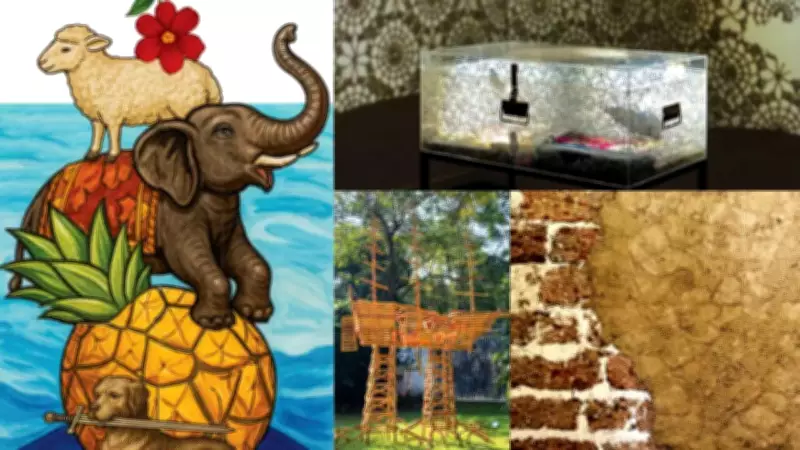
Initiatives like 'Makers & Materials' attempt to reconstruct this hidden history, collaborating with Goan artists and researchers to document techniques that survive in local practice despite centuries of anonymity.
Materials, Ecology, and Sustainable Craft Traditions
Goa's artistic landscape developed through deep ecological connection. "Red laterite bricks, white lime, shell windows, gilded statues—all these elements emerged from centuries of makers working in harmony with the Konkan coast's unique rhythm and ecology," Wood observes.
Her research reveals how builders and artisans created sustainable ecosystems where materials came from and returned to the soil. Oyster shells, for instance, served dual purposes:
- As window panes in traditional architecture
- As the basis for shell lime—the brilliant white plaster defining Goan churches, temples, and village houses
When juxtaposed with red laterite stone, this shell lime created Goa's distinctive architectural palette. "Shells are therefore essential to every part of Goa's built landscape," Wood emphasizes.
Cross-Cultural Exchange and Hybrid Artistic Language
Goan craftsmanship represents remarkable cultural synthesis. Wood's investigation uncovered collaborations across religions, communities, and political regimes, tracing innovations from pre-Portuguese periods through various ruling dynasties.
"We examined metalwork innovations within Islamic communities and building practices within Hindu temple communities from the Kadamba, Vijayanagara, Bahamani, and Adilshahi sultanates," she explains. "These traditions continuously converged in Goa due to its strategic port and changing political control."

This hybridity appears in surviving artifacts like a 16th-century Indian rosewood cabinet from the Basilica of Bom Jesus, which combines Mughal inlay techniques with naga-like figures forming its feet. Similar iconography appeared in carved church pulpits, while Augustinian account books record payments to Hindu sculptors and gilders despite official prohibitions.
"These objects shouldn't be interpreted as mere adaptations of Indian forms for European purposes," Wood argues. "Craft communities understood how materials and styles conveyed complex local meanings, intertwining everyday and sacred experiences with their environment."
Beyond 'Indo-Portuguese': A More Complex Creative Identity
Conventional labels like "Indo-Portuguese" fail to capture Goa's artistic complexity. "Over centuries, Goa absorbed influences from Islamic metalworkers, Hindu temple builders, European visitors, traveling traders, enslaved artisans, and migrant communities," Wood notes. "This artistic language is layered, hybrid, and deeply rooted in place."
Despite scarce surviving wooden or organic artifacts from pre-Portuguese times, techniques persisted through oral transmission and community practice, creating a living craft tradition that continues to evolve while honoring its Renaissance origins.