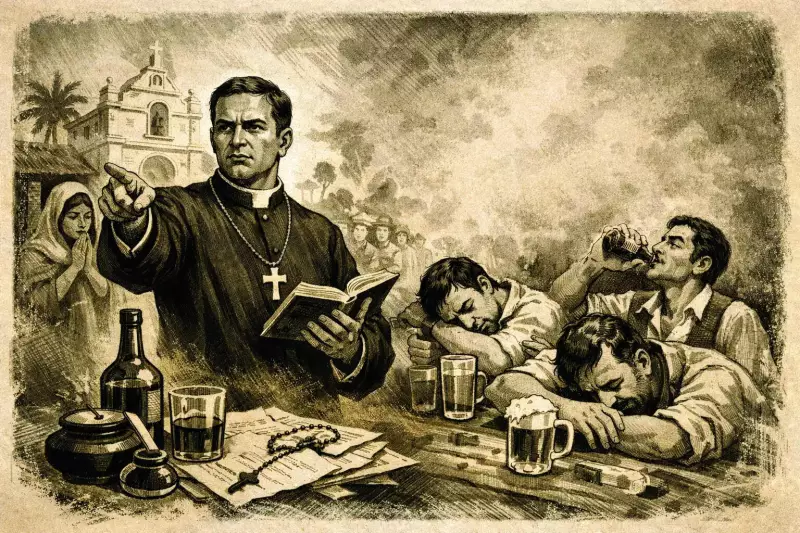
Historical documents from the 1900s paint a vivid picture of Goa's Catholic community grappling with a persistent demon. Letters, sermons, and official Church correspondence reveal a deep struggle against alcoholism. This vice embedded itself in both social and spiritual life, affecting clergy and laity alike.
A Community's Heavy Burden
Goa's Catholic community carried a heavy burden for generations. People widely associated them with excessive alcohol consumption and subsequent addiction. Throughout the 1900s, this perception did not escape the watchful eyes of Church authorities. For decades, whispers and accusations painted Catholic faithful as particularly vulnerable to alcoholism's scourge. This vice gnawed at the very fabric of Goan society.
PhD scholar Dr Maria de Lourdes Bravo Da Costa brings these historical struggles to light. Her work titled 'Portuguese Colonialism, Food, and Society in Goa' reveals disturbing statistics from that era. Mortality rates among Catholics appeared significantly higher, pointing to alcohol's devastating impact.

"This struggle against alcoholism in Goan Catholic society stands as a fascinating chapter," Da Costa told TOI. "It reveals a community wrestling with its own demons while striving to uphold spiritual ideals."
The Church Takes Action
According to Da Costa's research, the alcohol problem was not new. It had existed for ages among both clergy and laity, though with less intensity initially. The Archdiocese of Goa made its first formal moves in the early 1930s. Church authorities issued the 1931 Portaria, an order prohibiting food and drink service within sacristies and parochial houses. The order specifically targeted alcoholic beverages.
Yet these early measures yielded limited success. "The indulgence persisted," said Da Costa, "even at religious celebrations such as the ladainha, which are devotional gatherings."
Escalating the Battle
In 1934, the Church escalated its battle against alcoholism. Authorities issued a circular that explicitly condemned alcohol's presence at sacred functions. The document branded alcoholism a "real sickness" and called it a sacrilege to Catholic dignity. Priests received solemn duties to enforce these rules. Transgressors faced threats of canonical penalties.
"It was not easy for the Church to look the other way," writes Da Costa. "They could not say nothing was wrong with the Catholic community, so they decided to take remedial action."
Clergy Vulnerabilities and Lay Response
Da Costa's thesis reveals numerous cases of clerics failing to fulfill their duties. These clergy members faced ecclesiastical penalties ranging from fines to suspension and exile. Social pressures and isolation in rural parishes led many priests to seek refuge in alcohol. The Church recognized this vulnerability and called for discipline and abstinence.
In 1933, lay people organized the Congresso da Acção Católica. This seminar addressed moral and social ailments plaguing Goan Catholics. The patriarch of the Archdiocese of Goa attended and delivered powerful words. Moved by the discourse, he declared "the vice of alcoholism was like a cancer that had frighteningly invaded the archdiocese."
A Landmark Pastoral Letter
Thus emerged the landmark Carta Pastoral. Church authorities issued this pastoral letter on the Feast of the Sacred Heart of Jesus, a day of profound spiritual significance. The letter appealed for rigorous enforcement of laws restricting alcohol sales. It urged officials to "overlook any loss in income" if rules were properly implemented.
The document admitted alcoholism no longer existed only among Goa's illiterate classes. The problem had become widespread across different social strata. Alcohol was even corroding the lives of youngsters and adolescents.
"Historically, the Church had to face this problem amongst the clergy and the people," writes Da Costa. "So it was not surprising that the patriarch called attention to priests. He stated they should practice restraint first, as they were not above the law. Many priests were prone to drinking and became alcoholics."

Government Inaction and Economic Realities
Although the Church battled alcoholism vigorously, government response remained limited. The intelligentsia—both Catholics and Hindus—joined the fight, but official action proved insufficient. According to Da Costa's research, economic realities hindered progress.
Alcohol taxes provided crucial revenue for the region throughout the 1950s. Goa had few income sources apart from its mining industry. This revenue helped tide over difficult situations created by economic blockades. The Indian government had implemented these blockades on Portuguese territories.
The historical documents tell a compelling story of institutional struggle against a pervasive social ill. They reveal how religious authorities confronted uncomfortable truths about their community. These records show persistent efforts to uphold spiritual ideals while battling a demon that refused easy defeat.