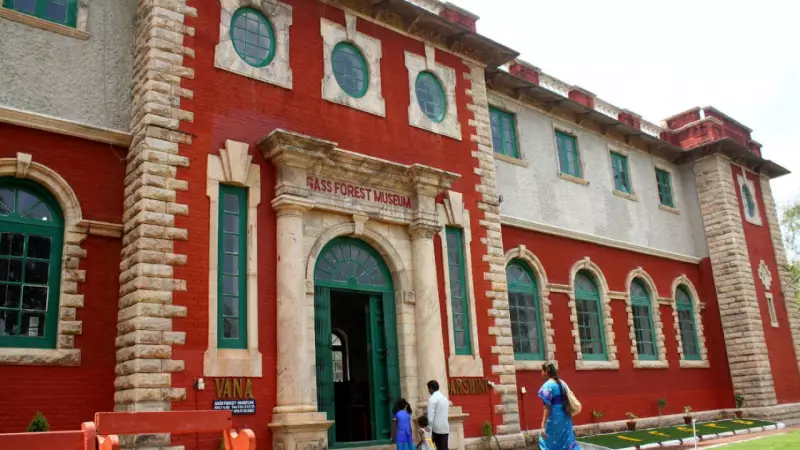
For lovers of history and nature, a visit to the British-era Gass Forest Museum in Coimbatore is like stepping into a timeless verse. Yet, this 123-year-old institution, India's oldest and largest forest museum, is now in urgent need of a revival to reclaim its glory.
A Legacy Frozen in Time
Established in 1902 and named in 1905 after Horace Archibald Gass, a former conservator of forests, the museum is a unique repository of India's forestry history. Located on the Institute of Forest Genetics and Tree Breeding campus, it houses an impressive collection of over 4,000 original exhibits, including century-old stuffed wild animals. However, the museum has seen a worrying decline in visitor numbers, largely due to a lack of modern upgrades and public awareness.
Voices of Visitors Highlight the Need for Change
Recent visitors echoed the need for transformation. S Senthil from Thudiyalur, on his second visit after seven years, expressed disappointment at seeing no changes. He urged authorities to display additional exhibits. First-time visitor Shoban Raj from Mettupalayam, a decade-long Coimbatore resident, was surprised he hadn't heard of the museum earlier. He pointed out the absence of upgrades and suggested appointing guides to assist visitors.

Blueprint for a Digital Future
Museum authorities have formulated a comprehensive facelift plan centered on digitalization to popularize it as a major city attraction. K Ganesh Kumar, head of extension, revealed a proposal under the Museum Grant Scheme of the ministry of culture to introduce audio systems with headphones for each exhibit.
G R Madhavaraj, deputy conservator of forests – extension, detailed that the digitisation upgrade includes:
- Establishing QR codes for each specimen's details.
- Providing audio descriptions.
- Implementing 3D visual interpretations.
He also mentioned plans to seek Corporate Social Responsibility (CSR) funds for landscaping and toilet construction. A significant challenge is the upkeep of taxidermy specimens, which require preservation every six years—a skill now in short supply.
Networking and Increased Accessibility
To boost footfall, there is a strategy to create a network of city museums for guided tourism. This initiative aims to increase public awareness. Crucially, the museum, currently closed on weekends, plans to open on Saturdays and Sundays. Furthermore, display boards at Coimbatore International Airport and Coimbatore Junction Railway Station are proposed to inform tourists, said Ganesh Kumar.
This multi-pronged approach seeks to ensure that this silent guardian of India's forest heritage gets the attention and visitors it deserves, blending its historic charm with 21st-century engagement.