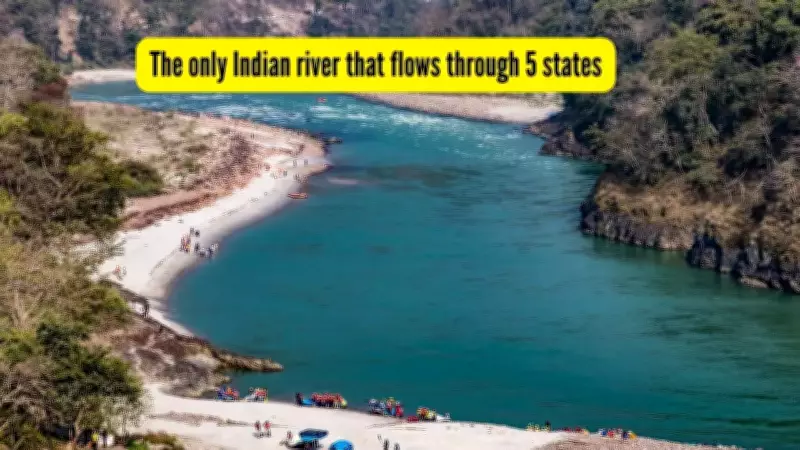
Ganga: The River That Flows Through Maximum Indian States
India's landscape is intricately woven with hundreds of rivers, both large and small, that have fundamentally shaped the nation's identity, cultural heritage, tourism potential, and economic development. These waterways transcend their physical form as mere water bodies, serving as vital lifelines that sustain agriculture, fisheries, drinking water supplies, and hold profound religious significance for millions.
Which River Flows Through the Most Indian States?
Among India's extensive river network, one stands out for traversing the greatest number of states: the revered Ganga River. As India's longest and one of its oldest rivers, the Ganga stretches approximately 2,525 kilometers and directly flows through five Indian states: Uttarakhand (where it originates), Uttar Pradesh, Bihar, Jharkhand, and West Bengal.
However, the river's influence extends far beyond these direct flow states. The expansive Ganga basin actually covers an impressive eleven Indian states, including Himachal Pradesh, Haryana, Rajasthan, and Madhya Pradesh. This extensive reach has rightfully earned the Ganga its title as India's 'lifeline,' touching countless lives across the nation.

The Ganga's Journey: From Source to Sea
The Ganga basin represents the river system flowing through the most states in India. The river's epic journey begins in the mighty Himalayas at the Gangotri Glacier in Uttarakhand. Here, the river initially emerges as the Bhagirathi, which then converges with the Alaknanda River at Devprayag to form the main Ganga River.
The river's path through various states includes:
- Uttarakhand: Origin point where Bhagirathi becomes Ganga at Devprayag
- Uttar Pradesh: Flows through major spiritual cities including Haridwar, Prayagraj, and Varanasi
- Bihar: Courses through important urban centers like Patna and Bhagalpur
- Jharkhand: Traverses a smaller stretch through Sahibganj district
- West Bengal: Splits into distributaries before reaching the Bay of Bengal
The Ganga ultimately merges with the Bay of Bengal in the vast Ganges Delta spanning West Bengal and Bangladesh.
Fascinating Facts About the Ganga River
The Ganga presents numerous remarkable geographical and ecological features:
- Bifurcation in Bengal: In West Bengal, the river divides into two branches - the Hooghly River flowing south past Kolkata, and the main stream entering Bangladesh as the Padma River
- Deepest Point: Near Patna, Bihar's capital, the Ganga reaches its maximum depth exceeding 100 feet (approximately 30 meters)
- World's Largest Delta: The combined Ganga and Brahmaputra rivers form the Sundarbans Delta, recognized as the planet's largest river delta
- Home to Endangered Species: The river hosts the rare Ganges River Dolphins, among the world's few remaining freshwater dolphin species now classified as endangered
Traveler's Perspective: Following the Ganga's Path
For travelers and explorers, tracing the Ganga's course offers a unique journey through India's diverse landscapes and cultures. From the sacred ghats of Varanasi and Rishikesh to the intricate mangrove forests of the Sundarbans, the river presents new discoveries at every turn.
The Ganga remains central to countless human narratives - whether witnessing devotees gathering at Prayagraj's Triveni Sangam confluence or observing traditional fishing communities casting nets in West Bengal. This sacred waterway continues to shape stories, traditions, and livelihoods across its extensive course through multiple Indian states.