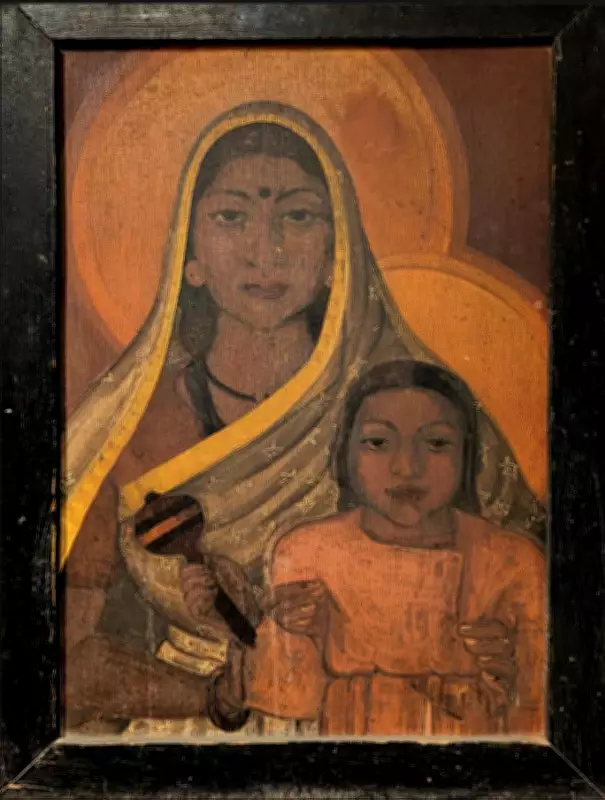
Angelo da Fonseca's Legacy Honored with Permanent Museum Display in Goa
In a landmark cultural development, the works of Angelo da Fonseca, one of India's most celebrated modernist artists, will be permanently exhibited in his home state for the first time. The Xavier Centre of Historical Research (XCHR) in Porvorim, which serves as the custodian of Fonseca's artistic heritage, is inaugurating a new museum this Saturday evening. This institution promises to reignite interest in the master artist, whose relationship with Goa during his lifetime was often complex and challenging.
A Museum Showcasing Fonseca and Historical Christian Art
The museum will feature approximately 60 artworks by Fonseca, representing a small but significant portion of the hundreds of pieces held by XCHR. While Fonseca's gallery forms a substantial part of the exhibition, it is not the sole focus. The museum also includes works by the Goan polymath Jose Pereira, the French artist and nun Sr Genevieve, and other centuries-old Christian art pieces. Many of these items will be displayed publicly for the very first time, offering a rare glimpse into historical artistic traditions.
Fr Delio Mendonca, who leads XCHR's art projects and is an international authority on Christian art, emphasized the importance of context. "Fonseca can only be understood in the context of Christian art of previous centuries," he stated. Mendonca, formerly an extraordinary professor at the Pontifical Gregorian University in Rome, highlighted the museum's role in preserving this rich heritage.

Fonseca's Journey and Artistic Innovation
Born in 1902 in St Estevam, Goa, Fonseca initially pursued medicine in Bombay but soon abandoned it to study at the Sir JJ School of Art. He later moved to Shantiniketan in West Bengal, where he became a disciple of Abanindranath Tagore, whom he described as "the best Indian artist in the twenties of this century." After his time in Shantiniketan, Fonseca returned to Goa with ambitions to spark a renaissance, but his progressive ideas met with suspicion from a conservative Christian establishment.
Disheartened, Fonseca relocated to Pune in 1931, where he spent the remainder of his life painting and pioneering the Indianisation of Christian art. His iconic depictions, such as Mother Mary adorned in a sari, wearing a bindi, or seated in padmasana, are now regarded as milestones in Indian art. These innovations have led to widespread recognition that Fonseca was far ahead of his time. He passed away in Pune in 1967, leaving behind a transformative body of work.
Fulfilling a Promise Through Jesuit Collaboration
In 2006, Fonseca's wife, Ivy, who had dedicated decades to safeguarding and collecting his artworks, donated the entire collection to the Goa Jesuits. This donation was made with the explicit understanding that a permanent gallery would be established. Ivy's contribution supplemented XCHR's existing holdings, which included works purchased decades earlier. The museum's opening this Saturday marks the beginning of the fulfillment of that promise.
Fr Delio Mendonca, in his 2022 book 'Fonseca', noted the ongoing collaboration between the Jesuits and Fonseca's legacy, stating, "Jesuit interest in and patronage to Fonseca during his lifetime and after is an ongoing collaboration." He also revealed that while only around 60 works are currently on display, the museum plans to gradually exhibit the hundreds of pieces in XCHR's repertoire over time. Mendonca proudly declared, "This collection ranks among the most significant repositories of Christian art worldwide."
The establishment of this museum not only honors Angelo da Fonseca's pioneering contributions but also enriches Goa's cultural landscape, ensuring that his visionary art continues to inspire future generations.