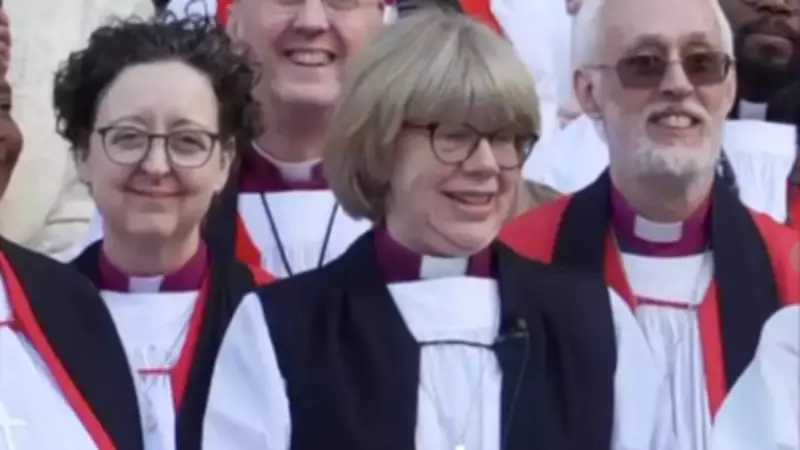
Sarah Mullally Makes History as First Woman Archbishop of Canterbury
The confirmation of Sarah Mullally as the first woman Archbishop of Canterbury represents a monumental shift for the Church of England, underscoring a broader global trend where female leadership in major Christian institutions remains exceptionally rare. This appointment not only breaks a 1,400-year tradition but also brings into sharp focus the ongoing challenges women face in ascending to the highest echelons of religious authority worldwide.
A Global Perspective on Women in Church Leadership
While numerous Christian denominations have progressively opened doors for women to serve as priests, pastors, or bishops over recent decades, the ascent to top leadership positions continues to be an uncommon achievement. Within the Anglican Communion, which encompasses approximately 85 million members across 165 countries, Mullally's elevation stands out as a pioneering milestone, making her the first woman to hold one of its most senior offices in centuries.
Notable Examples of Women Leading Protestant Churches

- In 2006, Katharine Jefferts Schori was elected as the Presiding Bishop of the Episcopal Church in the United States, becoming the first woman to lead a province of the Anglican Communion.
- The Evangelical Lutheran Church in America witnessed female leadership for twelve years under Presiding Bishop Elizabeth Eaton, its first woman head.
- Other denominations like the United Methodist Church and the United Church of Christ have also seen women occupy top leadership roles, though such instances remain limited.
Key Female Leaders in Christian Denominations
Prophet-President Stassi Cramm: In June 2025, Stassi D Cramm achieved a historic first by becoming the Prophet-President of the Community of Christ, part of the Latter Day Saint movement, marking the denomination's inaugural female head.
Bishop Katharine Jefferts Schori: Her election in 2006 not only made her the first female Presiding Bishop of the Episcopal Church but also the first woman to serve as a primate within the Anglican Communion.
Vashti Murphy McKenzie: She broke barriers as the first woman elected bishop in the African Methodist Episcopal Church and later led the National Council of Churches of Christ in the US.
Sharon E Watkins: As General Minister and President of the Christian Church (Disciples of Christ), she became the first woman to head a major Protestant denomination in North America.
Regional Advances and Persistent Barriers
Across Europe and North America, some Protestant churches have made strides in gender inclusivity. For instance, the Church of Sweden, the Protestant Church in the Netherlands, and various German churches have appointed women as bishops or heads of synods. However, these advancements contrast sharply with more conservative traditions.
Major Christian bodies such as the Roman Catholic Church and the Eastern Orthodox Churches maintain policies that prohibit women from becoming priests or bishops, effectively barring them from top leadership roles. Similarly, large evangelical groups like the Southern Baptist Convention uphold male-only leadership structures, reflecting deep-seated theological and cultural resistances.
The Significance of Mullally's Appointment
Experts emphasize that while women's representation in ministry has grown in recent decades, particularly within Western Protestant denominations, female leaders at the highest levels remain the exception rather than the norm. Mullally's appointment is therefore not just a symbolic victory but a substantive step forward, challenging long-standing norms and inspiring broader conversations about gender equality in religious leadership globally.
This historic moment serves as a reminder of the slow but evolving landscape of Christian governance, where each breakthrough paves the way for future generations. As the world watches, Mullally's tenure as Archbishop of Canterbury will likely influence discussions on inclusivity and diversity within faith communities for years to come.