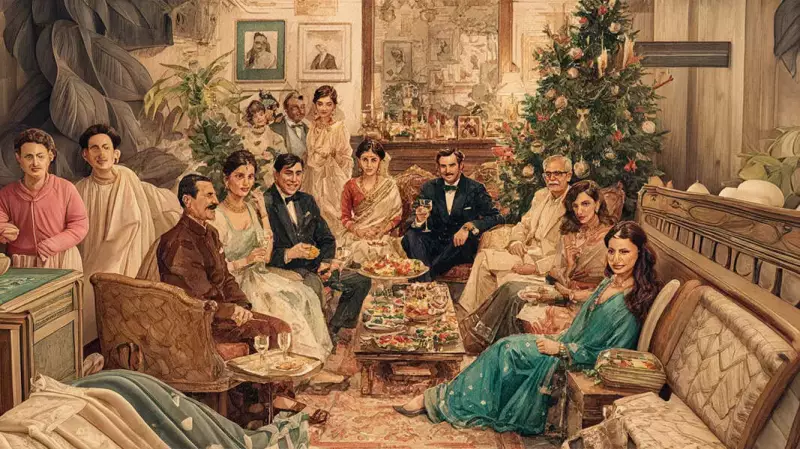
The annals of Indian history are not just a chronicle of empires and revolutions; they are also a tapestry woven with threads of extraordinary personal wealth and privilege. A closer look reveals the world of "Those Gilded Lives"—the rarefied existence of India's elite, from maharajas and nawabs to colonial-era industrialists and diplomats. Their stories, often overshadowed by broader political narratives, offer a fascinating window into a layer of society defined by immense fortune, cultural patronage, and complex identities.
The Architecture of Opulence: Palaces, Parties, and Possessions
The most visible testament to this gilded existence was, and often remains, the architecture. The sprawling palaces of the princely states were not merely homes; they were statements of power and taste. Think of the Umaid Bhawan Palace in Jodhpur, one of the world's largest private residences, or the Falaknuma Palace in Hyderabad, a masterpiece of Italian marble and stained glass. These structures housed unimaginable collections: Belgian crystal chandeliers, Venetian mirrors, Rolls-Royce motorcars, and bespoke jewelry from Cartier and Van Cleef & Arpels.
Social life in this sphere was a meticulously choreographed spectacle. Lavish parties, known as shikars (hunts) and durbars, were the norm. Guests were flown in from across the globe. Menus featured delicacies from every continent, and entertainment ranged from private performances by legendary musicians like M.S. Subbulakshmi or Bade Ghulam Ali Khan to grand balls. The elite were connoisseurs of the finer things, setting trends in fashion, automobiles, and art that trickled down through society.

Patrons of Culture and Conflicted Identities
Beyond mere consumption, many members of this class were significant patrons of art, culture, and sport. They funded the construction of temples, universities, and hospitals. They supported classical musicians, dancers, and painters, preserving India's cultural heritage during turbulent times. The Maharaja of Mysore was a renowned patron of the arts, while others founded prestigious cricket tournaments and polo clubs.
However, their identities were often layered with contradiction. As products of the colonial era, many were educated at Oxford, Cambridge, or Harrow. They were fluent in English and well-versed in Western etiquette, yet remained the titular heads of ancient Indian kingdoms. This duality created a unique hybrid culture—one where a maharaja might discuss Keynesian economics over breakfast and preside over a traditional religious ceremony in the evening. Their political influence waxed and waned, especially after India's independence in 1947 and the subsequent integration of princely states, which led to the abolition of their privy purses in 1971.
The Legacy and the Fading Glimmer
The post-independence era brought a seismic shift to this world of privilege. The abolition of the privy purses was a decisive blow to the economic autonomy of the aristocracy. Many found themselves "palace-poor," owning monumental properties they could scarcely maintain. The gilded life began to tarnish. Some families successfully transitioned, converting their palaces into heritage hotels, entering politics or business, or leveraging their art collections. Others faced a long decline, their stories becoming tales of faded grandeur.
Today, the legacy of these gilded lives is multifaceted. It is preserved in the heritage hotels that dot India's landscape, in the museums that house their collections, and in the cultural institutions they helped build. Their stories evoke a mix of awe at the sheer scale of their wealth and critical reflection on the sources of that wealth and the vast inequalities it represented. They remind us of an era where personal fortune could shape cities, preserve cultures, and create a self-contained world of extraordinary luxury, now largely vanished into the pages of history and the crumbling facades of once-great homes.

In essence, exploring these gilded lives is not an exercise in nostalgia but a crucial part of understanding India's social history. It reveals the interplay between power, culture, and identity during a transformative period, leaving behind a complex inheritance of beauty, excess, and adaptation.