In a toy store at a mall, a familiar, heart-wrenching scene unfolds. A mother tries to interest her five-year-old daughter in a doll with darker skin and black hair, gently saying, "Look, this one looks like you." The child, with the blunt honesty of her age, clings to a blonde, blue-eyed doll instead, insisting, "No. She's not the princess. The princess has yellow hair." This moment, captured in a Phoenix Mall, is a quiet tragedy repeated globally, where children learn from their toys that heroes don't look like them.
The Spark That Ignited a Revolution
This exact scenario played out in Lagos, Nigeria, in 2007, for a man named Taofick Okoya. His own daughter's wish to be white was not born from self-hatred, but from a world where all her beloved heroes had fair skin and light eyes. Unlike many parents who feel helpless, Okoya decided to act. He realized the solution wasn't just a black doll; it was a mirror. He founded "Queens of Africa," a pioneering line of dolls designed to challenge the deep-seated belief that "white is beautiful."
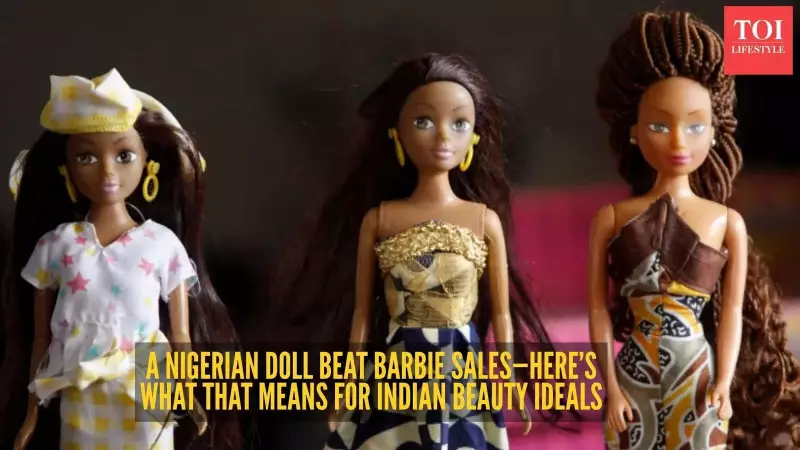
These were not merely existing molds painted a darker shade. Okoya created distinct characters: Nneka, Azeezah, and Wuraola. Each represented a major Nigerian ethnic group—Igbo, Hausa, and Yoruba—akin to having dolls representing Punjabi, Bengali, and Tamil cultures in India. They wore traditional geles (head ties) and vibrant ankara prints. Critically, their hair came in braids and afros, textures real children could recognize and touch.

From Market Rejection to National Triumph
When skeptical retailers claimed "black dolls don't sell," Okoya bypassed them entirely. He took his dolls directly to local markets and priced them affordably for average families. This grassroots strategy worked. Slowly, the tide of perception began to turn. The dolls' message of cultural pride resonated powerfully. By 2015, reports indicated that the "Queens of Africa" dolls were outselling the global giant Barbie in Nigeria itself—a monumental achievement for a local initiative.
Okoya's project also fostered an economy of pride. He employed local mothers to braid the dolls' hair and sew their outfits, creating a micro-economy where valuing one's culture generated tangible income and community empowerment.
A Subconscious Curriculum: The Indian Parallel
We often dismiss toys as trivial, but play is a child's rehearsal for life. When a child holds a doll, they are practicing who they can be. When every "beautiful" or "rich" doll conforms to a single, foreign standard, a subconscious curriculum is taught, bypassing all logic. This resonates painfully in India, a nation of a thousand skin tones where matrimonial ads still seek "fair" brides and film stars are often lightened.
Okoya's genius was understanding that you cannot lecture a child into self-love. A five-year-old won't grasp a lecture on post-colonial identity. But you can give her a doll named Wuraola. You can let her style hair that feels like her own. Without a single word, you show her that she is the protagonist of her own story.
The story of the Queens of Africa raises a crucial question for India: What if we stopped waiting for international brands to represent our diversity and built our own mirrors? While glimmers of this exist with local brands reclaiming Indian narratives, toy shelves and media landscapes remain dominated by foreign ideals. We protect children from many dangers, but perhaps the most insidious is the daily erasure of their own image. The true fear isn't a child wanting a blonde doll; it's a child who looks in the mirror and cannot see a queen.