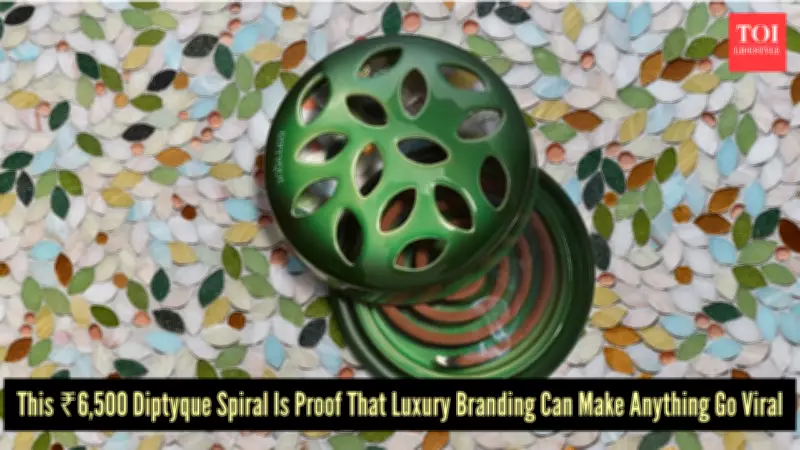
Luxury means different things to different people, but sometimes it also means paying around Rs 6,000 for something that looks surprisingly familiar and is available for just Rs 50. This was the case with French luxury fragrance house Diptyque, which recently found itself at the centre of a viral internet moment after releasing their scented spirals, which instantly drew comparisons to India's iconic Kachua Chaap mosquito coil.
Diptyque's Scented Spirals: A Luxury Incense
Diptyque is currently selling 'scented spirals' on their website, which is an incense in citronnelle, i.e., lemongrass, scent, worth Rs 6,479, i.e., USD 68. Also, if you buy their incense holder, it will cost you another USD 183, i.e., Rs 17,438. According to the brand, the scented spirals carry release notes of lemongrass that evoke "the peaceful air of a water garden", creating an outdoor oasis. The brand says the package comes with a set of 6 scented spirals, which have 3 pairs of 12g each, and an exclusive oval-shaped incense holder with a gold finish and brand embossing.
Social Media Reactions: A Flood of Memes
Next came the hilarious social media reactions. Some desi netizens expressed shock, embarrassment, and laughter at the brand's poor vision despite the high price tag. One Instagram user commented, "I am DECEASED seeing Kachua chaap mosquito coils sold as scented spirals." Someone else pointed out, "Kachua chaap to scented spirals is a wild journey." Meanwhile, Diet Sabya, who had shared the bizarre product with their followers, asked, "Will y'all buy???? Y/N?" and joked, "Haters will say this is AI."

Pattern of Cultural Appropriation
Well, it is not the first time that international brands have drawn inspiration from India without giving any credit. Be it the release of the Prada Kolhapuri chappal controversy or the Scandinavian scarf debacle. Western brands have had India's craftsmanship and vision on their mood board forever but often forget to give credit to the Indian craftsmanship after stealing the ideas and releasing them at exorbitant prices.
The result? A flood of jokes, debates, and memes about luxury branding, proving once again that the internet surely never misses a chance to question whether high-end design is truly innovative or simply a very expensive version of something that we all have already seen before.
This incident highlights a recurring theme in the fashion and lifestyle industry, where global luxury brands appropriate traditional designs without acknowledgment, sparking outrage and humor in equal measure.