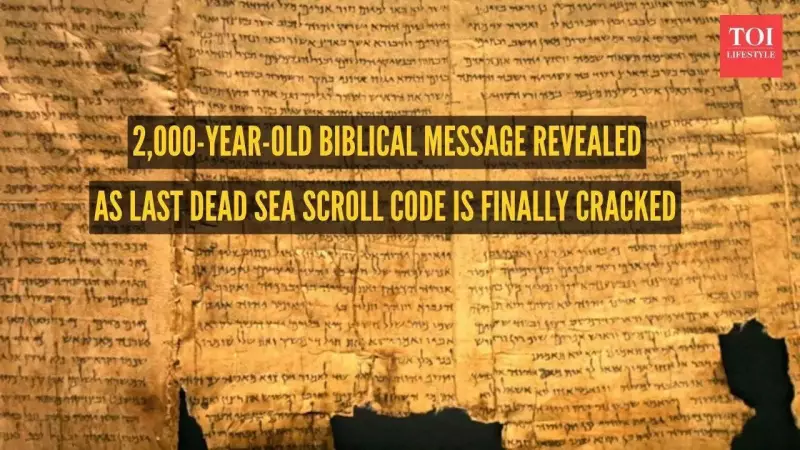
In a remarkable breakthrough, a scientist has successfully decoded one of the last remaining cryptic manuscripts from the famed Dead Sea Scrolls, more than seven decades after their initial discovery. This achievement sheds new light on ancient Jewish texts and the communities that preserved them.
The Decoding of the 'Impossible' Fragments
Researcher Emmanuel Oliveiro from the University of Groningen in the Netherlands accomplished this feat. He focused on two severely damaged fragments known as 4Q362 and 4Q363, which were long considered nearly impossible to read due to their unfamiliar, cryptic script. Oliveiro dedicated two intense months to the task, ultimately cracking the code by matching the mysterious symbols to letters in Hebrew that spelled out well-known biblical phrases.
The decoded text includes significant terms like Yisrael (Israel), Judah, Jacob, and Elohim, a name for God. Specific fragments contained phrases such as 'your glory' and 'the tents of Jacob,' which correspond to passages found in the biblical books of Jeremiah and Malachi. Oliveiro explained to Haaretz that a few manuscripts were written entirely in paleo-Hebrew, and this ancient script was also used selectively in other texts, particularly for the sacred name YHWH.

Why Were the Scrolls Written in Code?
According to Oliveiro, the purpose of this cryptic writing was not modern-style encryption meant to hide secrets. Instead, it was likely used to convey prestige and exclusivity to a text. "If you could read it, you had access to these manuscripts and were probably of a certain class or ranking within this pious community," he stated. This suggests the scrolls were meant for an inner circle with specialized knowledge.
The researcher humorously recalled the skepticism he faced, with friends and family joking that he might be stuck on the project for 40 years, perhaps hoping to find a "secret falafel recipe." Contrary to those doubts, he identified the pattern relatively quickly once he began the detailed work.
The Enduring Significance of the Dead Sea Scrolls
Discovered in 1946 in 11 caves near Qumran and the Dead Sea region, these scrolls are approximately 2,000 to 2,300 years old. Written on parchment, papyrus, and even copper, they represent a priceless collection of Jewish manuscripts. They include the oldest known copies of books from the Hebrew Bible and other religious documents, offering unparalleled insights into Jewish life and thought during the period just before and during the time of Jesus.
The Biblical Archaeology Society regards the Dead Sea Scrolls as the most significant archaeological find of the 20th century. To date, scholars have recovered more than 25,000 fragments. The collection is diverse, containing not only biblical and sectarian writings but also administrative records, deeds of sale, and personal documents like marriage and divorce records. This latest decoding by Emmanuel Oliveiro adds another crucial piece to understanding this vast and ancient puzzle, proving that even the most damaged fragments can still reveal their secrets to persistent and skilled researchers.