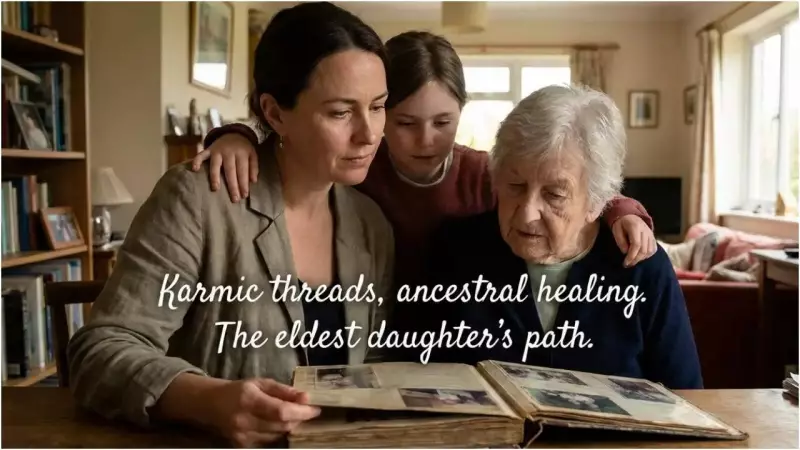
In many cultures and belief systems, daughters hold a special place as karmic figures in family stories. This perspective comes from spiritual teachings and real-life observations. It suggests daughters do not arrive in families by accident. Instead, they come to resolve emotional, ethical, and generational debts built over many lifetimes.
The Spiritual View of Daughters and Karma
Eastern philosophies often describe karma as the lasting effect of past actions and unresolved lessons. Daughters enter families where personal growth, emotional healing, or responsibility is needed. Their presence reflects hidden family dynamics, emotional gaps, and unmet duties.
Sons typically carry family heritage forward. Daughters, however, act as keepers of emotional truth. They highlight issues families might ignore or avoid.

The Unique Role of the Firstborn Daughter
The eldest daughter often carries the greatest karmic weight. As the first child, she joins a family still figuring itself out. Parents are learning their roles, and she absorbs their deepest hopes, fears, dreams, and weaknesses.
Older daughters frequently shoulder burdens beyond their years. They become the emotional glue holding families together. They serve as second caregivers and unacknowledged problem-solvers. Spiritually, the older daughter bears a heavy karmic load.
She questions unfair systems and pushes for change, even at personal cost. Her life is not simple. It features early maturity, emotional strength, and a powerful sense of duty.
Many spiritual views say her role is to break harmful cycles. These include patriarchal patterns, emotional neglect, and untreated trauma.
Psychological Insights into Elder Daughters
Psychological studies consistently show elder daughters often display high empathy, leadership skills, and emotional intelligence. Yet these traits usually stem from external pressures, not innate tendencies.
The expectation to "take responsibility" and "be a role model" creates a distinct emotional burden. This reinforces the idea that her role is karmically assigned, not random.
Mythological and Cultural Narratives
In myths and folklore, daughters often act as agents of balance and justice. Divine figures restore cosmic order. Mortal women sacrifice personal joy for family harmony. The common thread is clear: daughters exist to fix problems, not just continue lineages.
This symbolic framework supports the view that daughters, particularly firstborns, embody karmic reflections of their family's past and present.
Modern Discussions on Gender Roles
Today's conversations about gender roles shine new light on daughters' often overlooked responsibilities. The karmic perspective, while spiritual, shows up in everyday behavior. Elder daughters frequently remain emotional anchors for their families long after starting their own lives.
Seeing daughters as karmic agents does not mean they are doomed to suffer. It acknowledges their power to drive change. The elder daughter's life is often defined by obligation, not lack of difficulty. She teaches, comforts, and endures, paving an easier path for those who follow.