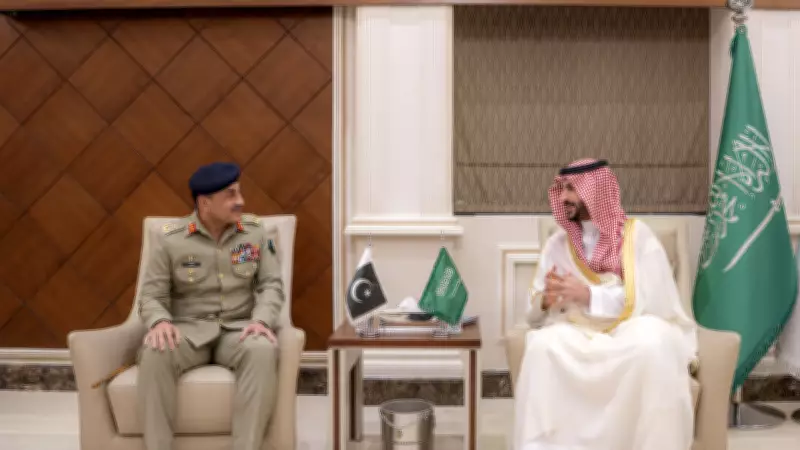
Pakistan-Saudi Arabia High-Level Meeting Addresses Iranian Strikes and Regional Security
In a significant diplomatic and military engagement, Pakistan's army chief and de facto leader, Field Marshal Asim Munir, held a crucial meeting with Saudi Arabia's defence minister, Khalid bin Salman. This high-level discussion occurs against the backdrop of escalating tensions in the Middle East, following recent Iranian military actions, including strikes on Saudi Arabia's Aramco oil refinery and retaliatory measures after US-Israel joint operations targeted Iran's leadership.
Focus on Halting Iranian Aggression and Upholding Defence Agreements
The Saudi defence minister detailed the meeting on social media platform X, emphasizing the urgent need to address Iranian attacks on the Kingdom. He stated, "We discussed Iranian attacks on the Kingdom and the measures needed to halt them within the framework of our Joint Strategic Defence Agreement." Both leaders stressed that such actions undermine regional security and stability, urging Iran to exercise wisdom and avoid miscalculation.
This meeting is strategically pivotal, as it reinforces the 2025 Strategic Mutual Defence Agreement between Pakistan and Saudi Arabia. Signed in September, this pact includes a provision similar to NATO's Article 5, where any aggression against one member is treated as an attack on all, committing both nations to collective defence.

Pakistan's Solidarity and Potential for Expanded Defence Alliances
Pakistan has recently expressed strong solidarity with Saudi Arabia and other Gulf countries following the Aramco refinery attacks. As tensions persist with Iran's continued missile and drone strikes, questions arise about whether Islamabad's response will extend beyond verbal condemnation, given its binding defence pact with Riyadh.
Furthermore, discussions are advancing on Turkey's potential entry into this defence arrangement, as reported by Bloomberg. Talks on a triangular "Islamic NATO" involving Turkey, Pakistan, and Saudi Arabia are at an advanced stage, reflecting overlapping strategic interests across South Asia, the Middle East, and parts of Africa. This expansion aims to reshape security alignments in the increasingly volatile region.
Broader Context of Middle East Unrest and Global Implications
The meeting comes amid a rapidly evolving situation in the Middle East, marked by:
- US-Israel joint strikes that killed Iran's Ali Khamenei, prompting Tehran's retaliatory actions.
- Ongoing military escalations raising fears of a wider regional conflict.
- International efforts, such as temporary waivers for Russian oil to ease supply pressures, highlighting global economic concerns.
These developments underscore the critical role of bilateral and multilateral defence agreements in maintaining stability. The Pakistan-Saudi talks not only address immediate security threats but also signal a deepening alliance that could influence future geopolitical dynamics in the Middle East and beyond.