The vibrant Dastkari Haat Crafts Bazaar is celebrating a significant milestone this year, marking four decades of bringing India's rich artisanal heritage to the heart of Delhi. The 40th edition of this annual event is currently underway at Dilli Haat, INA, and will continue to captivate visitors until January 15, 2026. This year's bazaar places a special focus on the intricate work of quilt makers, alongside a dazzling array of crafts from across the nation.
A Tapestry of Craft and Legacy
With over 130 stalls representing diverse regions, the bazaar is a living museum of Indian craftsmanship. Visitors can explore handwoven textiles from Kutch and Barmer, exquisite Madhubani and Gond paintings, luxurious Pashmina shawls, vibrant block-printed fabrics, appliqué bed covers, pottery, traditional jewellery, and hand-crafted footwear. The event is more than a marketplace; it's a celebration of generational stories and the enduring spirit of the handmade.
The journey began in 1986 when the Dastkari Haat Samiti was founded by renowned craft revivalist Jaya Jaitly with just 90 members. Jaitly envisioned a common platform where artisans' concerns could transform into larger projects promoting self-reliance and egalitarian principles. She credits her personal foundation for this commitment, influenced by her father's aesthetic sense and her mother's compassion for those in need.

Voices from the Loom and Block
Master weaver Vankar Murji Hamir (55), from Bhujodi near Kutch, narrates the evolution of his craft, from blankets to shawls and saris, now embracing organic kala cotton. He emphasizes the painstaking effort behind each piece, where a sari can take 10 days and a masterpiece up to six months, justifying why handmade textiles cannot be compared to machine-made products.
The bazaar has also fostered innovation and entrepreneurship. Khetaram Sumra from Barmer, Rajasthan, with his brand Rohida Handloom, has almost single-handedly revived pattu weaving in his village and now trains others. Jaitly advises young artisans to be serious and learn deeply, cautioning against over-reliance on tools like Google or AI at the initial stages, as they can "blank out your own thoughts."
Arshad Kafeel, a hand-block printer from Pilkhuwa, Uttar Pradesh, speaks candidly about market changes. He reminisces about products selling out as stalls were being set up, contrasting it with today's challenge of awareness, where people often don't understand the meticulous handwork involved in carving blocks and layering colours. He acknowledges that digital printing has changed the landscape significantly.
The Social Fabric: Quilts and Community
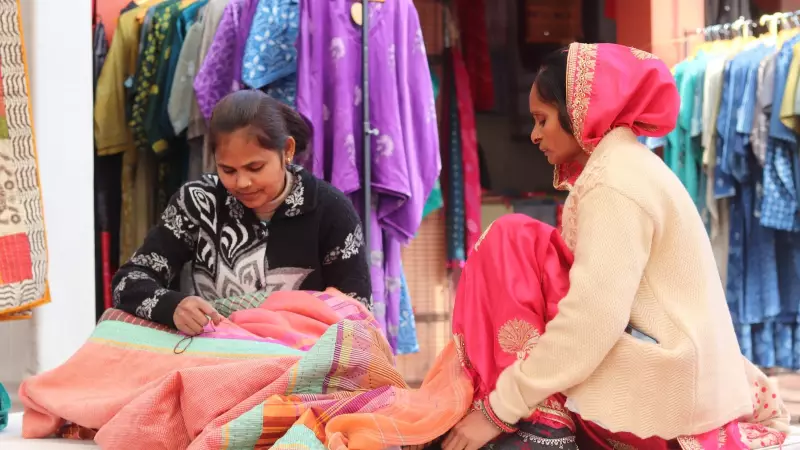
A major highlight this year is the focus on quilt making. At the Mother Quilt stall, founder Niraj Borate explains their mission of upcycling textile waste into hand-stitched quilts and apparel, collaborating with over 350 artisans across nine states. They work with traditional quilters, providing training, and find that people deeply appreciate the social and environmental impact of turning old saris and clothes into functional art.
A live demonstration of quilt crafting, or 'gudri' stitching, by artisan Gulabi Devi, draws curious crowds. She shares that this has been a generational occupation for her family. "I have been doing this for 50 years. Before me, my grandmother and my mother did this work," she says, expressing her desire to take the craft forward, which brings her to Delhi.
Regular visitors like teacher Shobha Mehta linger over the hand-painted works, noting that such exhibitions celebrate diversity and provide a crucial platform for artisans. Delhi-based journalist Anita Katyal adds that no two visits feel the same, and she shops consciously here, believing that appreciating this art is vital to prevent its disappearance.
The 40th Dastkari Haat Crafts Bazaar stands as a powerful testament to India's living craft traditions, offering a direct connection between the maker and the appreciator, and underscoring the irreplaceable value of human skill and creativity.