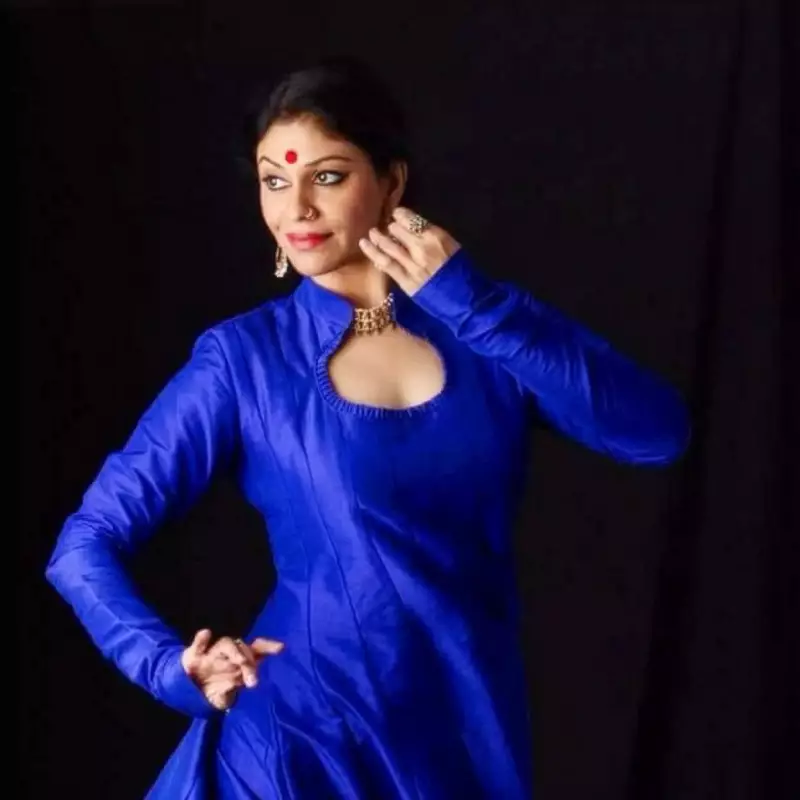
For one renowned dancer, the art form is not merely a skill learned but a profound 'womb memory'. She explains that by the age of two, she could recite intricate rhythmic patterns, a natural absorption from growing up immersed in a world of movement. Her mother, the legendary Kathak exponent and choreographer Maya Rao, was a deeply involved parent who exposed her to a vast spectrum of experiences—from first-class cultural delegations to Cuba to third-class travel for village festivals in Manipur.
The Dance of Life: A Mother's Legacy
In her upbringing, dance was never a separate entity from existence; it was the very space where life unfolded. Her mother belonged to a pioneering generation that lived dance with a different intensity. As a young woman, Maya Rao left home in pursuit of Kathak, later returning with a wealth of knowledge. She chose to stop performing publicly after her daughter's birth, not as a loss but as a conscious decision to channel her energy into motherhood, choreography, and teaching.
"I did not grow up watching her perform on stage," the dancer recalls, "but I grew up watching how she lived—her grace in movement, her poise in handling situations, her very conduct. Everything she did became part of what I now call the dance of life." This foundational philosophy shaped her perception of art as an extension of being.

Bengaluru: From Dull City to Creative Germination Ground
The dancer moved to Bengaluru from Delhi when she was around 15 or 16. Initially, the city felt dull in comparison. However, it soon revealed itself as a haven of safety and liberation. The freedom to ride a moped, walk, or drive at 2 AM without fear was transformative. This environment gave her the space to step away from dance, despite everyone's expectations.
For five years after moving, she did not dance. She pursued management studies at Mount Carmel College and immersed herself in painting, theatre, journalism, and other activities. Bengaluru, she says, provided the freedom to explore and grow outside the shadow of legacy. It became a germination ground for creativity, nurturing her independent spirit. The city's unique cultural fabric, where one could attend a temple concert in the morning and a jazz performance in the evening, offered a fertile collision of the old and new.
Building a Scene and Navigating Change
In 1995, she founded Bengaluru's first contemporary dance company, a move met with initial skepticism in a scene dominated by purists. Yet, audiences responded. They were smaller but discerning, and venues were packed with people genuinely wanting to engage with the art, not merely consume it.
Reflecting on the present, she acknowledges the city's dance landscape has changed dramatically. There are far more events, groups, and appreciation—sometimes, she feels, more than is warranted. The trend of automatic standing ovations troubles her, questioning where the space for critical feedback and improvement lies.
She also observes a significant shift in what it means to be a dancer today, where visibility on social media often precedes the art itself. The pressure to build followers and share visuals before the work is ready creates a challenging dynamic. "If you spend a year researching and creating with integrity, you lose out to someone who has already flooded social media with content," she notes, stating her choice to not enter that race.
The Body as a Storehouse and the Future of the Past
Today, when she dances, she sees the body as a storehouse of lived experience. With age, these experiences deepen and enrich the artistic expression, which is why she cherishes watching older dancers for their gravitas and maturity. She dips into pockets of memory, recalling her mother's guidance on placement and form.
This connection to the past is not about correcting mistakes but about fueling the future. This principle guides her current work archiving 60 years of the Natya Institute of Kathak and Choreography, which her mother founded. "I keep reminding people that the museum is not about the past—it is about the future," she emphasizes.

Ultimately, for her, dance mirrors life itself. "You walk down a street that looks entirely different now, yet memory fills it with what once was. You are in the present, constantly bridging the past. Both live together in the body. This is how dance still lives in me."