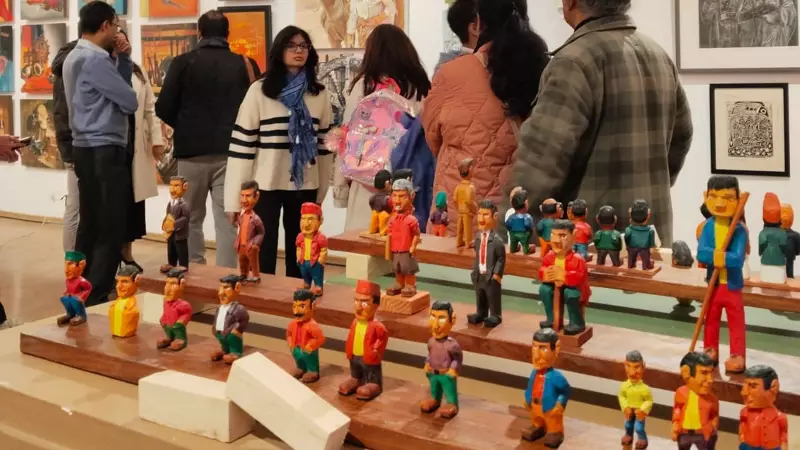
The Collage International Art Carnival, or CIAC, is currently shining a light on up-and-coming artists at the Lalit Kala Akademi in Delhi. This six-day event runs until January 18 and features more than 1,000 artworks created by approximately 500 artists from all over India. Many of these participants are students currently studying at various art colleges across the country.
A Platform for Interaction and Learning
Ashwani Kumar Prithviwasi, the founder and director of the Delhi Collage of Art and also the founder of CIAC, explained the event's main goal. He stated that one of the primary aims is to bring together members of the art community from different age groups and experience levels. While each segment often works in isolation, the idea here is to create space for interaction and learning from one another.
Prithviwasi recalled the humble beginnings of the event twenty years ago. He mentioned that they literally started by exhibiting works of art students on the streets of Uttam Nagar. Now, the carnival has grown into a significant gathering that attracts established artists and figures from the art fraternity, despite the winter chill.

Building Confidence and Visibility
Artist Bose Krishnamachari, who received a Lifetime Achievement Award at the carnival, emphasized the importance of such spaces for conversation. He noted that from previous editions, he has observed consistent efforts to connect with people. There are also students participating from across the country, and for them, showing their work in Delhi brings visibility. The interactions help build their confidence significantly.
On the first day itself, several art students experienced making their first sales. Others introduced their work, engaged with viewers, and gained firsthand experience in presenting their art. Anita Kaur, an artist who teaches printmaking at Jamia Millia Islamia, highlighted that there are very few places where art students can interact with audiences on this scale. She mentioned that they are encouraging students to take the lead, even asking them to select the works showcased in their space.
Diverse Participation and Activities
The event includes participation from over 25 institutions. These include art colleges like the College of Art in Delhi and the Sarada Ukil School of Art. Other participants come from Triveni Kala Sangam, the National Gallery of Modern Art, Bal Bhawan, Naveen Chhaya pottery studio, and Garhi Studios. The line-up also features workshops, film screenings, and lectures by artists, adding to the educational aspect of the carnival.
Divyanshi Verma, a 25-year-old pursuing a professional diploma at the Dehradun College of Art, is exhibiting her work in Delhi for the first time. She said that for students like her, this is a great platform to receive feedback and encounter the work of other artists. With so many mediums represented, simply observing the range of experiments becomes a valuable learning experience.
Focus on Niche Genres and International Art
The mediums on view range from paintings and photographs to drawings, etchings, videos, ceramics, and installations. At the booth of Shankar's Academy, faculty member Saurabh Pandey noted a deliberate decision to focus on the art of book illustrations through student works. He pointed out that this genre has been receiving little attention, making this focus particularly meaningful.
Artist Aakshat Sinha, founder and curator at UrbanFringe: The Underground Studio and a former student of Prithviwasi, is presenting works by five international artists. These include Maria Arendt from Germany, Ivan Yazykov from Russia, Reinar A Foreman from Iceland, Ivan Kirillov who is Russia-born, and Olga Petrova from France. Sinha stated that he deliberately chose these works and artists to present diversity from far shores at the carnival.
Growth of Opportunities in the Art Market
Pooja Mudgal, an artist who completed her diploma in applied art from the Shilpa Bharti Institute of Fine Art and Craft in 1999, reflected on the changes over the years. She mentioned that till twenty years earlier, at most there were youth festivals where one could participate. Now, the art market has grown so much, and there are ample opportunities for students to explore and showcase their talents.

The CIAC event continues to provide a vital platform for emerging artists, fostering connections and growth within India's vibrant art community.