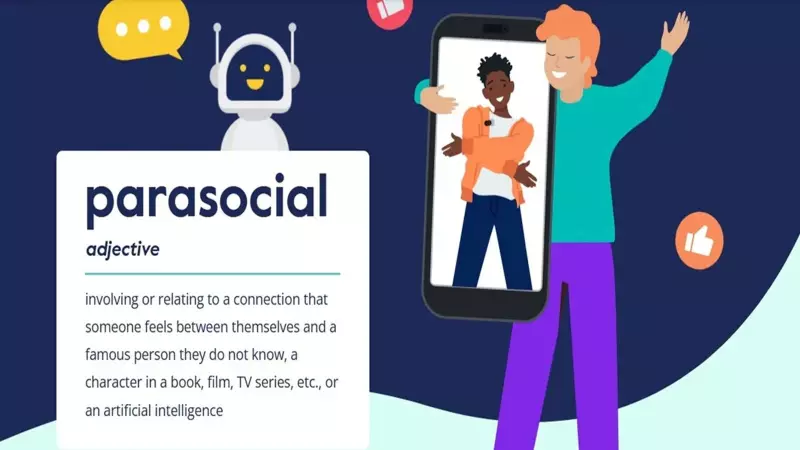
In a move that perfectly captures the spirit of our times, the Cambridge Dictionary has officially declared 'parasocial' as its Word of the Year for 2025. The announcement, made on November 19, 2025, confirms a widespread cultural phenomenon where people form intense, one-sided emotional attachments with individuals—and now, machines—who are entirely unaware of their existence.
The Anatomy of a One-Sided Affair
The term 'parasocial' provides a clinical label for a deeply personal modern experience. It describes the unilateral relationships millions cultivate with Bollywood stars like Shah Rukh Khan and Kareena Kapoor Khan, cricket icons like Virat Kohli, or even favourite influencers and podcasters. This dynamic involves meticulously tracking their every move, from airport fashion to daily routines, all while knowing the affection is never reciprocated.
This trend has effectively blurred the lines between reality and delusion, or as the internet vernacular puts it, 'delulu'. The fervent online debates surrounding fictional narratives, such as the choices of the teenage protagonist in The Summer I Turned Pretty, demonstrate the profound emotional investment in characters and personalities that have no real presence in the fans' lives.

From Human Idols to Algorithmic Partners
The evolution of parasocial bonding has taken its most intriguing turn with the rise of artificial intelligence. For a growing number of people, human relationships have become too demanding, leading them to seek companionship in AI chatbots. These digital partners offer constant availability, unwavering attention, and freedom from human complexities like conflicting political views or the need for sleep.
People are now speaking openly about their friendships, emotional dependencies, and even romantic feelings for these algorithms. A century ago, such behaviour might have been pathologized. Today, it is a recognized symptom of an anxious, digitally-mediated era, with experts frequently having to remind users that a chatbot, no matter how comforting, is not a substitute for a real human boyfriend or friend.
An Old Term for a New Digital Reality
While 'parasocial' feels quintessentially modern, it is not a new invention. Researchers first coined the term back in 1956 to describe the mild affinity television viewers felt for friendly presenters selling products like detergent. The core concept remains the same, but the scale and intensity have been magnified exponentially by the internet and social media.
The Cambridge Dictionary's selection serves as a formal acknowledgement of a pervasive truth: many of us have willingly become supporting characters in the life stories of people who do not know we exist. And for those feeling isolated by this realization, there is always a comforting, ever-available AI companion ready to listen—just don't ask it to help you move your sofa.