Sonia Faleiro's The Robe and the Sword: A Deep Dive into Buddhist Extremism in South Asia
Sonia Faleiro's new book, The Robe and the Sword: How Buddhist Extremism Is Shaping Modern South Asia, presents a compelling examination of the disturbing rise of violence among Buddhist monks in Sri Lanka, Myanmar, and Thailand. The book meticulously explores how these monks, traditionally seen as symbols of peace and renunciation, have increasingly engaged in aggressive nationalism and communal violence.
The Paradox of Buddhist Violence
Faleiro highlights the profound contradiction between Buddhism's core principle of ahimsa (non-violence) and the militant actions of some monastic communities. As Pankaj Mishra notes in his blurb, the book points to "...the social-economic shifts that make even an ancient spiritual tradition devoted to renunciation hospitable to modern fanaticism." This analysis provides a crucial framework for understanding how economic and political changes have fueled extremism within these societies.
Historical Context and Immediate Relevance
The author provides a rich historical backdrop, detailing incidents, movements, and the formation of radical right-wing political groups in recent decades. This approach gives the book an immediacy often lacking in academic explorations, blending investigative journalism with sharp analytical thinking. Faleiro's work stands out for its ability to connect historical patterns with contemporary political realities.

Theravada Buddhism's Distinct Path
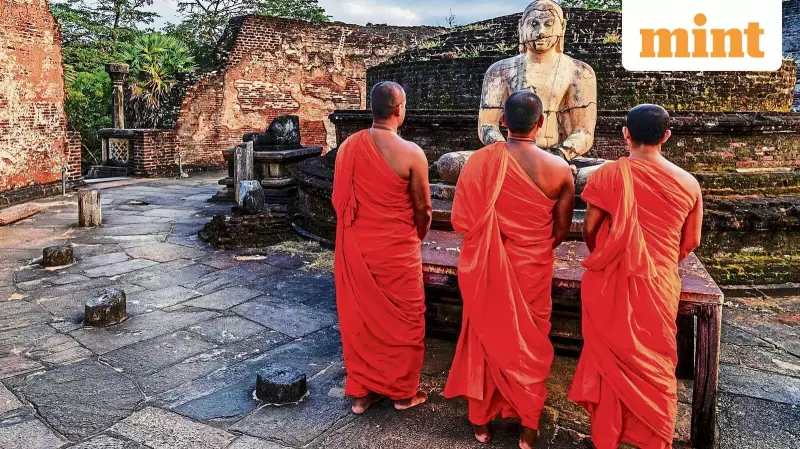
Buddhism in Sri Lanka, Myanmar, and Thailand follows the older, austere Theravada tradition, which differs significantly from the Mahayana and Tantra schools prevalent in Nepal, Tibet, and East Asia. In all these cultures, Buddhism maintains a strict monastic order where monks and nuns are revered for their simple, renunciate lives. The lay community's daily practice of feeding monks accrues religious merit, reinforcing the sacred role of monasticism.
Case Studies: Sri Lanka, Myanmar, and Thailand
Sri Lanka: Faleiro documents how monks turned ethnic and nationalist energies from the civil war against Muslims and Christians. After 2009, a "purged" Sri Lankan nation failed to address divisive emotions, with monks leading hate speech and violence, often with state complicity. Sinhala identity became intertwined with Buddhism, creating a climate of fear and insecurity.
Myanmar: Monks encouraged ethnic and religious cleansing, particularly targeting the Rohingya Muslim population. While some monks resisted authoritarianism, nationalist movements aligned with the military junta's exclusionist policies. Faleiro criticizes Aung San Suu Kyi's failure to support democratic movements, which allowed extremism to flourish.
Thailand: Although the monarchy has kept monks out of politics, they thrive as gatekeepers of an opulent religion based on donations, often violating monastic rules. This highlights the complex relationship between religious authority and political power in the region.
Broader Religious and Gender Dynamics
Faleiro's introduction contrasts courageous monks who performed self-immolations for justice with cruel hierarchies and patriarchal practices within monasteries that marginalize nuns. She argues that institutionalized religions often lose their original ennobling ideals, a pattern seen across faiths.
The historical Buddha, Siddhartha, emerged during a period of spiritual transformation in ancient India, where new doctrines like the Upanishads emphasized self-knowledge and ahimsa. Thus, non-violence is not unique to Buddhism but a shared spiritual value.
Critical Questions and Recommendations
Faleiro frames her argument carefully, presenting militant Buddhism as a recent, volatile force in Asian politics. Her book is both politically sharp and emotionally moving, offering insights into dissent and resistance. It is highly recommended for anyone interested in South Asia's fractured democracies and communal tensions.

The book encourages deeper questions about why religious identities often become entangled with aggressive masculinities and violence. Citing C.M. Naim's essay on hyper-masculinized Islam, Faleiro points to the loss of humility and poetry in religious practice, particularly as women's roles diminish.
Ultimately, The Robe and the Sword challenges readers to look beyond surface-level explanations and consider the systemic issues that allow hatred to overshadow compassion. It is a timely and essential read for understanding the political violence shaping our world today.