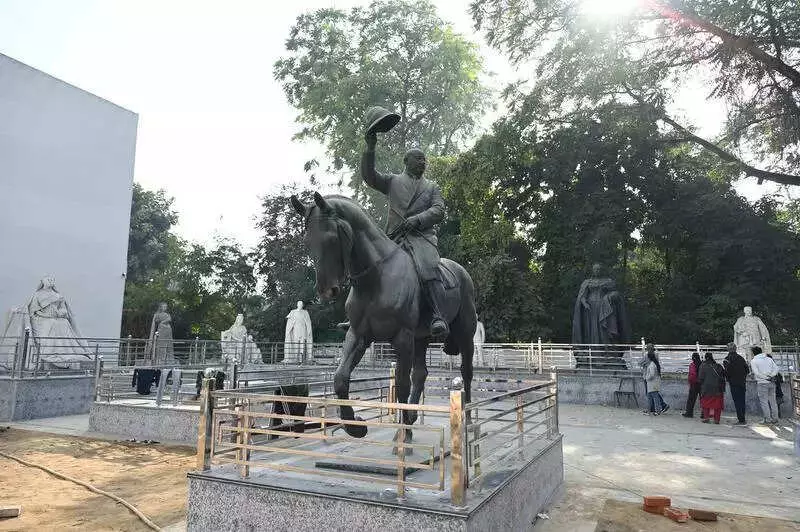
In a significant move to preserve a contentious slice of history, the Uttar Pradesh government is preparing to publicly display a collection of British colonial statues in a new open-air gallery in Lucknow. These life-sized marble sculptures, removed from public spaces after India's Independence, will soon be accessible for public viewing at the State Museum.
From City Crossroads to Museum Grounds
The collection comprises 27 sculptures, each standing between 15 to 20 feet tall, crafted in the 19th and 20th centuries. They once adorned prominent intersections and landmarks across Uttar Pradesh during British rule. The most notable figures immortalised in marble include Queen Victoria in both sitting and standing postures, along with her sculpted crown. The gallery will also feature statues of British officials like Sir John Woodburn (Governor of Bengal and Awadh), Sir Harcourt Butler, Antony Patrick MacDonnell, and Emperor George V.
Interestingly, while most statues were manufactured in London and shipped to India, some were the work of Indian artists. A statue of George V was sculpted by the Kolkata-based artist H. Roy Chowdhury.

A Tumultuous Journey Through History
The fate of these statues changed dramatically after 1947. In 1955, a movement led by socialist leaders pressured authorities to remove these symbols of colonial rule from public view. Consequently, the statues were taken down from their pedestals in cities including Allahabad (now Prayagraj), Faizabad, Varanasi, Deoria, and Lucknow.
For decades, they were stored away in the premises of police lines and district magistrate offices. Finally, between 1980 and 1982, the entire collection was transferred to the State Museum in Lucknow, where they have been housed in a temporary gallery until now.
A New Chapter as Public Artefacts
The new open air foreign sculpture gallery, constructed at a cost of Rs 1.59 crore sanctioned by the UP culture department, aims to present these artworks in a contextualised historical setting. According to Vinay Singh, Director of the State Museum in Lucknow, the gallery is expected to open by the end of January.
It will operate daily from 10:30 am to 4:30 pm. Singh added that visitor facilities like a sitting area with benches, a green lawn, and focused lighting will be installed to enhance the viewing experience.
This initiative represents a shift in how India engages with its colonial past—from erasing physical reminders to preserving them as artefacts of a bygone era, allowing current and future generations to reflect on a complex historical period within a curated museum space.