Bihar's Cultural Revival: The Quest to Bring Buddha's Begging Bowl Home
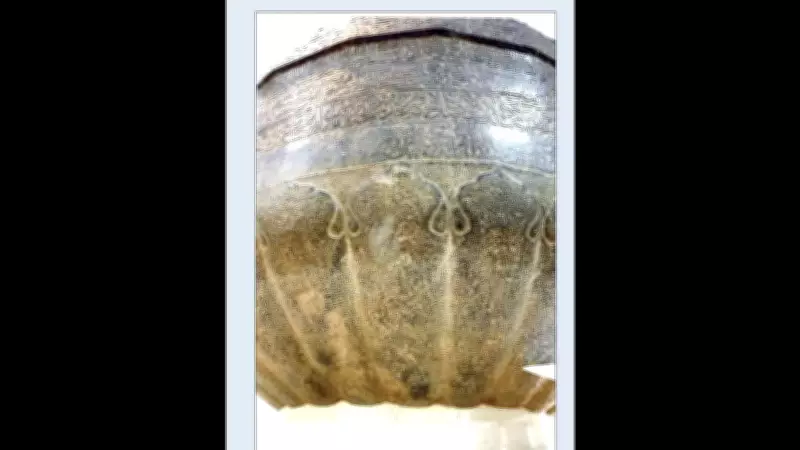
The recent successful repatriation of the Piprahwa relics, widely believed to be the physical remains of Lord Buddha, has sparked a renewed and passionate movement in Bihar. Historians, cultural activists, and local leaders are now channeling this momentum toward an even more ambitious goal: bringing Buddha's sacred begging bowl back from the Kabul National Museum in Afghanistan to its original site in Vaishali, Bihar.
A Museum Ready for a Sacred Artifact
State president of the Indian National Trust for Art and Cultural Heritage (Intach), Bhairab Lal Das, highlighted the perfect timing of this initiative. He noted that Chief Minister Nitish Kumar inaugurated a newly constructed Buddha Museum and memorial stupa in Vaishali in July of last year, built at a substantial cost of Rs 550 crore. Furthermore, a Buddha relic previously housed at Patna's Buddha Smriti Park has already been transferred to this new complex.
"It is high time efforts should be made to bring back Buddha's sacred alms bowl from the Kabul Museum to this place," Das asserted, emphasizing that the state-of-the-art facility is now prepared to serve as the rightful home for this invaluable artifact.

A Long-Standing Parliamentary Demand
The campaign for the bowl's repatriation is not a new development. In fact, the late RJD MP Raghuvansh Prasad Singh, who represented the Vaishali constituency, first raised the demand in Parliament back in 2013. He formally urged the Ministry of External Affairs and the Archaeological Survey of India (ASI) to initiate diplomatic and procedural steps to secure the bowl's return to India and its installation at its "original place in Vaishali."
In direct response to this parliamentary appeal, the Government of India dispatched a two-member ASI team to Kabul. Led by Phani Kant Mishra, the team's mission was to officially verify the authenticity of the large relic preserved in the Kabul museum, confirming whether it was indeed the "begging bowl" used by Lord Buddha during his stay in Vaishali in the sixth century BC.
Verification and Historical Corroboration
Former regional director and team member Phani Kant Mishra confirmed that, upon returning from Kabul, the team submitted a detailed report to the union government. "In my report, I mentioned that the relic in question, preserved near the entrance of the Kabul museum, is the same artefact that Chinese scholars Fa Hien and Hiuen Tsang and British archaeologist Alexander Cunningham had referred to in their writings," Mishra stated, providing crucial historical corroboration for the artifact's identity.
Despite this verification, no concrete action has been taken by the central government to facilitate the bowl's return in the years since the report was submitted.
Personal Appeals and Unfulfilled Wishes
Satya Prakash, son of the late Raghuvansh Prasad Singh, has taken up his father's cause. He revealed that he wrote to Prime Minister Narendra Modi over a year ago, pleading for the government to fulfill his father's last wish and take decisive steps to bring the "celebrated" bowl back to Vaishali. Prakash also recounted meeting with the Chief Minister and several union ministers regarding the matter, but expressed disappointment that, "unfortunately, none had shown interest in the matter."
The Bowl's Profound Historical Journey
Delving into the artifact's deep historical significance, Jayadeo Mishra, former head of Patna University's ancient history and archaeology department, explained its origins. He pointed out that Buddha gifted his alms bowl to the people of the Republic of Lichchhavis when he bid them a final farewell at Vaishali, as he journeyed to Kushinagar where he would later attain Mahaparinirvana.
"The bowl was gifted to the people of Vaishali who had long been following him everywhere," Mishra said. He detailed its subsequent turbulent journey: the bowl was later taken by invaders to the capital of Kanishka, "Purushputra" (modern-day Peshawar), and was eventually moved further to Kandahar (ancient Gandhar), before finding its current resting place in Kabul.

Advocates argue that realizing this repatriation would not only restore a key piece of spiritual and historical heritage to its rightful context but would also significantly bolster India's global standing as the primary guardian and custodian of Buddhist heritage, a role of immense cultural and diplomatic importance.