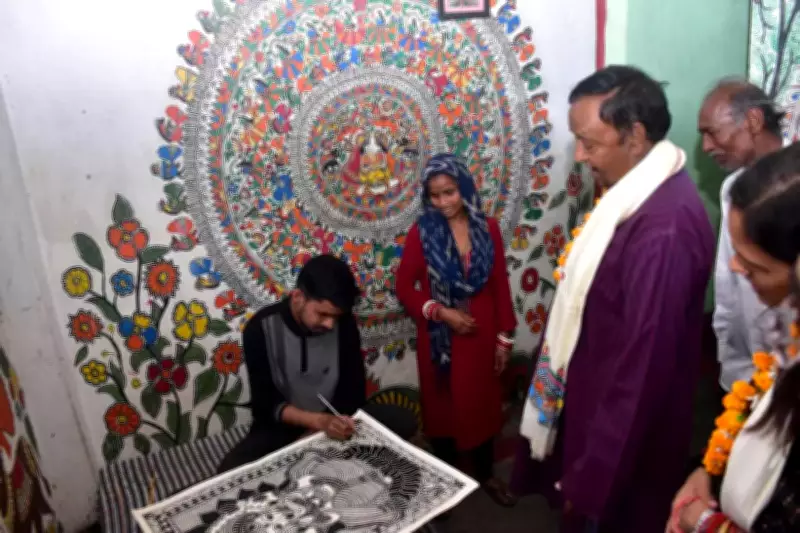
Bihar's First Shilpgram Inaugurated in Madhubani to Revitalize Mithila Art
In a landmark event for cultural preservation, Bihar's inaugural Shilpgram (craft village) was officially inaugurated on Saturday at Jitwarpur in the Rahika block of Madhubani district. This initiative represents a significant step under the Union textile ministry's National Handicrafts Development Programme, executed in collaboration with the Bihar Museum, to safeguard and promote the diverse handicraft traditions of Mithila.
Project Details and Funding
The Craft Village is being developed with an investment exceeding Rs 9 crore, featuring a funding model where 80% is provided by the Central government and 20% by the Bihar Museum. This allocation marks the highest financial support for such a project in any state across India. Targeted for completion within one year, the project aims to elevate Jitwarpur's global recognition and honor key figures who have contributed to the worldwide popularity of Mithila art, including W G Archer, Bhaskar Kulkarni, and Lalit Narayan Mishra.
Infrastructure and Development Plans
Phase one of the Shilpgram will encompass a range of facilities designed to support artisans and attract visitors. Key components include a four-room guest house equipped with modern amenities near the Common Facility Centre at the Dak Bungalow, a separate toilet block, and 12 stalls dedicated to crafts such as paper mache, sujni, and terracotta. Additionally, the project involves extensive landscaping and garden development to enhance the village's aesthetic appeal.

Further enhancements planned are a grand entrance gate adorned with Madhubani artwork, renovation of three government ponds with colorful brick and stone borders complemented by tree cover, paving of village roads, and installation of approximately 100 street lights. To foster artistic expression, outer walls of homes will be whitewashed, providing canvases for artists to paint traditional Madhubani motifs. The development is also envisioned to extend to nearby art-centric villages like Ranti and Raiyam, creating a broader cultural hub.
Jitwarpur's Artistic Legacy
Jitwarpur, a village comprising around 400 households, holds a unique distinction in India as the only village to have produced three Padma Shri awardees: Jagadamba Devi (1975), Sita Devi (1980), and Baua Devi (2017). When including the adjoining Laheriyaganj, this count rises to five, with Shivan Paswan and his wife Shanti Devi receiving the honor in 2024. With nearly 90% of locals reliant on handicrafts rather than agriculture or salaried employment, every home functions as an art studio, making the village a vibrant center for Mithila's artistic traditions.
Inauguration Ceremony and Dignitaries
The event was inaugurated by state art and culture minister Arun Shankar Prasad as the chief guest, with Bihar Museum director general Anjani Kumar Singh presiding over the ceremony. Notable attendees included Shirsat Kapil Ashok, Managing Director of Bihar State Road Development Corporation Ltd (BSRDCL); Ashok Kumar Sinha, additional director and nodal officer at Bihar Museum; Mohammad Asif Ahmad, MLA from Bisfi; and B K Jha, assistant director from the Union ministry of textiles. The ceremony was graced by four Padma Shri artists: Baua Devi, Dulari Devi, Shanti Devi, and Shivan Paswan.
Villagers extended a warm welcome to the dignitaries, with Baua Devi expressing gratitude, noting that the project fulfills a long-standing dream for the community. Ashok Kumar Sinha, who advocated for Jitwarpur in a high-level meeting in Delhi in 2025, emphasized the village's cultural significance, which played a crucial role in securing approval from the ministry's committee.
Commitments and Future Impact
Shirsat Kapil Ashok, recalling his tenure as Madhubani District Magistrate, pledged the timely completion of the project and informed that BSRDCL has been appointed as the executing agency. Speaking as chief guest, minister Arun Shankar Prasad highlighted that the Craft Village will empower local artists by providing direct market access, eliminating middlemen, and ensuring fair prices for their work, thereby boosting economic opportunities and preserving cultural heritage for future generations.