Bhatala's Bhonda Mahadev Temple: Vidarbha's Largest Shivling & Architectural Mystery
In the Warora taluka of Chandrapur district, the prehistoric village of Bhatala stands as a remarkable testament to India's rich historical and mythological heritage. Known locally as a "Shilpgram" or village of sculptures, this site is home to the extraordinary two-storeyed Bhonda Mahadev Temple, dating back approximately to the 7th-8th century.
The Temple's Exceptional Religious Significance
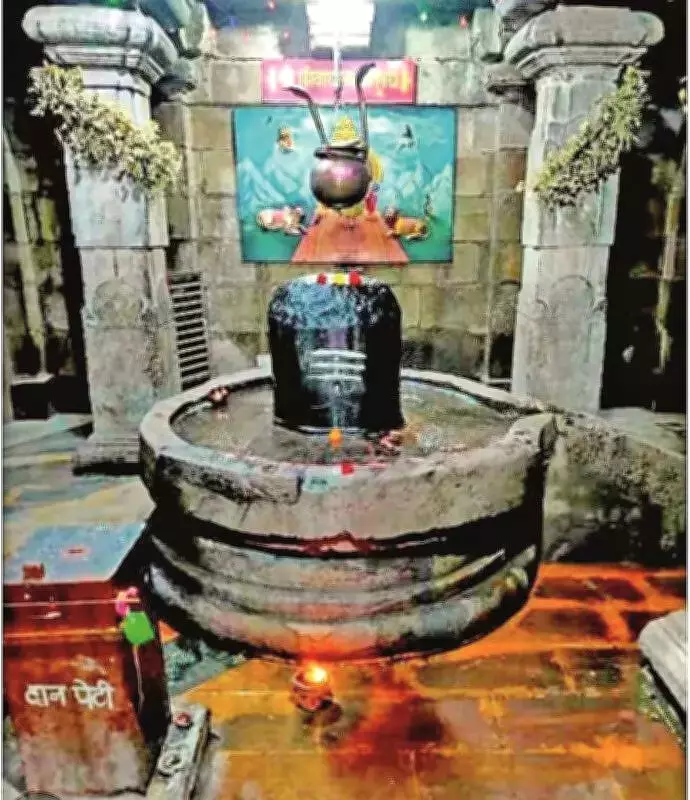
The temple houses a massive Shivling that is believed to be the largest in the entire Vidarbha region, making this location one of exceptional religious and archaeological importance. According to Mayuresh Khadke, assistant director of the directorate of archaeology and museums and curator, this Shivling is regarded as the largest not merely at the local level but across northern Vidarbha, including the Nagpur region.
"References to its scale are made in the context of the wider geographical area, underscoring the uniqueness of this shrine," Khadke explains. The Bhonda Mahadev Temple stands to the west of Bhatala village and faces east, constructed from distinctive reddish-yellow sandstone. Located 13 kilometers from Warora and 95 kilometers from Chandrapur, it ranks among the oldest temples in Chandrapur district.

Architectural Mystery: The Missing Spire
The temple's most unusual characteristic is the complete absence of a shikhar or spire. Local tradition maintains that centuries ago, lightning struck the temple, destroying the shikhar, kalash, and amalaka elements. During subsequent repairs, the structure was rebuilt without its spire, giving rise to the name "Bhonda Mahadev", which literally means a temple without a shikhar.
Khadke points out that the temple's architectural form presents a significant mystery, particularly because the structure visible today appears incomplete when compared to what it may originally have been. "The temple was originally much taller, and the missing shikhar suggests it may once have been one of the most advanced and imposing temples of its era," he notes, adding that the front mandap is now entirely missing and was likely lost over time.
Protected Monument and Active Worship Site
Khadke confirms that the site is a protected state monument, with conservation work by the archaeology department nearing completion. Despite its ancient origins, the temple remains an active place of worship, attracting large numbers of devotees throughout the year.
The temple sees particularly significant crowds during the three-day Mahashivratri fair, when a major yatra is organized and managed by the temple trust. This continuous religious activity highlights how Bhatala's heritage remains vibrantly alive in contemporary practice.
Historical Context and Regional Significance
Historical evidence indicates that several major dynasties held sway over this region at different periods, including:
- The Mauryas and Satavahanas
- The Vakatakas and Guptas
- The Parmars and Chalukyas
- The Nagavanshi rulers
These rulers contributed to the construction of temples and monuments throughout the area, many of which survive in fragments today. It is believed that intricately carved stone sculptures from Bhatala were once transported beyond the region, possibly even overseas.
The carvings on the ancient Bhavani temple and the rock-cut caves near Rishi Lake further reinforce Bhatala's antiquity. Recognizing this exceptional heritage, the Maharashtra government has officially declared the village a tourist destination.
Additional Architectural Features
The temple contains several remarkable elements beyond its famous Shivling:
- A 10 feet by 4 feet monolithic black stone Shivpindi, whose source and transportation method remain a mystery
- Idols of Kartikeya, Shiva, and Chamunda within the temple complex
- Architectural features believed to date to the Rashtrakuta period (10th century)
The black stone used for the Shivpindi presents particular archaeological intrigue, as experts cannot determine how such massive stones were transported to the site centuries ago.

Bhatala village represents a crucial link in understanding Maharashtra's architectural and religious history, with the Bhonda Mahadev Temple serving as both an active place of worship and a protected archaeological treasure that continues to reveal mysteries about India's ancient past.