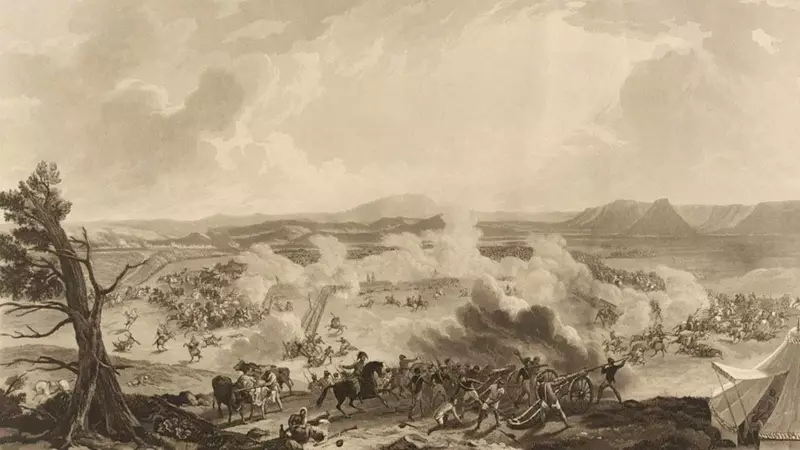
The Battle of Khadki: Maratha Empire's Final Gamble Against British Colonial Rule
In the annals of Indian history, the Maratha Empire stands out as a formidable force that fiercely resisted colonial domination until its very last breath. The Battle of Khadki, also known as Kirkee or Ganeshkhind, represents the empire's ultimate and desperate attempt to reclaim sovereignty from the British East India Company. This pivotal conflict, fought on November 5, 1817, near Pune, marked a turning point in the struggle for independence and the consolidation of British power in India.
The Decline of the Maratha Empire and British Ascendancy
By the early 19th century, the Maratha Empire was a shadow of its former glory. Centuries earlier, under the visionary leadership of Chhatrapati Shivaji Maharaj, the Marathas had expanded their dominion across the Deccan, building a vibrant civilization. However, by the time Baji Rao II ascended as Peshwa, the empire was weakened by internal strife and external pressures.
Meanwhile, the British East India Company had grown into a formidable colonial power. Through disciplined armies, modern weaponry, and strategic subsidiary alliances, the British systematically eroded the independence of Indian states. In June 1817, Baji Rao II signed the Treaty of Poona, a document that effectively subjugated him to British interests. The treaty forced him to disband his cavalry, allow British troops to remain in his territory, and conduct foreign relations only with British permission.

Secret Preparations and the Gathering Storm
In secret, Baji Rao II turned to his most capable commander, Bapu Gokhale, a brilliant military strategist often regarded as the last great general of the Marathas. Gokhale covertly raised an army while feigning compliance with the treaty. His efforts included:
- Recruiting hill tribes to bolster forces
- Strengthening fortifications at Sinhgad and Raigad
- Amassing approximately 28,000 troops and 20 cannons
Despite these preparations, the British Resident, Mountstuart Elphinstone, uncovered the Peshwa's plans through an extensive network of spies. On October 19, 1817, during the Dussehra festival, the Maratha cavalry launched an initial charge against British soldiers, but it was repelled as British sepoys stood firm and reported the incident to their officers.
The Battle Unfolds: A Clash of Strategies and Terrain
By early November, British forces had gathered at Khadki with 3,000 troops under the command of Colonel Charles Barton Burr. Captain John Ford arrived on November 4, adding to the British strength. Historian Uday Kulkarni notes a fascinating detail: Captain Ford was initially friends with Moropant Dixit, a Peshwa minister, and had an informal agreement to remain neutral, but he ultimately switched sides as the battle approached.
On November 5, the Maratha artillery launched an attack on the British Residency where Elphinstone was stationed. Forced to retreat, Elphinstone joined Burr's forces at Khadki. As British troops moved to unite, the Peshwa watched anxiously from Parvati Hill, already doubting the attack's success due to the overwhelming British power. However, Bapu Gokhale remained resolute in confronting the enemy.
The battle took a dramatic turn when the Maratha horsemen encountered a treacherous muddy terrain, which disrupted their momentum and order within seconds. Seizing this opportunity, the British unleashed relentless volleys of bullets. Only a handful of Maratha horsemen managed to advance, while the rest retreated or fled. Kulkarni reflects, The rate of reload was so rapid and intense that even strategic positioning could not have prevented the Maratha defeat. By nightfall, the field was cleared, with the Marathas suffering around 500 casualties compared to minimal British losses.

Aftermath and the End of an Era
The aftermath of the battle was swift and decisive. By November 17, 1817, the British occupied Shaniwarwada, the seat of the Peshwa, forcing Baji Rao II to flee southward towards Satara. Subsequent battles further weakened the Marathas, culminating in the death of Bapu Gokhale at the Battle of Ashti on February 19, 1818. By June 1818, Baji Rao II surrendered, effectively ending the Maratha Empire.
Within two years, the British solidified their control over most of central India. Kulkarni elaborates on the broader context: We were at the end of the feudal era. This battle represented the last attempt to resist British rule, but the chances of success were slim. The British had established themselves as a dominant force nationwide, and without a unified coalition of princely states, defeating them was a distant dream.
Despite the defeat, historian Mohan Shete emphasizes a point of pride: The Maratha Empire was the sole entity that fought against colonial rule until its last breath. This resilience underscores the empire's enduring legacy in the fight for independence.
Legacy and Modern-Day Reflections
Today, the sites associated with the Battle of Khadki offer poignant reminders of this historical struggle. The British Residency now serves as the residence of Pune's district court judge, with a small marble plaque commemorating the battle. The battleground itself forms part of the campus of Savitribai Phule Pune University. Historians believe the muddy terrain that hindered the Maratha cavalry likely existed between what is now Range Hills Colony and the Khadki Military Station. Parvati Hill, from where the Peshwa witnessed the collapse of his world, still stands as a silent witness in the city.
Reflecting on the battle's lessons, Shete notes, The British were significantly advanced with the latest artillery technology and strategic prowess. This prompts us to assess our standing and ensure we stay current in our pursuits. The Battle of Khadki serves as a powerful reminder of the challenges faced by indigenous forces against colonial powers and the importance of unity and innovation in the face of adversity.