Historic Barapullah Bridge Set for February Reopening After Major Conservation
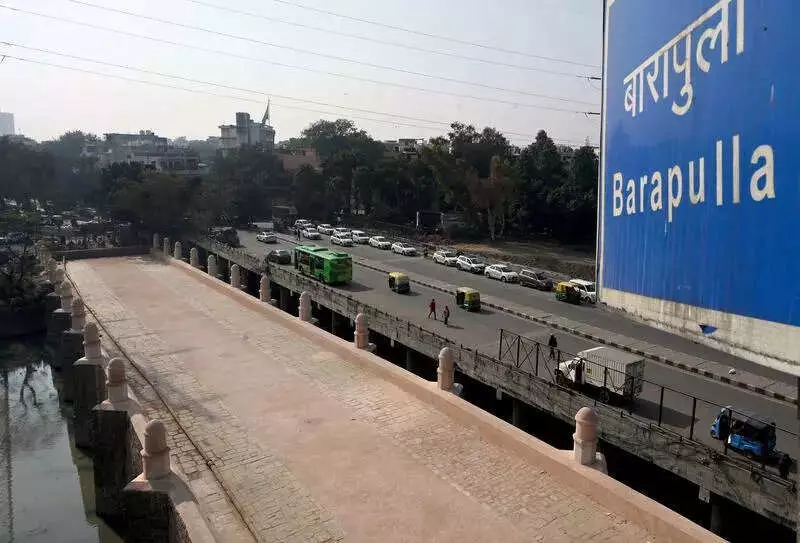
New Delhi's historic Barapullah Bridge will welcome the public again in February. The Archaeological Survey of India has nearly completed an extensive conservation exercise for this 17th-century Mughal-era structure near Nizamuddin.
For decades, the bridge suffered from neglect and encroachment. Now, it stands ready for a new chapter.
Protective Measures and Access Restrictions
The bridge currently remains closed behind iron gates. These gates will stay in place even after the reopening. Officials confirm the monument will be accessible only to pedestrians.

Vehicles are permanently barred to preserve the bridge's structural integrity. This decision ensures long-term protection for the historic structure.
Superintending archaeologist RK Patel of ASI's Delhi Circle provided an update. "Conservation work is largely complete," he said. "Only minor finishing touches remain."
Patel explained the remaining tasks. "A few areas require some small-scale masonry work," he noted. "This should take around two weeks to finish."
Clearing Decades of Encroachment
Officials identified encroachment clearance as the most challenging aspect of restoration. For nearly twenty years, unauthorized vendors occupied the core monument area.
Nearby residents used parts of the bridge as a dumping ground. The situation required decisive action.
In 2024, following directions from Lieutenant Governor VK Saxena, authorities removed more than 120 illegal sellers. This clearance created space for proper conservation.
"Once the encroachments were cleared," Patel recalled, "ASI immediately secured and barricaded the monument. We began conservation work right away."
Structural Assessment and Restoration Work
A structural assessment revealed the bridge remained largely intact. However, some sections showed partial damage from prolonged exposure and misuse.
ASI addressed most of these issues through careful restoration. Workers excavated and restored debris-covered protective walls on both sides of the bridge.
To prevent future misuse, iron gates were installed at both ends. One gate near Nizamuddin station was completed in September 2024. Another facing Jangpura was finished last February.
Traditional Techniques and Materials
The conservation project began in late December 2024. According to the project report, ASI removed substantial material from the bridge.
Workers cleared over 600 cubic metres of bituminous surface. They also removed more than 1,500 cubic metres of old plaster through mechanical intervention.
Restoration employed traditional materials and techniques. These included:
- Random rubble masonry
- Lime mortar mixed with natural binders
- Traditional materials like gur, bel giri, and gum
This approach ensured historical authenticity while strengthening the structure.
Multi-Agency Collaboration
While ASI handled structural conservation, other agencies contributed significantly. The Municipal Corporation of Delhi and Delhi Development Authority took responsibility for cleaning and landscape development around the monument.
Patel emphasized the importance of coordination. "Conservation cannot be done in isolation," he stated. "It works only when agencies act together."
He stressed that protection and preservation of heritage requires cooperation among all stakeholders.
Historical Significance and Architecture
The bridge stands about one kilometre east of Khan-i-Khanan's Tomb along the old Mathura Road. Its distinctive design features 11 arched spans supported by 12 piers.
This architectural feature gives the bridge its name - Barapullah means 12-pillared bridge. The structure spans 195 metres and measures 14 metres wide.
Each pier is topped by a two-metre-high minar, adding to its visual appeal. Historical records show the bridge was built in 1621-22.
Mihr Banfi Agha, a senior court official during Emperor Jahangir's reign, patronized its construction. The bridge once served as a key crossing for Mughal rulers travelling from Agra to Nizamuddin Dargah and Humayun's Tomb.

Contemporary accounts regarded it as one of the finest bridges of its time. Its reopening marks a significant step in reclaiming Delhi's built heritage.
Officials express satisfaction at making this long-neglected monument accessible to the public again. The February reopening promises to reconnect Delhi residents with an important piece of their history.