Reading Indispensable in World Fractured by Polarity and Anxiety: Booker Winner
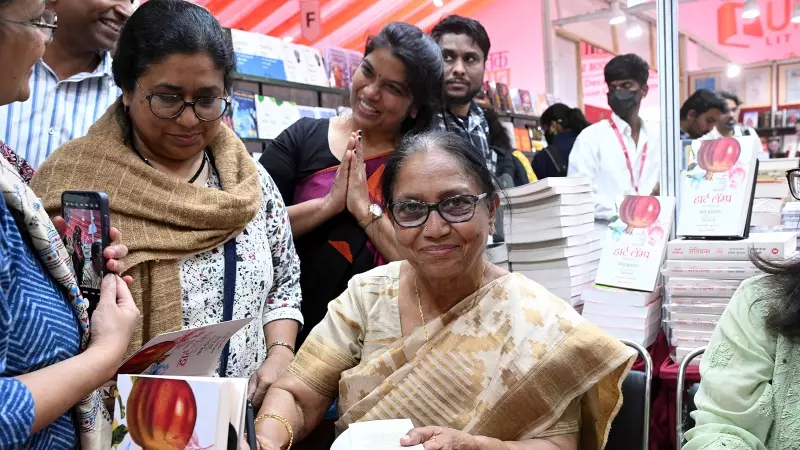
In a powerful address at the 14th edition of the Exide Kolkata Literary Meet held at the Alipore Museum, International Booker Prize-winning writer Banu Mushtaq highlighted the crucial role of reading in today's fractured world. Speaking to an engaged audience, Mushtaq articulated how books serve as essential tools for fostering deep listening and understanding amidst growing societal divisions.
The Transformative Power of Reading
"We are being asked to rediscover reading," Mushtaq declared during her keynote speech. "It is the best way to discover new words, and Kolkata understands this truth better than most cities. This is a city where words are never ornamental, but instrumental."
She elaborated on how words have historically questioned empires, shaped pivotal moments, reimagined society, and offered shelter to wounded imaginations. According to Mushtaq, reading doesn't transport us to entirely new worlds but rather expands our existing perspectives and understanding.

Countering Modern Challenges Through Literature
Mushtaq presented reading as an antidote to contemporary challenges: "In a world increasingly governed by speed and spectacle, reading teaches us slowness. In an age of instant opinion, reading teaches us patience."
She emphasized that literature resists simplification and doesn't offer easy answers, instead revealing the world's inherent complexity. This quality makes reading particularly vital during times marked by polarization and anxiety. "A reader learns the complexity of the world, which is why literature remains indispensable," she asserted.
Deep Listening as Social Catalyst
The acclaimed writer connected reading with the broader social capacity for meaningful dialogue: "A reader is someone who listens deeply, and a society that listens deeply is capable of change." She described this as a space where silence carries meaning and diverse voices are preserved in their full fragility and courage.
Addressing Gender and Patriarchy Through Writing
Speaking about her International Booker Prize-winning collection "Heart Lamp," which explores the lives of Muslim women, Mushtaq addressed gender representation in literature: "Male writers writing about women set the standards for them—how to drape herself, how submissive she should be—and a woman is expected to conform to those standards."
She clarified her position: "I don't hate men, neither do my women characters hate men. They are our own blood relations." However, she emphasized the need to challenge patriarchal structures: "What I want to say is that there is a patriarchy that must be fought. My characters pose questions to society and seek answers."
Personal Challenges and Resilience
Mushtaq openly discussed the backlash she has faced: "Due to my writings, I have been humiliated, attacked, and trolled, but still, I am not bitter." She revealed the personal toll: "After the publication of my book, I was humiliated, attacked, trolled, abused, and thrown out of my community. I am a Muslim woman writer, and that tag haunts me. But I am also a human being. I was mentally shattered when that happened."
On Triple Talaq and Political Dynamics
When questioned about the BJP championing legislation banning triple talaq, Mushtaq offered a nuanced perspective: "It's an acquired practice by the Muslim community which should have been prohibited by Muslim scholars long back." She continued: "By not doing so, they left the space open for the BJP to take the opportunity. I don't blame the BJP; they, too, made some political gains."
International Literary Voices Echo Similar Themes
The literary meet also featured prominent international authors sharing related insights. Pulitzer Prize-winning American novelist Barbara Kingsolver remarked: "I believe the antidote to meanness and division is empathy." She reflected on books serving as windows into others' lives during her childhood in a small American town.

British-American author Jhumpa Lahiri discussed her transition from writing in English to Italian, noting: "Wherever we are, we are all outsiders. Alienation is probably the thriving theme of literature." Her comments reinforced the universal human experiences that literature explores across linguistic boundaries.
The 14th Exide Kolkata Literary Meet thus provided a significant platform for discussing literature's vital role in addressing contemporary social challenges, with Banu Mushtaq's powerful testimony about reading's transformative potential standing as a particularly resonant contribution to the ongoing dialogue about literature's place in our polarized world.