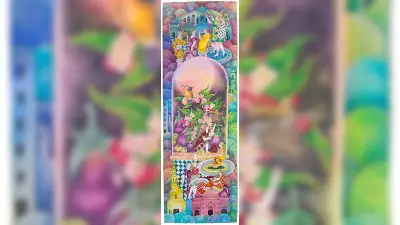
A painting displayed at a parallel event of the prestigious Kochi-Muziris Biennale has been taken down after facing strong objections from Christian and Catholic groups in Kerala. The artwork, created by artist Tom Vattakuzhy, was part of the exhibition titled 'Edam'.
Foundation and Curators Decide to Withdraw Artwork
On January 4, 2026, the Kochi Biennale Foundation released an official statement confirming the withdrawal. The foundation stated that the curator of Edam and the artist himself made the decision. This action was taken out of respect for public sentiment and for the common good. While the foundation reiterated its longstanding support for artistic and curatorial freedom, it expressed respect for the choice to remove the piece.
The exhibition 'Edam' is curated by artists KM Madhusudhanan and Aishwarya Suresh. It showcases works by 36 artists and collectives with deep roots in Kerala. Vattakuzhy's controversial painting was on view at one of the exhibition's three venues, the Garden Convention Centre. This specific venue had been temporarily closed following petitions and directions from the authorities related to the artwork. It has since reopened to the public after the painting's removal.

Roots of the Controversy and Church's Stance
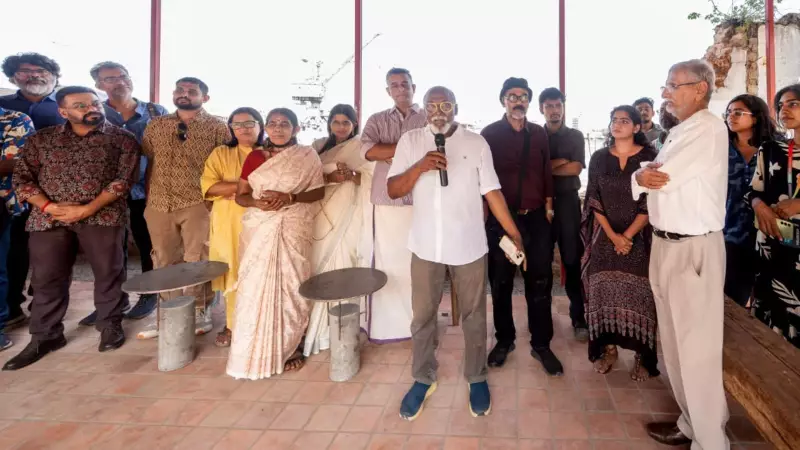
The decision to withdraw the painting followed a meeting chaired by the sub-collector where the issue was discussed. The controversy erupted when Christian groups alleged that the painting hurt their religious sentiments. Tom Olikkarott, the public relations officer of the Syro-Malabar Church, had earlier issued a strong condemnation.
Olikkarott called the artwork a "distorted depiction of The Last Supper," which is a sacred symbol of the Christian faith. He stated that it violated basic respect for religious belief. The church official also pointed out that the same artwork had been withdrawn in 2016 after being published in a magazine due to protests from the faithful. This history led the church to suspect the exhibition of the piece was an intentional act to insult Christian beliefs.
Artist's Silence and Curatorial Defense
When contacted by The Indian Express, artist Tom Vattakuzhy chose not to comment extensively on the allegations. He stated that he did not believe the ongoing claims were based on facts and therefore preferred to remain silent at that moment.
Prior to the withdrawal, the curators and the Biennale president had defended the work's artistic merit. In a joint statement, Madhusudhanan, Suresh, and Bose Krishnamachari (President of the Kochi-Muziris Biennale) explained the painting's context. They clarified that the work was created in response to a story by writer C Gopan and depicts Mata Hari, the convicted spy and exotic dancer.
The statement emphasized that the use of nudity in the painting is directly linked to this historical and narrative context. They further elaborated that Gopan's story was itself inspired by a poem by Vailoppilli, which drew from historical events. Therefore, they argued, Vattakuzhy's painting is part of a long chain of artistic interpretation—moving from history to poetry, prose, and finally visual representation. Within this continuum, they asserted the painting was neither isolated nor gratuitous but grounded in a recognized tradition of cultural engagement.
Despite this defense, the pressure from religious groups and the subsequent administrative discussions led to the final outcome of the painting being withdrawn from the exhibition, reigniting debates on the limits of artistic expression and religious sensitivity in India's contemporary art scene.