Bengaluru's remarkable journey from a tranquil garden city to a bustling global IT hub is a story of dramatic change. This evolution is best understood not just through data, but through the eyes of those who have lived and documented its shifting landscape. Three prominent artists—artist Paul Fernandes, fashion photographer Waseem Khan, and landscape photographer Vivek Mathew—recently shared their personal reflections, painting a vivid picture of the city's past, its rapid present, and its uncertain future.
From Open Gates and Greenery to Glass Towers
Paul Fernandes grew up in an era when Bengaluru rightfully earned its title as the Garden City. He recalls a childhood shaped by lakes, abundant open spaces, and a consistently cool climate. "There was a time when every house had trees as part of its design," he says, highlighting an intrinsic connection to nature that defined daily life. Fashion photographer Waseem Khan shares similar memories from the 1980s and '90s. A short drive past Old Airport Road would lead into dense foliage, with areas like Whitefield resembling a forest. He often shot models there, with the occasional aeroplane taking off in the backdrop.
For Vivek Mathew, the initial impression of Bengaluru was that of a quiet, accessible small town. "It felt like a small town — quiet roads, fewer cars, everything within reach," he adds. This peaceful, green environment was the canvas upon which their early lives and careers were built.

The Inevitable Surge of Change Post-2000
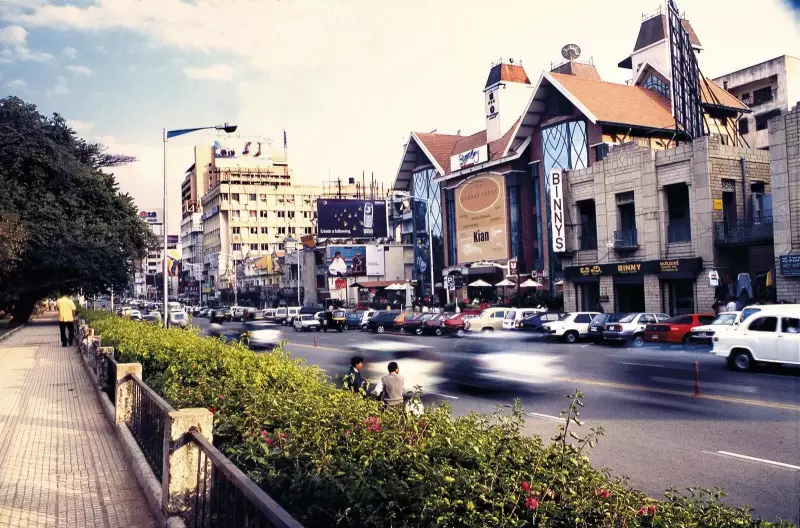
All three note that for decades, Bengaluru remained a relatively sleepy town. Paul Fernandes points out that until the late 1990s, there was no dramatic visual shift, with people seeking excitement in cities like Bombay. However, the turn of the millennium acted as a catalyst. "After 2000, the city expanded rapidly and pushed beyond its boundaries," Paul observes.
Vivek Mathew witnessed this transformation firsthand through his lens. The IT boom triggered explosive growth, making the city "suddenly huge." He notes that photographing the same spot today would reveal a completely altered scene. Waseem Khan, having documented the city for decades, sees this acceleration as the inevitable cost of progress. "The last 25 years have been spectacularly fast. That’s the price of progress," he states pragmatically.
A Profound Social and Cultural Shift
Beyond the skyline and infrastructure, the artists identify a deeper, more significant change in the city's social fabric. Paul Fernandes reminisces about a time when neighbours felt like family and front gates were always open—a stark contrast to today's life behind closed doors. Waseem Khan observes a distinct shift in attitude, especially among the youth. He contrasts the hesitant models of the past with the confident, demanding professionals of today.
Vivek Mathew feels the city has lost a degree of civic discipline along its growth path, noting that public spaces and roads were more orderly in the past. Yet, he acknowledges that such change is an unavoidable part of urban evolution.
Capturing Memory Amidst Relentless Progress
Each artist has found a different way to respond to the city's metamorphosis. For Paul Fernandes, art has become an act of preservation and resistance. He chooses to draw from memory, revisiting happier times, in the hope that young people might carry those images forward and recreate that spirit. Waseem Khan, who long focused on people, now feels a pull to document Bengaluru's vanishing old houses and architecture before they disappear completely.
Vivek Mathew continues to photograph the present as the past recedes, accepting that one cannot freeze a city. "All you can do is record its transitions," he concludes. Despite the complexities of change, their affection for Bengaluru remains. Paul calls it one of the finest cities for weather and people, both cosmopolitan and friendly. Waseem asserts it is still the best urban city in India with great spaces and talent. Vivek captures the essence perfectly: "Good and bad come together. That’s what any living city is — and Bengaluru, despite everything, is still home."