In a remarkable fusion of ancient heritage and contemporary craft, artisans from Khambhat in Gujarat have successfully revived a 5,000-year-old artistic and trade connection at the historic site of Rakhigarhi in Haryana. This revival was a central highlight of the Rakhigarhi Festival, an event organized by the Haryana Government to celebrate and reconnect with India's Indus Valley Civilisation roots.
A Living Bridge to the Harappan Era
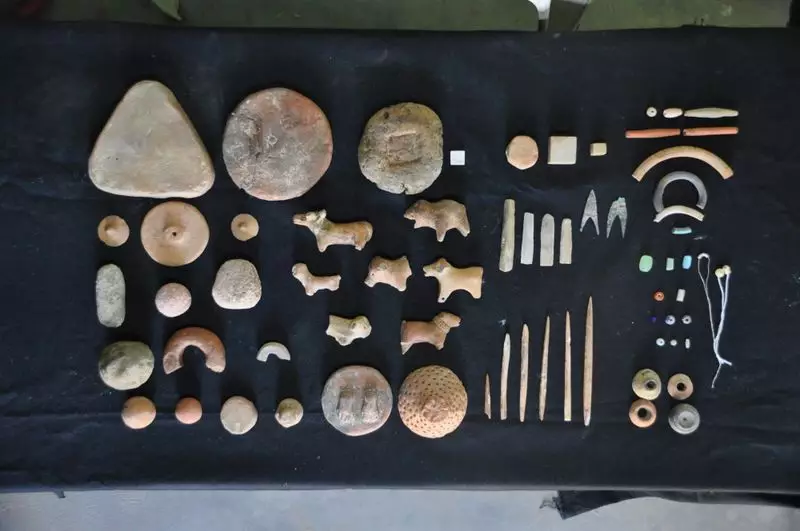
The festival served as a dynamic platform where master bead-makers from the coastal town of Khambhat demonstrated their skills, directly linking their modern practice to techniques used millennia ago. Rakhigarhi, recognized as the largest known township of the Harappan civilisation, once thrived as a major urban centre. Historical evidence suggests a flourishing trade network where precious stones and intricately crafted beads travelled from coastal regions like Khambhat to inland metropolises such as Rakhigarhi.
This event, held in Hisar, effectively turned back the clock, recreating that ancient economic and cultural corridor. By showcasing their craft on the very land that once consumed their ancestors' creations, the Khambhat artisans are not just preserving a technique; they are reanimating a historic dialogue between two distant yet intimately connected points of Indian geography and history.

The Craftsmanship on Display
The artisans brought with them the age-old knowledge of working with semi-precious stones like agate and carnelian, for which Khambhat has been famous for centuries. Their demonstrations provided a tangible link to the past, showing visitors how raw stones are meticulously shaped, drilled, and polished into beautiful beads—a process that has seen little change since the Harappan era.
The significance of this revival is multi-fold:
- Cultural Continuity: It demonstrates an unbroken, though nearly forgotten, thread of craftsmanship spanning five millennia.
- Educational Value: The festival educates the public about the sophistication of Harappan trade, art, and technology.
- Economic Empowerment: It provides a prestigious national platform for traditional artisans, potentially boosting their livelihood.
Government Initiative and Future Implications
The Haryana Government's initiative to organize this festival at Rakhigarhi underscores a growing commitment to leveraging archaeological heritage for cultural and community development. By curating this event in late December 2025, the authorities have successfully drawn attention to one of India's most important archaeological sites in a living, engaging manner.
This revival effort goes beyond a mere exhibition. It positions traditional Indian craftsmanship as a direct descendant of one of the world's earliest urban cultures. The event promises to spark greater interest in archaeological tourism and could serve as a model for other states to connect their ancient history with present-day artisanal communities.
The successful showcase at Rakhigarhi establishes that India's ancient past is not confined to textbooks and museum cases. It is a living tradition, kept alive by the skilled hands of artisans from places like Khambhat, who continue to tell the story of a civilisation that mastered art, trade, and urban life thousands of years ago.