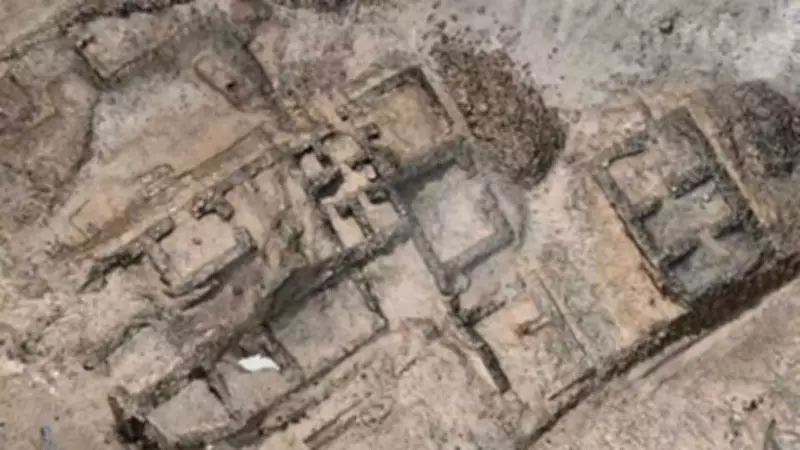
Archaeologists Rediscover 3,000-Year-Old Egyptian Gold Mining Complex in Eastern Desert
Archaeologists have made a groundbreaking discovery in Egypt's rugged eastern desert that reveals far more than just an ancient industrial site. Deep within the remote Sukari Mountains, a remarkably preserved 3,000-year-old Egyptian gold mining operation has been brought back to light after millennia of obscurity.
More Than Just a Mine: A Complete Ancient Settlement
This extraordinary find represents not merely a mining pit carved into rock, but rather a comprehensive settlement where generations of workers lived, worshipped, traded, and labored under the harsh desert sun. The discovery forms a crucial part of the ongoing "Reviving the Ancient City of Gold" project, spearheaded by Egypt's Ministry of Tourism and Antiquities.
What researchers have uncovered goes well beyond scattered tools or fragmentary walls. Instead, they have revealed an entire bustling gold-mining camp built around sophisticated industrial operations that sustained a community for centuries.

Advanced Gold Processing Technology from Three Millennia Ago
Archaeologists have documented an impressively advanced gold processing complex dating back approximately three thousand years. According to experts, the site included specialized crushing and grinding stations specifically designed to break apart quartz veins containing gold traces.
The complex featured:
- Filtration basins for separating materials
- Sediment tanks for processing ore
- Clay furnaces engineered for smelting and purifying precious metals
Mohamed Ismail Khaled of Egypt's Supreme Council of Antiquities explained through the State Information Service that the remains demonstrate a carefully orchestrated industrial operation. Gold wasn't simply gathered here—it was systematically extracted, processed, and refined with remarkable technical skill, with the scale of operations indicating sophisticated planning and organization.
Evidence of Generational Settlement Beyond Mining Operations
What makes this discovery particularly compelling is that it extends well beyond mere production facilities. Archaeologists have identified what appears to be a complete residential district surrounding the mining complex, suggesting something far more substantial than a temporary encampment.
The architectural remains date not only to the original pharaonic era but also to subsequent Roman and Islamic periods, indicating continuous habitation and industrial activity across multiple historical epochs.
Artifacts Revealing Daily Life in the Ancient Desert Hub
The excavation has yielded 628 fragments of pottery, many bearing inscriptions in hieroglyphic, demotic, and Greek scripts. This linguistic diversity suggests a multicultural population passed through this desert trading and industrial center.
Additional discoveries include:
- Bronze coins from the Ptolemaic era
- Terracotta figurines depicting humans and animals
- Small stone statues of deities including Bastet and Harpocrates
- Vessels likely used for storing medicines and incense
- Beads crafted from semi-precious stones
- Decorative items made from seashells
- Five offering tables used in religious ceremonies
Particularly poignant are the unfinished stone statues abandoned mid-carving, offering an intimate glimpse into the interrupted work of ancient artisans.
Modern Connections to Ancient Gold Traditions
The Sukari Mountains remain significant for gold production today, with the modern Sukari Mine operating in the same region. This contemporary connection makes the ancient discovery feel remarkably relevant, demonstrating how the lure of gold in this desert landscape has persisted across three millennia of human history.
This archaeological revelation provides unprecedented insight into how ancient Egyptians organized large-scale industrial operations while maintaining complete communities in challenging desert environments. The discovery promises to reshape our understanding of ancient Egyptian economic systems, technological capabilities, and daily life in remote industrial settlements.