Ancient Chinese City Used Human Bones as Raw Material for Tools and Rituals
Recent archaeological excavations in China's Yangtze River Delta have uncovered startling evidence about the socio-cultural practices of the Neolithic Liangzhu civilization, which flourished approximately 5,000 years ago. The findings reveal a complex relationship between early urban dwellers and human remains, demonstrating how bones were systematically repurposed for both functional and ritualistic purposes.
Systematic Bone Modification Discovered
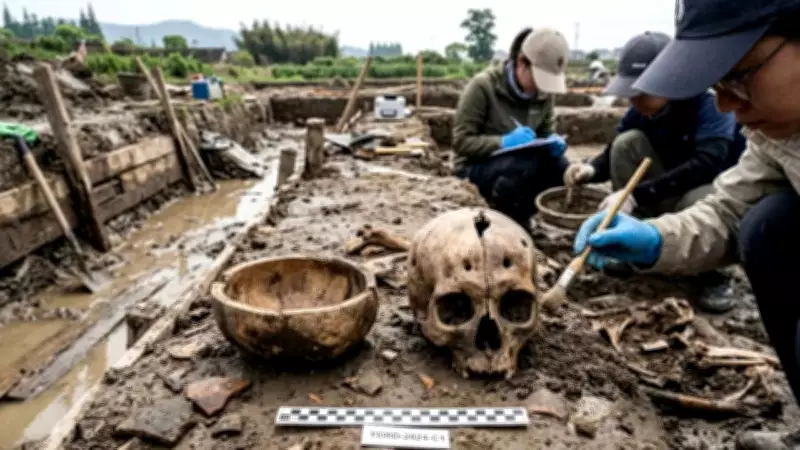
Researchers examining remains from the Zhongjiagang site have identified 183 human bone fragments that show evidence of intentional modification. Among these, 52 bones displayed specific characteristics indicating they had been deliberately shaped into objects. The most striking discoveries include what archaeologists term 'skull cups' and 'skeleton masks' - cranial vaults cut horizontally and crania split vertically respectively.
These artifacts represent the first documented evidence of systematic human bone working during prehistoric times in East Asia. Analysis shows clear signs of scraping, drilling, and polishing, indicating sophisticated craftsmanship comparable to the Liangzhu civilization's renowned jade carvings.

Urban Anonymity Changed Attitudes Toward the Dead
According to researchers from Niigata University and the Zhejiang Provincial Institute of Cultural Relics and Archaeology, the transition to urban living fundamentally altered how people viewed human remains. As the Liangzhu civilization grew into a densely populated urban center, social distance increased between residents and the deceased.
"In densely populated Liangzhu, urban dwellers cared primarily for those they knew and recognized in life," explained researchers. "This urban anonymity resulted in many human remains being treated as 'material' rather than as sacred ancestors."
Unlike typical burials where the dead received respectful treatment, these modified bones were discovered deposited in urban canals alongside animal bones and pottery shards, suggesting they were viewed as industrial waste rather than sacred remains.
Sophisticated Bone Working Technology
Technical analyses reveal the Liangzhu peoples employed multiple technological methods to shape bones into functional objects. Examination under high-power magnification shows striations and pitting consistent with stone tool usage in creating bone technology.
Bones were not merely broken but carefully harvested and shaped for specific purposes. Long bones, particularly femurs, were fashioned into handles or fasteners for tools, while skulls received precise treatment to create ritual objects. This level of craftsmanship suggests bone working was an established practice within Liangzhu society.
Evidence of Social Hierarchy in Bone Treatment
The spatial distribution of human remains provides compelling evidence of a complex social hierarchy within Liangzhu civilization. While elite individuals received elaborate burials in jade-filled tombs at sites like Fan Mountain, non-elite remains were repurposed as part of the city's industrial processes.
The Zhongjiagang area functioned as a specialized workshop district within Liangzhu city. The discovery of modified human bones in waste-filled ditches alongside other industrial debris indicates these particular remains served utilitarian rather than sacred purposes.
This differential treatment of human remains based on social status reveals how early urban societies developed distinct practices for different social classes, with elite bodies preserved with reverence while commoner remains became raw material for the city's functional and ritual needs.
The study, published in Scientific Reports, provides unprecedented insight into how urbanization transformed human relationships with death and the deceased. These findings challenge conventional assumptions about Neolithic societies and demonstrate how early cities developed complex, sometimes unsettling, approaches to managing human remains as they transitioned from small communities to large urban centers.