Archaeological Discovery in Goa: Ancient Cave Unearths Historical Trade Route
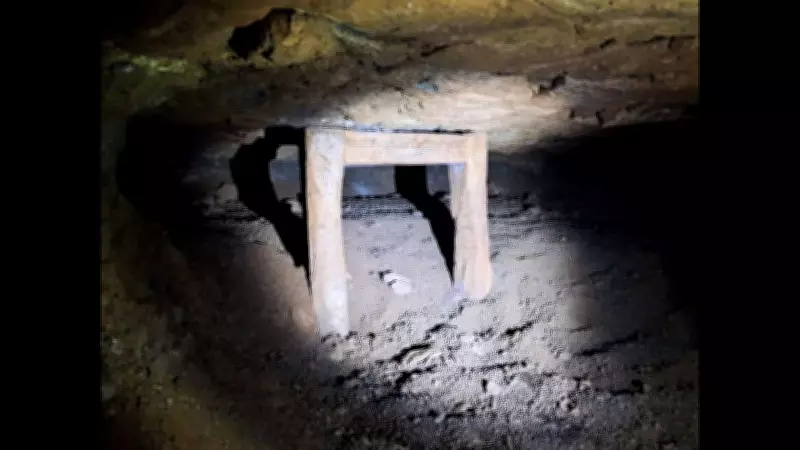
In a significant archaeological breakthrough, researchers studying the coastal history linked to Ramghat in Goa have identified a natural cave with substantial potential for historical exploration. This remarkable discovery is situated in the mountainous terrain near Dodamarg, a location that historically functioned as a crucial passageway for trade between Goa and the Konkan region during ancient times.
Location and Initial Findings
Vithoba Gawde, an archaeology student involved in the research, detailed that the cave was located in Gudavale Khalsa, positioned at an elevation of 716 meters. It lies merely 380 meters from Ramghat, making it an accessible yet historically rich site. Currently inhabited by wild animals, the cave shows clear evidence of past human occupation, as indicated by distinctive paintings on its interior walls.
"The walls display symbols painted in white against a red background, suggesting early human artistic expression," Gawde explained. "Additionally, we discovered skeletons of wild animals inside, and the cave's spacious interior could have accommodated over 50 people simultaneously, hinting at its use as a shelter or communal space."

Historical Context and Trade Significance
Sara Anthony, an archaeology student from Mumbai University based in Vasco, emphasized Ramghat's historical importance following a recent visit. She noted that Ramghat was one of the key ghatways connecting kingdoms across Maharashtra and Karnataka, facilitating regional commerce and cultural exchange.
Anthony referenced the work of Abbe Carre, a French writer who traveled on behalf of the East India Company between 1672 and 1674. In his writings, Travels of Abbe Carre, he documented Ramghat as a vital trade route from the ghat regions to coastal areas, underscoring its long-standing economic role.
Ecological and Folklore Aspects
Gajanan Shetye, a wildlife enthusiast from Keri in Sattari taluka, highlighted the cave's ecological setting. Nestled within evergreen forests, it serves as the origin point of the Kharadi nalla, a tributary of the Tillari river, which is known as the Colvale river in Goa. Access to the cave is via a pathway from Kalasgade when traveling from Dodamarg to Chandgad.
Local folklore adds a mythological dimension to the site. Sonu Ninu Fonde, a resident, shared that according to traditional tales, the Pandavas resided in this cave during their period of exile, linking it to ancient epics and cultural narratives.
Research and Future Prospects
Namdev Gawas, a local from Tillari who guided the researchers, praised the cave for offering panoramic views of the Tillari river valley, making it a must-visit for both historians and nature enthusiasts. Varad Sabnis, an archaeologist from Goa, reported that researchers have brought pottery fragments found in the cave to his attention, which are likely from the early medieval era.
"Only through systematic excavation can we uncover the unknown facets of this region's history and heritage," Sabnis stated, emphasizing the need for further study to fully understand the cave's archaeological significance.
This discovery not only enriches our knowledge of Goa's ancient trade networks but also opens new avenues for exploring human settlement patterns and cultural evolution in the coastal Konkan region.