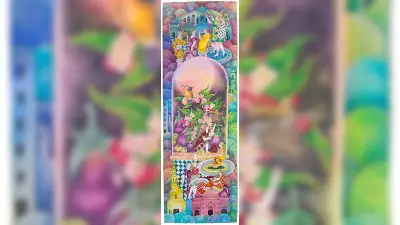
A recent interactive exhibition in Goa has cast a spotlight on the fascinating world of ancient board games, tracing their origins from the Indian subcontinent to the banks of the Nile and beyond. The project, titled "The Games People Play," was a highlight of the Serendipity Arts Festival 2025 held in Panjim, Goa, earlier in December.
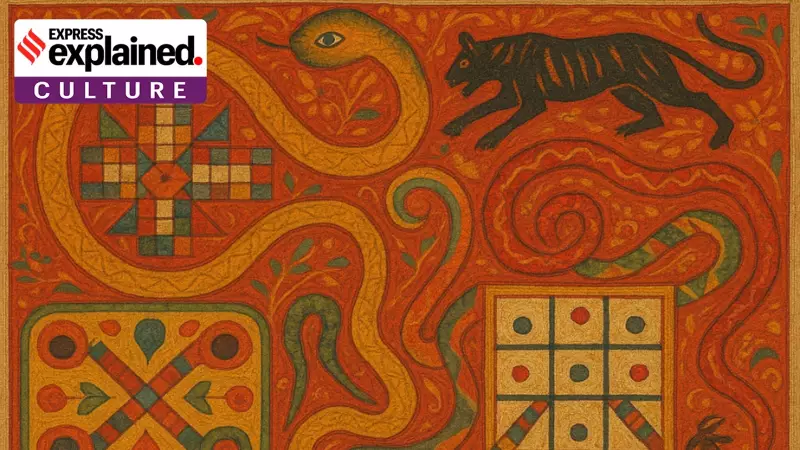
Conceived by the WEFT Foundation, the exhibit reimagined traditional games through contemporary craft, inviting visitors to play and interact. It presented these games not as dusty museum pieces but as vibrant traditions of strategy, storytelling, and social connection. The display celebrated Indian games like Chaupar (the precursor to Ludo), the tactical Nav-Kakdi, and the chase game Wagh Bakri.
A Global Conversation Through Play
The exhibition went beyond India's borders, initiating a dialogue about similar games from ancient cultures worldwide. This underscored their universal and timeless appeal. Historically, these games did not remain confined to their places of origin. Trade routes and military campaigns acted as superhighways, facilitating their spread across continents and cultures, weaving a shared thread of human recreation through history.

1. Chaturanga: The Strategic Ancestor of Chess
Origin: India
Archaeological evidence suggests board games resembling chess were played in the Indus Valley Civilisation as early as 3300 BCE in Lothal, Gujarat. However, the direct predecessor of modern chess is widely acknowledged to be Chaturanga. This game flourished in the 6th century CE during the Gupta Empire's reign.
The name, meaning "four limbs" in Sanskrit, represented the four divisions of the ancient Indian army: infantry, cavalry, chariots, and war elephants. Played on an uncheckered board, its pieces moved in ways familiar to chess players today, with the objective being to checkmate the opponent's king. By the mid-sixth century, Indian traders had carried Chaturanga to Persia's Sasanian Empire, where it evolved into Shatranj, later spreading to Europe by the 12th century.
2. The Royal Game of Ur: A Mesopotamian Marvel
Origin: Central Asia (Mesopotamia)
Dating from 2600 BCE to 2400 BCE, this two-player strategy game was rediscovered by British archaeologist Sir Leonard Woolley during his excavations of the Royal Cemetery of Ur between 1922 and 1934. The board features a unique design of connected rectangles. Players moved pieces based on dice rolls, navigating safe zones and hazardous combat squares. Its popularity endured into the Middle Ages in Central Asia, and a variation was brought to Kochi, India, by Jewish migrants from ancient Babylonia.
3. Senet: The Egyptian Pathway to the Afterlife
Origin: Egypt (possibly originating in the Levant)
One of the oldest known board games, fragments of what may be Senet boards date to around 3100 BCE. The earliest clear representation comes from 2620 BCE. Played by commoners and royalty alike—including the young Pharaoh Tutankhamun—Senet was played on a grid of 30 squares. Movement was determined by throwing sticks. Over centuries, the game acquired deep spiritual significance, symbolizing the soul's journey through the underworld toward the afterlife.
4. Mehen: The Game of the Coiled Serpent
Origin: Egypt
Named after a protective snake deity, Mehen was played from approximately 3000 BCE to 2300 BCE. Its board was a circular, coiled serpent with its body divided into segments. A multiplayer game, it used lion figurines and marbles. The goal is believed to have been to navigate pieces to the center (Ra, the Sun God) and back. Its popularity faded with the decline of Egypt's Old Kingdom. Religious texts from the era even suggest that successfully navigating the Mehen board was metaphorically linked to attaining the afterlife.
5. Hounds and Jackals: A Pharaoh's Pastime
Origin: West Asia (Ancient Egypt)

Originating around 2000 BCE, this game was a favorite in Egyptian royal courts. The board had two sets of holes, and players used pieces topped with jackal or dog heads. While exact rules are lost, the aim was likely to race from a starting point to a larger hole at the top of the board, using knucklebones as dice. Its gameplay may share conceptual similarities with the modern game of Snakes and Ladders.
The Living Legacy of Ancient Play
The Serendipity Arts Festival exhibit powerfully demonstrated that these ancient games are far from obsolete. They represent a fundamental human desire for challenge, narrative, and social interaction. From the strategic depths of Chaturanga that evolved into global chess to the spiritual journey of Senet, these games are archaeological artifacts of the human mind. They remind us that across millennia and empires, people have always gathered to play, think, and connect, leaving behind a checkered legacy that continues to captivate us today.