Arctic Indigenous Innovation: The Ancient Origins of Snow Goggles
Picture a vast, unending expanse of brilliant white snow, stretching as far as the eye can see under the intense, blazing sun of the Arctic. In this harsh environment, a single glare could potentially blind a person for days. Long before modern, stylish sunglasses ever appeared on store shelves, ingenious peoples inhabiting the far northern regions had already mastered a solution to overcome one of nature's most challenging optical tricks.
Masters of Survival and Adaptation
These resourceful individuals included Indigenous Arctic communities such as the Inuit, Yupik, and Inupiaq peoples. They demonstrated extraordinary mastery of survival, transforming simple, available scraps into vital, life-saving tools. Their remarkable story extends far beyond mere equipment; it vividly illustrates the continuous process of adaptation and the survival of the fittest in one of Earth's most extreme climates. In this unforgiving landscape, every crafted tool could mean the critical difference between maintaining clear sight and descending into debilitating darkness.
These early eye protectors were not decorative gadgets created for show. They were born from genuine, urgent necessity—the need to shield the eyes from snow blindness, a painful condition often described as feeling like a severe sunburn directly on the eyeballs. Indigenous peoples from Greenland and Alaska were pioneers in this field, effectively building the world's first functional 'sunglasses'.

Ancient Technology for Modern Problems
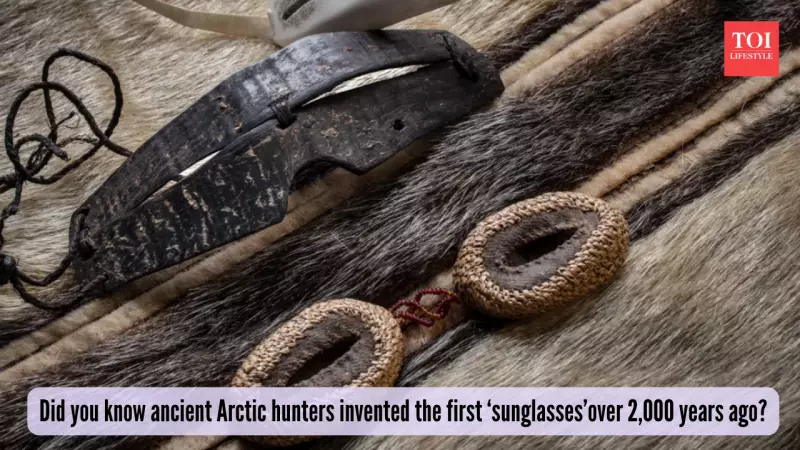
Indigenous Arctic communities, including the Inuit from Greenland and the Inupiaq from Alaska, crafted snow goggles thousands of years ago specifically to combat snow blindness. The danger stems from ultraviolet rays reflecting powerfully off ice and snow, which can burn the cornea much like intense sunlight on unprotected skin. These early goggles were meticulously fashioned from locally sourced materials such as bone, wood, ivory, or even whale baleen. They featured narrow, tight slits designed to drastically cut down blinding glare while still permitting just enough light to see clearly.
Archaeological discoveries have unearthed versions of these goggles dating back an astonishing 2,000 years, proving that this ingenious fix predates the invention of modern sunglasses by many millennia. This ancient technology operates on a fascinating optical principle.
The Pinhole Camera Effect in Action
These traditional snow goggles function similarly to a pinhole camera. The narrow slits focus incoming light, which can actually improve visual clarity for distant objects. Anthropologist Ann Fienup-Riordan experienced this firsthand after testing Yupik goggles following eye surgery, exclaiming, “I could see!” as distant landscapes suddenly popped into sharper focus. Tribal member Phillip Moses aptly refers to them as “Yupik prescription sunglasses,” highlighting how Inuit ingenuity effectively corrected fuzzy vision long before the advent of modern optical lenses.
Resourceful Use of Local Materials
The construction of these goggles showcased incredible resourcefulness, utilizing whatever materials were locally available. Examples include goggles made from caribou bone discovered in Igloolik in 2002, others crafted from baleen sinew found in Point Hope around 1890, and some fashioned from beach grass in Bristol Bay circa 1910. Creators often applied soot inside the slits to further reduce glare and designed curved shapes to prevent breath fog from obscuring vision. Kalaallit Greenland goggles from 1910, for instance, used wood and animal hide to achieve the same protective purpose, as documented in the Smithsonian's National Museum of the American Indian collection.

Enduring Legacy Amid New Challenges
Today, these Indigenous communities face new and profound threats, primarily from climate change. Ann Fienup-Riordan notes significant environmental shifts, observing, “The ocean isn’t freezing up the way it did in the past,” with later formation of fall ice and earlier spring melts disrupting traditional hunting patterns and livelihoods. Despite these modern challenges, the ancient techniques and the spirit of innovation they represent endure. They continue to inspire resilience and adaptation, serving as a powerful testament to human ingenuity in the face of both historical and contemporary environmental shifts.