Allahabad Museum Commemorates Ambedkar's 135th Birth Anniversary with Historic Newspaper Exhibition
In a poignant tribute to Dr. BR Ambedkar on his 135th birth anniversary, the Allahabad Museum in Prayagraj organized a special exhibition on Tuesday, showcasing a remarkable collection of documents and newspaper articles dedicated to the architect of the Indian Constitution. This exhibition provides a crucial window into the social and ideological landscape of the post-independence era, offering profound insights into Ambedkar's enduring legacy.
Newspaper Archives Reveal Society's Evolving Perception
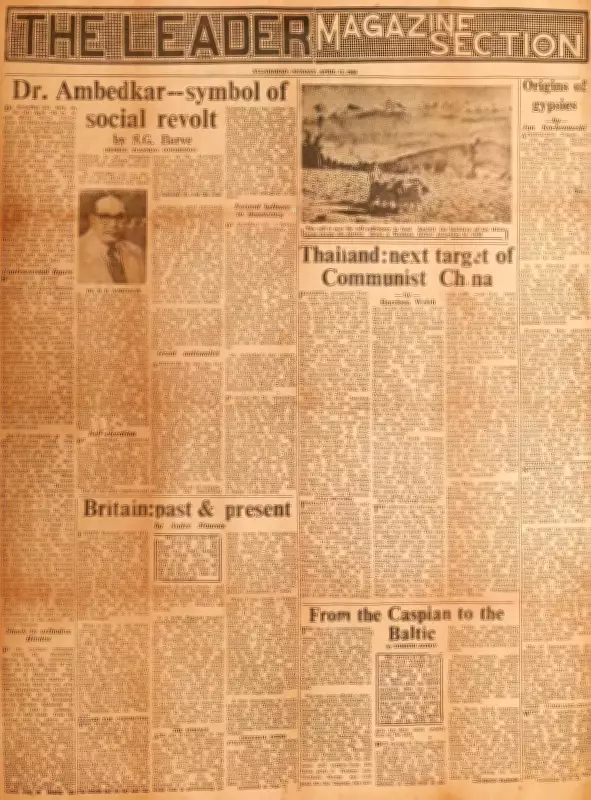
The exhibition features articles, commentaries, and images published in various newspapers during the decades following India's independence. These historical documents do more than simply chronicle events; they vividly reveal society's evolving attitudes toward Dr. Ambedkar, the reception of his revolutionary ideas, and the intensity of his lifelong struggle against social injustice.
One particularly significant article titled 'Biography of a Man with a Mission,' published in the English newspaper 'Bharat Jyoti,' portrays Dr. Ambedkar as both a visionary and resolute leader. The publication presented his life as 'a Relentless Fight Against Social Tyranny and Injustice,' powerfully underscoring the continuity and profundity of his struggle for equality.

Multifaceted Portrayals of a Social Revolutionary
Similarly, an article titled 'Ambedkar: The Fighter – Record of a Struggle' depicts his life as a continuous campaign characterized by extraordinary intellectual fortitude and unwavering social commitment. This portrayal emphasizes how Ambedkar's work transcended mere political activism to become a comprehensive movement for human dignity.
A Hindi newspaper article titled 'Baba Saheb Ambedkar: Pioneer of Social Revolution' presents him as a powerful advocate for the deprived and exploited sections of society. The article notes that he not only sensitized marginalized communities to their fundamental rights but also inspired them to unite and wage a collective struggle against oppression. In this context, his movement is viewed as a broad-based 'Human Rights Consciousness Movement' that continues to resonate today.
Historical Depth from Major Publications
The exhibition gains additional historical depth through articles published in The Times of India and the National Herald in 1956. One particularly powerful piece titled 'Ambedkar Replies' features his explicit declaration: 'Caste is not merely a division of labour; it is a division of labourers.' Through this incisive statement, Ambedkar exposed the fundamental complexities of the caste system and its devastating consequences for Indian society.
According to Ambedkar's philosophy, democracy would remain incomplete until the values of equality, liberty, and fraternity were firmly established within the social fabric. These newspaper archives make it evident that his intellectual thought was remarkably multifaceted, addressing various dimensions of social reform.
Economic Justice as Foundation of Social Democracy
Identifying economic inequality as the root cause of social injustice, Ambedkar consistently advocated for equal opportunities and a just social order. One article describes him as a proponent of the principle that 'Economic justice is the foundation of social democracy.' This perspective highlights his understanding that true social transformation required addressing material disparities alongside cultural and religious prejudices.
Moreover, his stance against religious dogmas and orthodoxy was equally incisive, challenging traditional hierarchies while proposing alternative frameworks for spiritual and social organization. These newspaper archives clearly demonstrate that his contribution to India's freedom struggle was of immense ideological significance, extending beyond political independence to envision a nation where social justice and equality could be genuinely realized.

Prayagraj's Role in Disseminating Ambedkar's Ideas
Newspapers published from intellectual hubs such as Prayagraj played a pivotal role in disseminating Ambedkar's ideas to the wider public during this formative period. The Allahabad Museum's exhibition serves as a testament to how regional media contributed to national conversations about social reform and constitutional values.
Organized by the Allahabad Museum, this exhibition transcends being merely a compilation of historical documents. It represents a living reflection of the intellectual consciousness that characterized the post-independence era, offering contemporary audiences an opportunity to engage with Ambedkar's vision for a more equitable India.