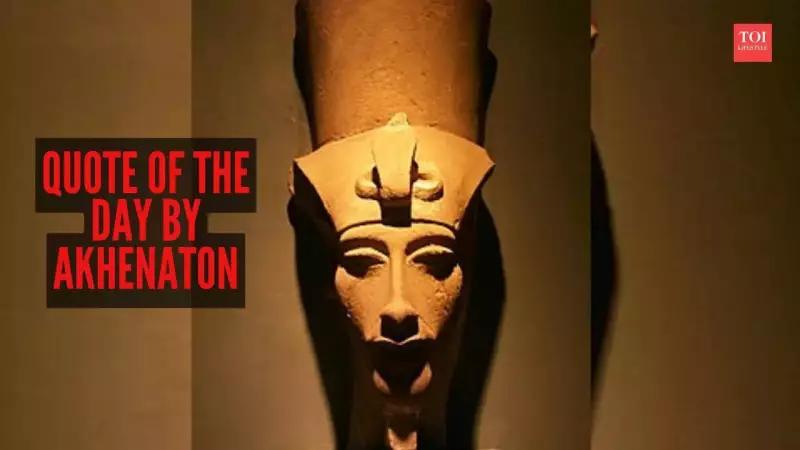
Akhenaton: The Revolutionary Pharaoh of Ancient Egypt
Akhenaton, also known as Akhenaten, stands out as one of ancient Egypt's most remarkable and unconventional rulers. He reigned during the 14th century BCE, and his legacy extends far beyond mere kingship. This pharaoh was a revolutionary thinker who boldly rejected the traditional norms of his time.
A Shift from Polytheism to Monotheism
Akhenaton is particularly noted for promoting a form of monotheism centered on the worship of the sun disc. This was a stark departure from the polytheistic practices that had long dominated Egyptian religion. His religious reforms were not just about changing gods; they influenced philosophy, art, and spirituality in profound ways.
Under his rule, art became more natural and supportive, moving away from rigid perfection to reflect genuine truth. This artistic shift mirrored his broader philosophical ideas, which emphasized reflection, ethics, and a direct connection between the soul and the divine. Akhenaton's thoughts were truly ahead of his time, laying groundwork for movements that would come much later.

The Meaning Behind Akhenaton's Famous Quote
One quote often attributed to Akhenaton captures the essence of his spiritual ideals: “Those who gave thee a body, furnished it with weakness; but He who gave thee Soul, armed thee with resolution. Employ it, and thou art wise; be wise and thou art happy.” This powerful statement draws a clear contrast between the physical body and the eternal soul.
Akhenaton pointed out that the body, as part of our mortal existence, is inherently weak. It succumbs to aging, illness, and frailty, with no inherent ability to resist these forces. In contrast, the soul is a divine gift endowed with resolution—inner strength, determination, and moral fortitude. This means that while our bodies may falter, our souls possess the capacity to overcome life's hardships.
Personal Responsibility and the Path to Happiness
The latter part of the quote emphasizes personal responsibility and the active use of spiritual strength. Akhenaton suggested that merely having resolution is not enough; one must consciously employ it. When individuals use their inner strength wisely, they become wise. And wisdom, in turn, leads to true happiness.
Here, happiness is not defined by fleeting pleasures or material wealth. Instead, it represents a state of inner harmony and alignment. True happiness flows from living with awareness, self-discipline, and a congruence between the soul's values and one's actions. This ancient wisdom encourages a life of purpose and clarity.
Timeless Relevance of Akhenaton's Message
Akhenaton's quote offers a deep message about human existence that remains relevant today. It reminds us that while we cannot escape our physical limitations, we are gifted with spiritual strength to navigate challenges. By choosing wisdom over impulse and spiritual resolve over weakness, individuals can achieve lasting fulfillment.
His teachings continue to resonate, urging us to look beyond the body, trust in the soul's power, and live with intention and inner peace. In a modern world often focused on external achievements, Akhenaton's insights provide a refreshing perspective on what it means to live a meaningful life.