Ai Weiwei's Debut Solo Exhibition in Delhi Bridges Cultures Through Art
Internationally acclaimed Chinese artist and activist Ai Weiwei has made his first visit to India, marking the occasion with a solo exhibition at Delhi's Nature Morte gallery. The show, held at the upscale Dhan Mill Estate, features his unique Lego interpretations of modern Indian masters SH Raza and VS Gaitonde, alongside other familiar works, as he seeks to forge connections between his own history and Indian culture.
A Life Shaped by Defiance and Exile
Born in Beijing in 1957, Ai Weiwei's life has been defined by confrontation with authority. His father, poet Ai Qing, was denounced during Mao's Anti-Rightist Campaign, leading to a childhood in exile in northeast China. Ai himself faced intense scrutiny in the 1990s as his avant-garde art and criticism of China's authoritarian state made him a target of surveillance and censorship. In 2011, he was detained for 81 days and had his passport confiscated, only regaining it in 2015 before immediately leaving China. Since then, he has lived as a perpetual traveler, with temporary homes in Berlin, Cambridge, and Lisbon, describing his home as "on my two legs."
Challenges of a First Solo Show in India
Ai Weiwei acknowledges the difficulty of presenting a solo exhibition in a relatively unfamiliar country. "Doing a first solo in a relatively unfamiliar country is, in fact, very challenging," he stated. "I need to tell the audience who I am and introduce my own history. At the same time, I must create a connection between myself and Indian life and culture, bringing people into a context that feels familiar to them. For both of these aims, a language of art is necessary, a way for art to enter."

Lego Tributes to Indian Masters
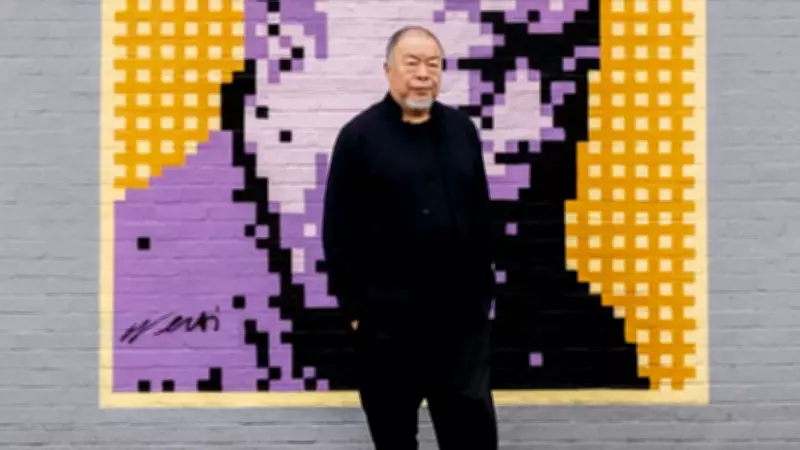
The exhibition includes Ai Weiwei's Lego-based works inspired by SH Raza and VS Gaitonde, a medium he has used for over two decades. Although not previously familiar with their specific pieces, he was introduced to them by the gallery. "I have been interested in Indian art for a long time but not these particular works that the gallery introduced to me because I felt I had to do some works relating to Indian culture," he explained. "I made a choice and used my Lego language. The pixels have surprisingly come out beautifully."
Impressions of India's Art Scene
During his brief visit, Ai Weiwei took time to attend the India Art Fair, where some of his works are displayed. He expressed deep admiration, noting, "I was deeply impressed. It has a very significant character. Showing a lot of local Indian artists, it has a strong understanding about the culture, techniques and expression. It made me think about many things. Not very commercial, it is deeply rooted here and the audience too seems to understand art very well."
Cultural Connections Between India and China
Reflecting on the historical ties between India and China, Ai Weiwei highlighted the influence of Buddhism. "China has been deeply influenced by Buddhism. Like China, India too has many different cultures and religions and languages and though Buddhism may not still exist here as strongly as China, both nations do have a rich history in relation to art and humanity," he said. This connection has long lived in his imagination, shaping his artistic perspective.
About the Journalist
Vandana Kalra, an art critic and Deputy Associate Editor with The Indian Express, has chronicled arts and culture for over two decades. With a focus on modern and contemporary art, she is a respected voice in India's cultural journalism, covering major events like the Venice Biennale and Kochi-Muziris Biennale, and profiling artists from M.F. Husain to Marina Abramović.