Nearly a decade after they first appeared as decorative props in Ahmedabad's cafes, board games have transformed into dynamic tools for teaching algebra, corporate strategy, medieval history, and cultural preservation. What began as casual meet-ups has blossomed into a full-fledged movement, changing how the city learns, works, and plays.
The Rise of a Screen-Free Counterculture
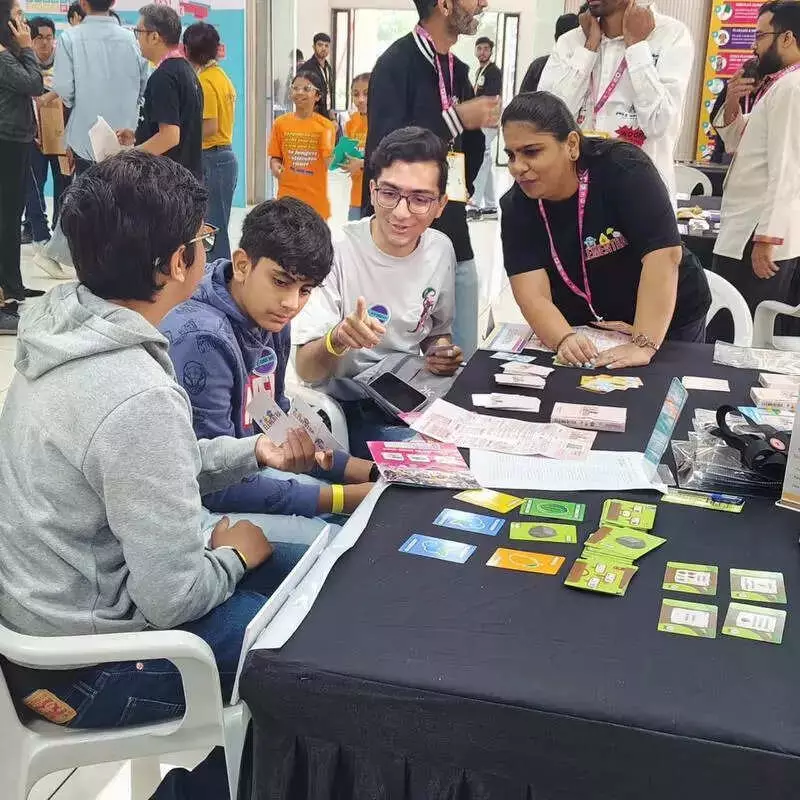
The shift started subtly around 2016. A small group began meeting every Tuesday at a cafe on Commerce Six Roads, drawn not by coffee but by games. Soon after, a dedicated cafe opened in Navrangpura. These informal gatherings laid the foundation for a community that today sees over 700 people participating in events like the recent second edition of the Unboxed Game Fest. This two-day, community-led festival, organized by the not-for-profit Unboxed Club, featured more than 150 games, workshops, tournaments, and role-playing experiences.
In an era dominated by screens, board games offer a valuable analogue pause. Families across Ahmedabad are increasingly choosing games that foster conversation, patience, and collective problem-solving. "I was increasingly concerned about screen-time," says Hetu Sudarshan, a lawyer from the city. Board games became her family's alternative, leading to unexpected educational moments, like her 10-year-old identifying bird species after playing a related game. For Dr. Bela Shah, a retired paediatrician, these games offer cherished intergenerational connection, echoing childhood memories of playing with her father and grandfather.

Boardrooms and Classrooms Embrace Play
The impact extends far beyond living rooms. Educational institutions and corporations are now harnessing board games as core pedagogical tools. Faculty at business schools, like Shobhit Aggarwal, an associate professor at IIM Udaipur, use custom-designed games to teach negotiation, decision-making, financial management, and game theory. "Games allow students to experience abstract ideas rather than merely discuss them," Aggarwal explains, noting that retention is higher due to deeper engagement.
In schools, teachers are turning play into lessons. An experiment at Riverside School used a game called 'A Light Game' to teach algebra, where players solve voltage equations to light up bulbs. History lessons are being reimagined through empire-building games that illustrate cause and consequence better than rote memorization. In corporate training rooms, cooperative board games are replacing simple icebreakers, helping teams reveal leadership styles and communication gaps during sustained two-hour sessions, as noted by board-game educator Shradha Jain.
Designing Culture into Playable Formats
Gujarat's robust design ecosystem has been instrumental in pushing board gaming from pastime to pedagogy and cultural inquiry. At institutions like Cept University, board games are a formal design medium. "It's only recently that games rooted in Indian contexts are slowly entering the market," says senior associate professor Jay Thakkar. His studios use local culture as source material, collaborating with artisans and using curated walks through historic cities to inform game narratives.
Students have created educational board games for 12 to 14-year-olds, with themes spanning from stepwells and water systems to Gujarat's craft traditions like Ajrakh and Bandhani. This design-focused approach ensures the movement is not just about playing games, but about preserving and narrating heritage. As Unboxed co-founder Kruti Shah observed at the recent fest, Ahmedabad's board-gaming culture is maturing into a genuine platform for creativity, education, and enterprise.
The journey from cafe shelves to classrooms and boardrooms underscores a significant shift in Ahmedabad's leisure and learning landscape. Board games are no longer just boxes gathering dust; they are active, tactile portals to knowledge, strategy, and shared human connection, building a unique, screen-free intellectual community in the heart of the city.