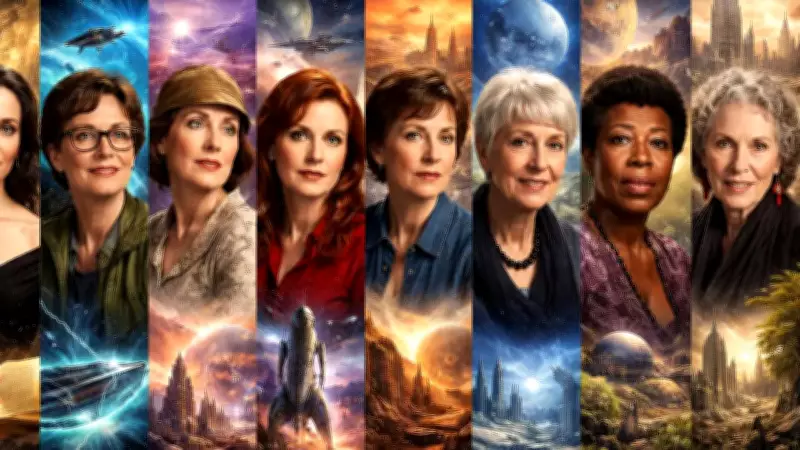
8 Female Writers Who Shaped Science Fiction Across Generations
Science fiction did not emerge by chance; it was meticulously crafted by visionary writers who pushed the boundaries of human imagination and explored the profound implications of science for humanity. While the genre is often associated with male authors, women have played an integral and transformative role in shaping science fiction from its very inception. From early scientific explorations to contemporary narratives on identity and social constructs, these writers did not merely participate in the genre—they redefined it. By examining their contributions chronologically, we can trace the evolution of science fiction over time.
Mary Shelley: The Pioneer of Scientific Gothic
Mary Shelley's groundbreaking work originated during a stay near Lake Geneva with Lord Byron and Percy Bysshe Shelley, where relentless rain confined the group indoors, sparking discussions on science and life. Inspired by debates on reanimation and electricity, her novel Frankenstein marked a departure from traditional gothic tales by employing scientific explanations instead of supernatural elements. The story delves into themes of human ambition, responsibility, and creation, establishing foundational concepts that continue to resonate in science fiction today.
Clare Winger Harris: A Trailblazer in Early Sci-Fi
Clare Winger Harris emerged as a pioneer among female science fiction writers, publishing under her own name in prominent magazines like Amazing Stories during an era when many women used pseudonyms. Her story The Fate of the Poseidonia exemplifies her depth-infused writing, which introduced female perspectives and challenged the male-dominated landscape of early science fiction, paving the way for greater inclusivity.

C. L. Moore: Blending Imagination with Emotional Depth
In the 1930s, C. L. Moore gained prominence, using initials to navigate gender bias. Known for her imaginative yet emotionally rich narratives, works like Mimsy Were the Borogoves and Vintage Season explored not only futuristic concepts but also human reactions to them. Moore is credited with elevating science fiction beyond mere speculative fiction, infusing it with psychological insight.
Leigh Brackett: Bridging Literature and Popular Media
Leigh Brackett flourished during the Golden Age of science fiction, characterized by expansive, adventurous themes. Her novel The Long Tomorrow masterfully blends scientific speculation with compelling storytelling. As a screenwriter for major film productions, Brackett helped popularize science fiction in mainstream culture, effectively bridging the gap between literary works and mass media.
Ursula K. Le Guin: A Philosopher of the Genre
Ursula K. Le Guin revolutionized science fiction by prioritizing social and philosophical exploration over technological focus. Her novel The Left Hand of Darkness examines gender and identity within an alien society, using the genre to challenge cultural norms and human relationships. Le Guin's works elevated science fiction to an intellectually and emotionally engaging art form.
Octavia E. Butler: Championing Social Consciousness
Octavia E. Butler advanced the genre with themes of race, power, and survival. In Kindred, she merges historical trauma with sci-fi elements, while her Parable series scrutinizes dystopian futures through the lens of social inequality. Rooted in speculative yet pertinent human experiences, Butler's writing made science fiction more inclusive and socially aware.
Margaret Atwood: Realism in Dystopian Fiction
Margaret Atwood's approach to science fiction is grounded in realistic, plausible events rather than purely futuristic scenarios. Her dystopian masterpiece The Handmaid's Tale tackles issues of power, control, and societal structures, stretching the genre's boundaries and attracting a broader audience by emphasizing contemporary relevance.

Becky Chambers: The New Wave of Emotional Sci-Fi
Becky Chambers represents the newer wave of science fiction, focusing on character-driven stories and emotional depth. In The Long Way to a Small, Angry Planet, she explores daily life aboard a spaceship through diverse characters and cultures, emphasizing themes of community, identity, and interspecies coexistence. Her work highlights the genre's capacity for intimate, human-centered narratives.
These eight female writers have collectively shaped science fiction across generations, each contributing unique perspectives that expanded the genre's scope. From Shelley's foundational themes to Chambers' emotional explorations, their legacies underscore the vital role of women in crafting a genre that continues to evolve and inspire.