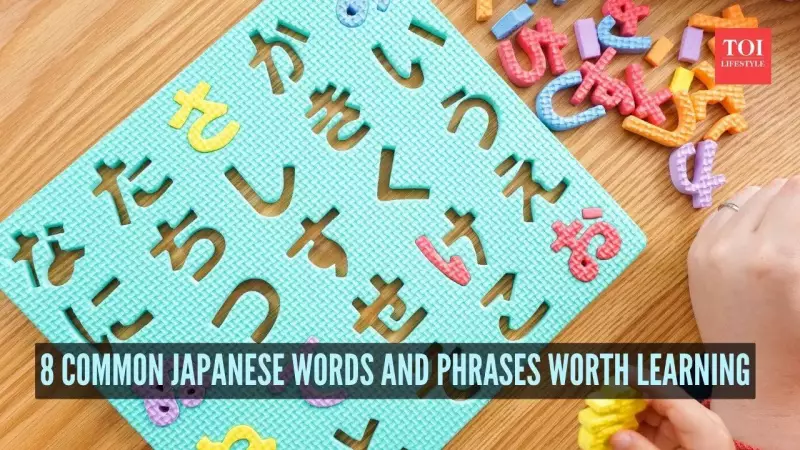
For Indian travelers and culture enthusiasts, learning a handful of basic Japanese words can transform an overseas trip or a deep dive into Japan's rich traditions. A few key phrases can bridge communication gaps, foster respectful interactions, and significantly enrich the overall experience. Published on January 4, 2026, at 18:00 IST, a guide highlights eight fundamental terms that are indispensable for everyday conversations in Japan.
Mastering Japanese Greetings for Every Time of Day
Navigating social interactions in Japan begins with knowing the appropriate greeting for the time of day. The most versatile and widely recognized term is Konnichiwa (こんにちは). This phrase serves as a standard "hello" or "good afternoon" and is suitable for both formal and informal settings, whether you're entering a shop or meeting someone new.
For the morning hours until noon, the correct and polite greeting is Ohayou gozaimasu (おはようございます). Commonly used in schools, offices, and other daily scenarios, this expression conveys courtesy and warmth. A simple "Ohayou gozaimasu" accompanied by a smile is an excellent way to start the day positively.

As the sun sets, the greeting shifts to Konbanwa (こんばんは), meaning "good evening." This is the standard polite greeting for evening meetings, visits to friends' homes, or dinners at restaurants, helping you seamlessly integrate into evening social etiquette.
Key Phrases for Polite and Effective Communication
Politeness is a cornerstone of Japanese culture, and a few key words are essential for smooth interactions. Expressing gratitude is done with Arigatou (ありがとう) for casual thanks, while the more polite form is Arigatou gozaimasu. Using these phrases, whether thanking a cashier or a helpful local, shows respect and appreciation.
One of the most useful and multifaceted words to know is Sumimasen (すみません). While it directly translates to "excuse me" or "sorry," it can also function as a polite "thank you" when someone has gone out of their way to help you. It's crucial for politely getting someone's attention or offering an apology.
Basic Affirmations, Negations, and Farewells
Clear communication often relies on simple affirmations and negations. The word for "yes" in Japanese is straightforward: Hai (はい). Using "Hai" to answer questions or acknowledge information will make your speech sound more natural.
Similarly, the word for "no" is Iie (いいえ). Despite the cultural emphasis on tact and avoiding direct refusal, "Iie" is still commonly used when you need to disagree or decline something. Its soft pronunciation maintains the polite tone valued in Japanese discourse.
For farewells, Sayounara (さようなら) is a formal way to say goodbye, typically used when parting for a longer period. While friends might use more casual terms like "Matane" (see you later), "Sayounara" is the universally understood formal farewell.
These eight common Japanese words and phrases form a solid foundation for anyone looking to travel to Japan or begin learning the language. From greetings to expressions of gratitude, mastering these basics will build confidence and enable more meaningful connections with people, enhancing any cultural or travel adventure.