While dinosaurs captivate our imagination, ruling the planet from 230 to 66 million years ago, they were relative newcomers in Earth's long history. Astonishingly, several animal lineages that evolved long before the first dinosaur ever walked the land are still swimming and crawling among us today. These "living fossils" offer a direct, fascinating window into a primeval world, having survived multiple mass extinctions and dramatic planetary changes.
Maritime Time Travelers: The Ocean's Ancient Inhabitants
The depths of our oceans serve as a refuge for some of the planet's most ancient creatures. Leading this list are sea sponges, simple multicellular organisms that have been filtering water for an astounding 600 million years. Their evolution predates the Cambrian Explosion, a period of rapid biological diversification that occurred long before the age of dinosaurs.
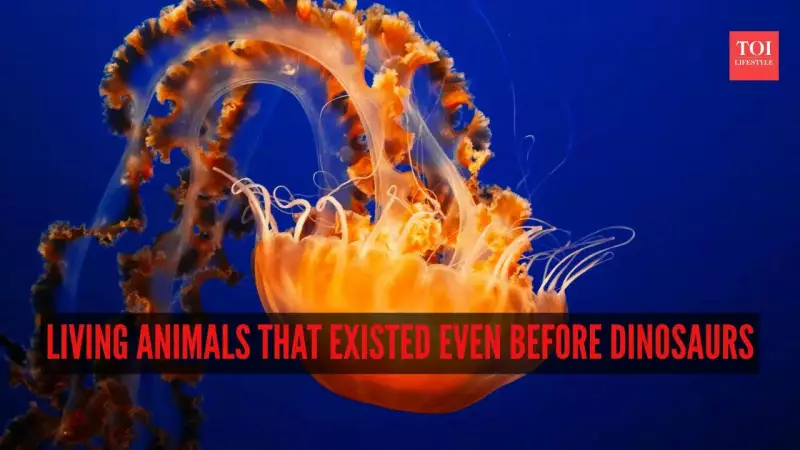
Another pre-dinosaur survivor is the nautilus, a shelled cephalopod that has navigated the seas for roughly 500 million years. Its iconic helical shell and efficient jet-propulsion system are designs perfected by time. Similarly, jellyfish, with their simplistic, gelatinous bodies lacking brains, bones, or hearts, have also floated through Earth's oceans for over 500 million years. Their simple biology is a key to their extraordinary resilience.

Perhaps one of the most famous living fossils is the coelacanth. This deep-sea fish, with its distinctive lobe fins that resemble limb structures, was believed extinct for millions of years until a stunning rediscovery in 1938. It has existed for approximately 400 million years. Sharing a similar ancient pedigree in the waters are sharks, which have been apex predators for over 400 million years. While species have diversified, their fundamental body plan has remained remarkably successful.
Primitive Vertebrates and Arthropod Relics
Moving to more primitive vertebrates, we find the eel-like lampreys. These jawless fish, which use a round, toothed mouth to parasitically attach to other fish, have been around for over 340 million years. Their close cousins, the hagfish, are also ancient saltwater dwellers of about 300 million years. Known for their slimy self-defense mechanism and scavenging lifestyle on the ocean floor, they showcase anatomical features of very early vertebrates.
On the arthropod front, the horseshoe crab stands as a true relic. It has existed on Earth for about 445 million years. Beyond its hard exterior, this creature is famed for its copper-based blue blood, which is critically used in modern medicine to detect bacterial contamination in vaccines and medical equipment.
Lessons in Survival and Resilience
These eight remarkable animals are more than just biological curiosities; they are testaments to endurance. Their continued existence reminds us that life on Earth has deep, ancient roots. They have weathered ice ages, continental shifts, and the cataclysmic event that wiped out the dinosaurs. While they have undoubtedly undergone subtle evolutionary changes, their core blueprints have proven to be masterpieces of survival.
Studying these living fossils allows scientists to piece together the puzzle of life's history, offering invaluable insights into adaptation, extinction events, and the long-term stability of certain biological designs. They are a humbling reminder of our planet's vast timeline and the incredible tenacity of life itself.