Demolition of Historic Church in Kayyar Ignites Heritage Preservation Dispute
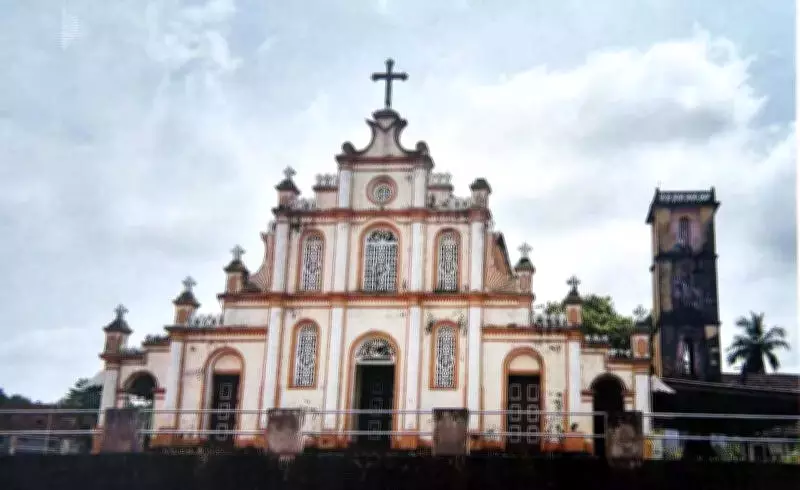
A significant controversy has erupted in the village of Kayyar, near Mangaluru, following the demolition of the 70-year-old Christ The King Church building under the Diocese of Mangalore. Conservation advocates are alleging that the structure was brought down overnight, disregarding multiple requests to preserve it as an important cultural and religious symbol.
Conservation Committee Alleges Hasty Demolition Despite Preservation Efforts
The Kayyar Church Conservation Committee has stated that the church, originally constructed in 1953 and inaugurated on April 25, 1956, under Reverend Father Lawrence S Pais, represented a Roman-Gothic architectural landmark. The committee emphasized that this building served as a crucial cultural and religious symbol not only for Kayyar village but also for surrounding areas.
Wilson JP D'Souza, a parishioner and active member of the conservation committee, revealed to reporters on Saturday that the group had met with Bishop Peter Paul Saldanha on November 28. Following the bishop's direction, eleven committee members submitted written undertakings accepting both financial and physical responsibility for maintaining the historic church structure.

D'Souza further alleged that structural feasibility assessments, including a report from the National Institute of Technology Karnataka (NITK) Surathkal indicating the building was in good condition, were completely ignored before the demolition commenced. An independent conservation architect's report was similarly disregarded according to the committee's claims.
Parish Council Defends Decision Citing Safety Concerns and Official Approvals
In response to the allegations, the Christ The King Church parish council has defended the demolition decision, asserting that the building had become dilapidated and was removed only after obtaining all necessary official clearances. The council clarified that the Paivalike panchayat issued a formal demolition certificate on November 21, 2025, with the Diocese of Mangalore granting its approval on February 12.
The parish council explained that the church tower had remained unrepaired for nearly a decade, and the cross—damaged by lightning—could not be safely relocated. Additionally, a comprehensive survey conducted in 2023 demonstrated strong community support for rebuilding the church, with the demolition receiving approval from parish committees and a general assembly comprising 552 members.
Conservationists Raise Multiple Concerns About Demolition Process
The conservation committee has raised several serious concerns regarding the demolition process. D'Souza alleged that the demolition was executed with undue haste, particularly noting that construction of the new church at a different site was not even 50% complete. This situation has forced religious services to be conducted in a temporary mini hall.
According to the committee, the old structure did not obstruct new construction activities and could have been preserved as a memorial or heritage site. The group also claims that heavy machinery was deployed during nighttime hours to carry out the demolition, raising questions about transparency and procedure.
The conservation committee has demanded a comprehensive explanation from church authorities regarding the decision-making process and has warned of potential protests if their concerns remain unaddressed. This dispute highlights the ongoing tension between modernization efforts and heritage preservation in rapidly developing regions.
Broader Implications for Cultural Heritage Preservation
This controversy extends beyond a single demolition, touching on broader issues of architectural conservation, community participation in heritage decisions, and the balance between religious modernization and historical preservation. The conflicting reports from structural engineers versus church authorities regarding the building's condition further complicate the narrative.
As both sides present their arguments, the situation in Kayyar serves as a case study in how communities navigate the complex intersection of faith, history, and development in contemporary India. The outcome may influence how similar heritage structures are treated in the region moving forward.