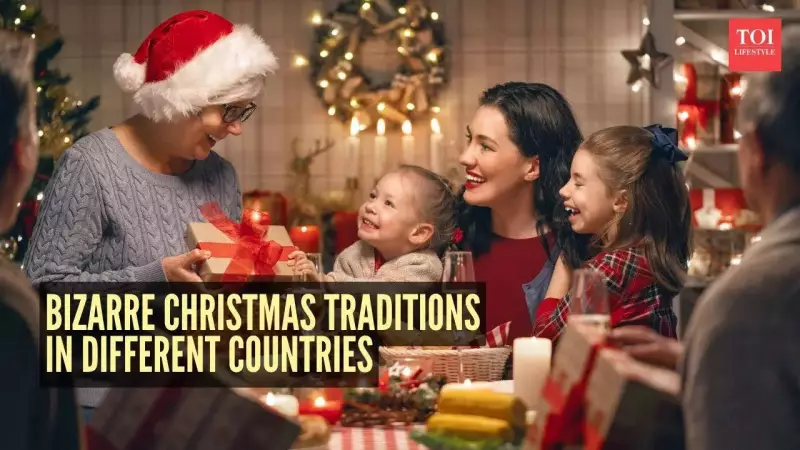
As the air turns crisp and hearts fill with warmth, the world gears up for Christmas, a season of joy, hope, and togetherness. While Christians globally celebrate the birth of Jesus Christ, the festival transcends faiths, bringing families and friends together for feasts and merriment. Beyond the familiar carols and decorations, however, lie some truly unique and wonderful customs that highlight the beautiful diversity of celebration. Here are seven weird yet wonderful Christmas traditions from different corners of the globe that strengthen community bonds.
Festive Feasts and Frightful Folklore
In Japan, the traditional Christmas dinner plate looks surprisingly familiar, but not for the reason you might think. Instead of roasting a turkey, many families across Japan enjoy a festive bucket of Kentucky Fried Chicken (KFC). This unusual tradition stems from a highly successful 1970s marketing campaign by KFC and the practicality of smaller Japanese kitchens. The demand is so immense that people often place their orders and make reservations days, even weeks, in advance to secure their Christmas meal.
Moving to the snowy landscapes of Norway, a tradition born from folklore takes centre stage on Christmas Eve. Before retiring to bed, Norwegians diligently hide all the brooms in their houses. This quirky practice is rooted in the ancient belief that evil spirits and witches, who are said to ride on brooms, roam freely on this holy night. By hiding the brooms, families protect their homes from these supernatural visitors.

Roller Skates, Singing Logs, and Straw Goats
In Venezuela, particularly in the capital city of Caracas, the journey to church becomes a festive spectacle. While attending the Misa de Aguinaldo (Early Morning Mass) in the week leading to Christmas is common, many residents of Caracas travel to these services on roller skates. This tradition is so popular and deeply ingrained that the city authorities close certain roads to traffic on Christmas morning to ensure the safe passage of skating worshippers, creating a unique communal celebration.
Catalonia in Spain boasts one of the most unusual characters of the season: the 'Caga Tió' or the 'defecating log'. Families create a cheerful character from a small log, complete with a painted face and a hat. For two weeks before Christmas, children 'feed' the log with fruits, nuts, and sweets. Then, on Christmas Eve, the family gathers to beat the log with sticks while singing traditional songs, prompting it to 'defecate' the hidden treats onto a blanket—a bizarre but immensely fun ritual that delights children and adults alike.
Sweden celebrates the advent of the festive season with the raising of giant Yule Goats (Julbock) made of straw. The most famous one, erected in the town of Gävle since 1966, stands an impressive 13 metres (over 40 feet) tall. This tradition is linked to a Nordic folklore figure that accompanied Saint Nicholas. In a twist of modern tradition, the Gävle Goat has been vandalized, burned, or destroyed nearly 36 times, making its survival each year a much-anticipated part of the local Christmas narrative.
Masked Dancers and Lucky Spiderwebs
In Romania, the streets come alive on Christmas Eve with the lively 'Capra' tradition. Men dress as goats, wearing brightly coloured traditional costumes, a carved wooden goat mask, and a sheepskin draped over their backs. Accompanied by a band of singers and musicians, these 'goats' dance through neighbourhoods, performing a ritual meant to ward off evil spirits and bring good fortune for the coming year, turning the festival into a vibrant public performance.
Finally, in Ukraine, Christmas trees glisten with an unexpected decoration: spider webs. This tradition originates from a folk tale about a poor family whose tree was adorned only by a spider's web on Christmas Eve. By morning, the webs had turned into shimmering silver and gold threads, bringing the family prosperity. Today, Ukrainians honour this legend by hanging delicate, glittering spider web ornaments called 'pavuchky' on their trees. Unlike in many cultures where spiders are considered unlucky, in Ukraine they symbolise good fortune, prosperity, and protection.

From shared meals to communal performances, these seven traditions, however strange they may seem, share a common thread: they are acts of community, storytelling, and shared joy that truly embody the spirit of bringing people together during the festive season.