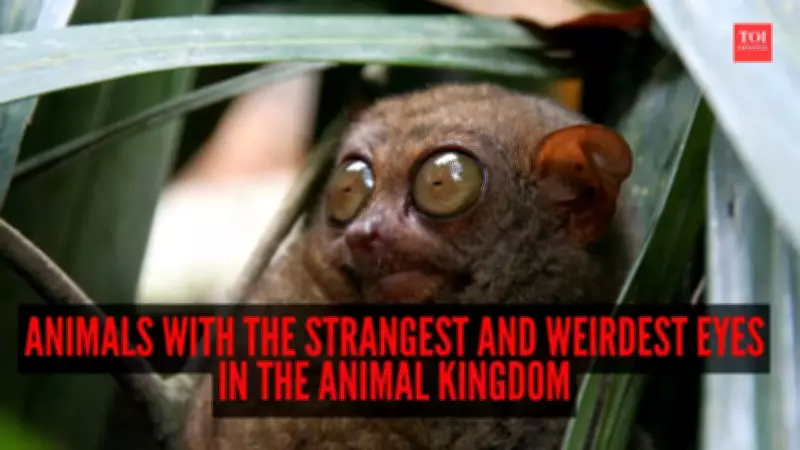
7 Animals With The Strangest And Weirdest Eyes In The Animal Kingdom
Nature's incredible diversity is perhaps most vividly displayed through the remarkable adaptations of animal eyes. Across the vast animal kingdom, vision has evolved in astonishingly diverse ways to help creatures hunt, evade predators, and thrive in challenging environments. While some animals can perceive colors invisible to humans, others possess eyes that move independently or even sense light across their entire bodies. Here, we explore seven extraordinary animals that boast some of the strangest and most fascinating eyes in the natural world.
Mantis Shrimp: The Color Vision Champion
The mantis shrimp is celebrated for possessing one of the most sophisticated visual systems known to science. Its eyes contain an impressive array of 12 to 16 different types of photoreceptors, enabling it to detect ultraviolet light, polarized light, and a far broader color spectrum than humans can perceive. Remarkably, each eye can move independently and even perceive depth, giving this marine creature a visual advantage in its underwater habitat.
Tarsier: The Nocturnal Primate With Giant Eyes
Tarsiers are tiny nocturnal primates whose eyes are each roughly the same size as their brain. These enormous eyes are essential for gathering maximum light in dark conditions, compensating for the lack of other night vision adaptations. Interestingly, tarsier eyes cannot move within their sockets, so the animal must rotate its head nearly 180 degrees to scan its surroundings.

Chameleon: The Master Of Independent Eye Movement
Chameleons possess highly specialized eyes that can move independently of each other, providing them with near-panoramic vision. This unique ability allows them to monitor their environment while simultaneously focusing on prey. Their eyes also feature monocular depth perception and rapid focusing capabilities, making them exceptionally efficient insect hunters.
Dragonfly: The Aerial Predator With 360-Degree Vision
Dragonflies are equipped with massive compound eyes composed of tens of thousands of individual visual units, covering almost their entire head. This structure grants them nearly 360-degree vision and exceptional motion detection, even in low-light conditions. These traits make dragonflies formidable aerial predators, capable of tracking fast-moving prey with precision.
Gecko: The Night Vision Specialist
Geckos are renowned for their superior night vision capabilities. Their eyes are significantly more light-sensitive than human eyes, thanks to specialized retinal and lens cells that enable color detection in near darkness. Additionally, their vertical slit pupils help regulate light intake, further enhancing their ability to navigate and hunt at night.
Sea Urchin: The Eyeless Creature That Sees With Its Body
Unlike most animals, sea urchins lack conventional eyes. Instead, they possess light-sensitive photoreceptor cells distributed across their tube feet, effectively turning their entire body into a visual organ. This extraordinary adaptation allows them to sense light and motion in their marine environment, demonstrating a radically different approach to vision.
Ostrich: The Bird With Eyes Larger Than Its Brain
Ostriches have eyes that are notably larger than their brains, providing them with an expansive field of vision crucial for detecting predators in open savannas. Their long, protective eyelashes shield their eyes from dust and debris, ensuring clear sight while foraging and evading threats.
The strange and wonderful eyes found throughout the animal kingdom vividly illustrate how evolution tailors vision to meet specific survival needs. From the mantis shrimp's color-detecting super-vision to the sea urchin's body-wide light sensing, each adaptation reflects a unique ecological challenge. These extraordinary visual systems serve as a powerful reminder that human eyesight represents just one small variation within a vast spectrum of biological possibilities, highlighting nature's endless capacity for innovation and adaptation.