India's 500-Year-Old Natural Mummy in Spiti Valley's Remote Gue Village
High in the stark, cold desert landscape of Himachal Pradesh's Spiti Valley lies a tiny, remote village that has captivated the imaginations of travelers, historians, and spiritual seekers from around the world. Perched at an altitude of approximately 10,000 feet near the sensitive India-China border, Gue is not merely another isolated Himalayan settlement. It is the guardian of one of India's most unusual and mysterious heritage treasures: a naturally preserved mummy believed to be over 500 years old.
This remarkable fact has been officially confirmed by the Department of Town and Country Planning (TCP) of the Himachal Pradesh Government in an official report, lending scientific credence to the site's significance.
A Remote Destination of Stark Beauty and Historical Intrigue
Far removed from the crowded tourist trails of Manali or Shimla, Gue offers a rare and powerful combination of stark mountain beauty and deep historical intrigue. The village is situated roughly 40 kilometers from the ancient Tabo Monastery, a UNESCO World Heritage site candidate, and has become an increasingly popular stop for intrepid travelers exploring Spiti's rich cultural circuit.

However, it is the village's primary attraction that truly sets it apart: the astonishingly well-preserved mummy of a Buddhist monk, seated in a meditation pose. Unlike the famed mummies of Egypt, which were products of elaborate embalming processes, the Gue mummy is believed to be a result of natural preservation, a phenomenon made possible by the region's extremely dry climate, high altitude, and freezing winter temperatures.
The Mummy of Sangha Tenzin: A 15th-Century Legacy
The mummy enshrined in Gue is widely accepted to be that of Sangha Tenzin, a Buddhist monk who lived during the 15th century. Scientific studies, including carbon dating methods, estimate the mummy to be around 550 years old, dating its origins to approximately the year 1475. The monk's body, positioned in a traditional meditation posture, retains visible hair and teeth—details that are exceptionally rare and contribute to its awe-inspiring presence.
Today, the mummy is housed in a small, temple-like shrine under protective glass coverings to prevent further decay, allowing visitors a humbling and direct encounter with this ancient artifact.
Discovery and Preservation: From Earthquake to Enshrinement
The story of the mummy's discovery adds another layer to its mystique. Local sources indicate that the remains were first unearthed following a major earthquake that struck the region in 1975. The seismic event is believed to have revealed the tomb where the monk was originally laid to rest.
Years later, in the early 2000s, road construction work carried out by the Indo-Tibetan Border Police (ITBP) brought the mummy to broader public attention. In response, the local administration and villagers collaboratively built the simple shrine that now protects and displays this priceless cultural relic for respectful viewing.
The Legend of Self-Mummification and Local Lore
Local folklore imbues the mummy with a mystical dimension. According to enduring village narratives, Sangha Tenzin may have practiced a rare and profound form of prolonged meditation that led to self-mummification—a tradition acknowledged in certain esoteric Buddhist cultures. While this phenomenon lacks conclusive scientific evidence, the legend persists as a powerful oral tradition among local residents and traveling pilgrims.
Some theories suggest villagers believe the monk sacrificed his life to protect the community from calamities like scorpion infestations and natural disasters. Whether viewed through a spiritual or scientific lens, the Gue mummy undeniably evokes a profound sense of awe and connects visitors to the ascetic practices deeply rooted in Himalayan Buddhism.
A Unique Attraction in India's Heritage Landscape
India boasts countless ancient monuments, temples, and fossil remains, but a naturally preserved human mummy is exceptionally rare. The Gue mummy is often cited as one of the only known naturally preserved human mummies in the entire country, making it a site of unparalleled heritage value.

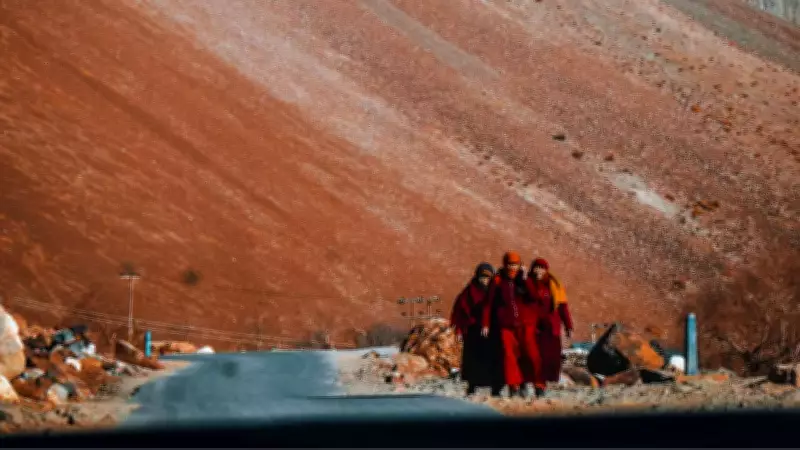
The journey to Gue itself is part of the experience. The village is surrounded by barren mountains, dramatic valleys, and winding, challenging roads that test even seasoned drivers. Reaching this remote destination requires determination, making the eventual encounter all the more rewarding. There are no fancy ticket counters or large crowds here. Visitors enter a modest, simple structure and come face-to-face with a 500-year-old artifact. This simplicity amplifies the personal and profound nature of the visit.
Tourism, Conservation, and the Future of Gue
While the mummy has steadily brought attention to Gue and the broader Spiti region over the years, the village remains relatively offbeat compared to more popular stops like Kaza or the Key Monastery. Local authorities have acknowledged the mummy's importance for regional tourism development, highlighting its cultural and spiritual values.
However, given the delicate and ancient nature of the mummy, there is a growing emphasis on its conservation. Tourists are strongly encouraged to maintain silence within the shrine and refrain from using flash photography to help preserve this centuries-old treasure for future generations.
Beyond the Mummy: Experiencing Gue and Spiti
While the mummy is the primary draw, a visit to Gue offers a genuine glimpse into traditional Himalayan village life. Visitors can witness mud-brick homes and colorful prayer flags fluttering against a backdrop of cobalt-blue skies and majestic, snow-capped peaks.
The proximity to the ancient Tabo Monastery, established in 996 CE and often called the "Ajanta of the Himalayas," allows for deeper spiritual and historical exploration. The monastery houses exquisite old murals and Buddhist artworks. Together, Gue and Tabo provide a fascinating window into Spiti's rich spiritual history. The dramatic geographical surroundings also offer a treat for adventure enthusiasts, with the drive through the rugged, high-desert terrain being an exhilarating journey in itself.
The Gue mummy stands as a silent testament to time, faith, and the unique preservative power of the Himalayan environment. It is a destination that challenges the body with its remote location but rewards the spirit with an encounter unlike any other in India.