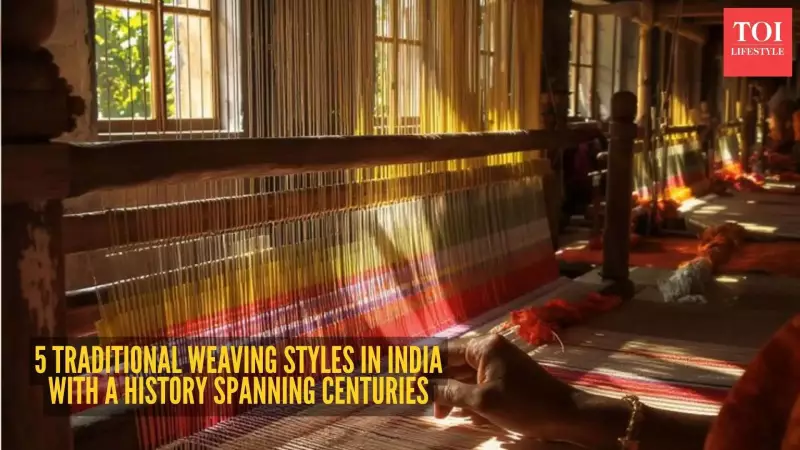
India's textile heritage is a vibrant tapestry woven with threads of history, culture, and unparalleled craftsmanship. Far from being a modern phenomenon, the country's weaving traditions represent a living legacy, passed down through countless generations. These art forms are not merely about fabric; they are chronicles of ancient eras, rich civilisations, and local folklore. Here, we explore five such weaving traditions that have not only survived for centuries but continue to flourish in the contemporary fashion landscape.
Patola: The Geometric Marvel from Gujarat
Hailing from Patan in Gujarat, the Patola weave boasts an impressive history spanning 700 years. This craft is renowned for its exceptionally complex double ikat technique, where both the warp and weft threads are resist-dyed before weaving. The result is vibrant sarees and dupattas adorned with precise, geometric patterns. The meticulous craftsmanship required ensures that each piece is a masterpiece. Today, the allure of Patola remains undiminished, finding favour with Bollywood celebrities, fashion influencers, and connoisseurs alike, proving its timeless appeal.
Kota Doria: The Epitome of Sheer Elegance
The origins of Kota Doria weaving are rooted in Kota, Rajasthan, with a rich history dating to the 17th century. The craft was established when Rao Kishore Singh, a prince and general of Kota, invited master weavers known for their fine muslin work from the Deccan region. Kota Doria is celebrated for its incredibly lightweight, airy fabric characterised by a distinctive transparent, square-check pattern known as 'khat'. This combination of delicacy and structure makes it a perennial favourite for warm-weather elegance.

Jamdani: The Muslin Poetry of Bengal
The Jamdani, or Dhakai Jamdani saree, is a testament to painstaking skill and artistry. Woven on a sheer, structured muslin base, it features intricate, often floral, motifs that appear to float on the fabric. This craft has historical ties to Dhaka (in present-day Bangladesh) and was introduced to West Bengal during the Mughal era. Its finesse was documented as far back as the 9th century by a fabric prosecutor named Sulaiman, who noted the superfine muslin from the Rahmi Kingdom (Bengal) could be passed through a ring. Each Jamdani saree is a labour-intensive creation, demanding immense skill from the weaver.
Chanderi: Weaving with Royal Patronage
With a lineage believed to trace back to the 2nd century, Chanderi weaving from Chanderi, Madhya Pradesh, carries a royal aura. The craft truly flourished under the patronage of the Scindia rulers. Chanderi sarees are known for their glossy transparency and lightweight feel, woven in fine silk or cotton. Traditional motifs grace the fabric, but a significant transformation occurred in the 13th century during Alauddin Khilji's rule. Weavers who migrated from Bengal infused the craft with heavy gold and zari work, adding a layer of Mughal-inspired opulence that defines many Chanderi textiles today.
Banarasi: The Regal Silk of Varanasi
Synonymous with luxury and grandeur, Banarasi silk sarees from Varanasi, Uttar Pradesh, have been in constant high demand for centuries. Their history is deeply intertwined with the Mughal era, where skilled artisans were patronised by the emperors themselves. These sarees, originally crafted for Mughal darbars, are characterised by rich silk fabric lavishly decorated with intricate zari work (gold and silver thread). Featuring traditional motifs and elaborate patterns, a Banarasi saree remains the ultimate symbol of opulence and traditional Indian wear for weddings and major celebrations.

These five traditions—Patola, Kota Doria, Jamdani, Chanderi, and Banarasi—stand as powerful pillars of India's handloom heritage. They demonstrate how ancient techniques, when nurtured by patronage and adapted to contemporary tastes, can not only survive but also thrive. They are more than just textiles; they are woven narratives of India's enduring artistic spirit, ensuring that the legacy of the loom continues for generations to come.