Modern archaeology has transformed our understanding of how ancient civilizations lived, constructed monumental structures, practiced their religious beliefs, and traveled across continents. Despite having access to cutting-edge technologies like satellite imaging, radiocarbon dating, LIDAR scanning, and DNA analysis, numerous archaeological discoveries continue to mystify researchers and challenge conventional wisdom.
The Enduring Enigma of Ancient Sites
These remarkable sites provide tantalizing clues about our ancestors, yet they offer incomplete answers, leaving archaeologists navigating the fascinating space between concrete evidence and thoughtful interpretation. Each new discovery brings humanity closer to understanding our collective past, while simultaneously deepening our curiosity about what remains hidden beneath the earth's surface and what stories these ancient locations might eventually reveal.
Here are five of the world's most captivating archaeological mysteries that continue to defy explanation despite decades of research and technological advancement.

The Mysterious Plain of Jars in Laos
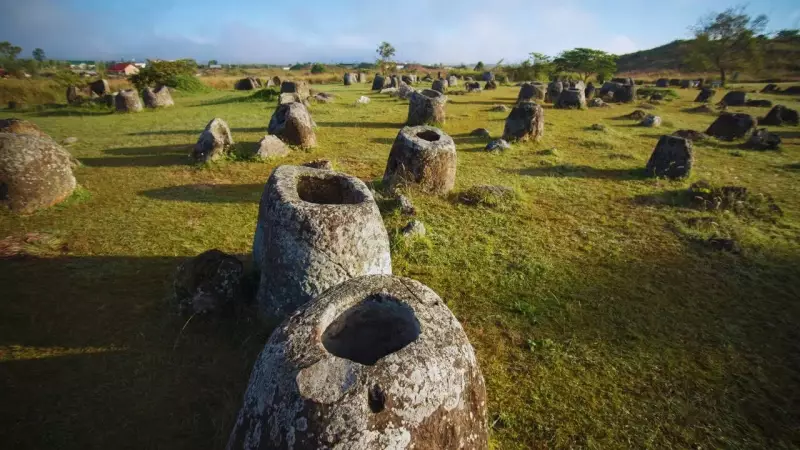
Scattered across the Xiangkhoang Plateau in northern Laos, thousands of enormous stone jars occupy more than 90 known archaeological sites. Some of these megalithic jars weigh several tonnes and stand as tall as three meters. Carved from various materials including sandstone, limestone, and granite, these mysterious containers date back to the Iron Age, approximately between 500 BCE and 500 CE.
Archaeological excavations around some jar sites have uncovered evidence of human burials, cremation remains, and various artifacts. However, researchers remain uncertain about the jars' precise purpose and the civilization that created them. The sheer scale and distribution of these stone vessels continue to puzzle experts who struggle to understand their original function and significance.
Peru's Baffling Nazca Lines
Etched into the arid plains of southern Peru, the Nazca Lines comprise hundreds of massive geoglyphs created by removing the reddish topsoil to reveal the lighter earth beneath. Dating between 500 BCE and 500 CE, these enormous designs are best appreciated from aerial viewpoints, raising compelling questions about their construction methods and intended purpose.
The geoglyphs feature various giant animal outlines including hummingbirds, spiders, and monkeys, along with geometric shapes and straight lines stretching across the desert. While many scholars theorize they served ritual purposes connected to water, fertility, or astronomical alignments, no single explanation adequately accounts for the diversity and complexity of these remarkable formations.
The Paracas Candelabra's Coastal Mystery
Another perplexing geoglyph from Peru, the Paracas Candelabra, stretches 180 meters up a steep desert hillside overlooking Peru's Bay of Pisco. Created between 200 BCE and 600 CE, this massive trident or candelabra-shaped design remains visible from considerable distances at sea. Despite its prominent location and impressive scale, researchers continue to debate its original purpose and significance.
Some experts propose it functioned as a navigational marker for ancient sailors, while others suggest it held religious or ceremonial importance. Interestingly, some scholars have proposed a connection between the Paracas Candelabra and the Hindu epic Ramayana, suggesting it might have served as a marker guiding the Vanara Sena army during their search for Sita.
Japan's Underwater Yonaguni Monument
Discovered by a local diver in 1986 off the coast of Yonaguni Island in Japan's Okinawa Prefecture, the Yonaguni Monument presents one of archaeology's most heated debates. This submerged structure features stepped terraces, straight edges, and flat platforms carved into bedrock sandstone, creating a formation that appears remarkably artificial.

The central controversy revolves around whether this is a natural geological formation or a structure modified by human hands. Some researchers point to the geometric precision of certain features as evidence of human alteration, while many geologists argue that natural fracturing, erosion, and tectonic activity could produce similar shapes. The absence of artifacts, tools, or cultural evidence at the site continues to complicate efforts to determine its origins.
Turkey's Revolutionary Göbekli Tepe
Located in southeastern Turkey, Göbekli Tepe represents one of the most groundbreaking archaeological discoveries of the twentieth century. Dating back to approximately 9600 BCE, this remarkable site predates Stonehenge by roughly 6,000 years and the Egyptian pyramids by 7,000 years.
The site features massive T-shaped limestone pillars arranged in circular enclosures, many decorated with intricate carvings of animals and abstract symbols. What makes Göbekli Tepe truly extraordinary is its chronological placement—constructed before the advent of agriculture or settled village life, during what researchers believe was a hunter-gatherer society. This timing raises profound questions about how such sophisticated structures were built and why, along with the mystery of why the site appears to have been intentionally buried.
These five archaeological sites represent just a fraction of the historical mysteries that continue to challenge our understanding of human history. As technology advances and research continues, archaeologists remain hopeful that these ancient enigmas will eventually reveal their secrets, providing deeper insights into humanity's fascinating journey through time.