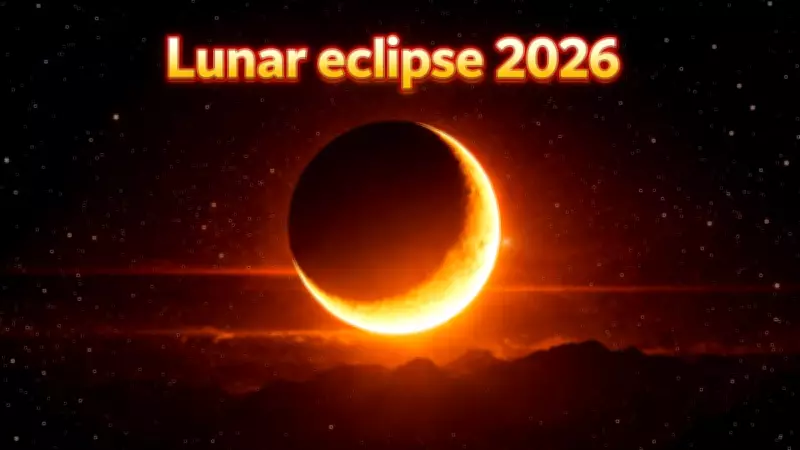
First Lunar Eclipse of 2026: A Celestial Event in India
The year 2026 will witness its inaugural lunar eclipse, a phenomenon that captivates astronomers and spiritual enthusiasts alike. Scheduled for February 3, 2026, this celestial spectacle will be visible from various parts of India, offering a unique opportunity for observation and reflection.
Date and Timing of the Lunar Eclipse
The lunar eclipse on February 3, 2026, is set to unfold with precise astronomical timing. According to calculations, the eclipse will commence in the early hours of the morning, providing a dramatic backdrop against the night sky. The exact timings are as follows:
- Penumbral Eclipse Begins: This initial phase marks the start of the eclipse, where the Moon enters the Earth's penumbral shadow.
- Partial Eclipse Phase: Following the penumbral start, the Moon will partially enter the umbral shadow, creating a noticeable darkening effect.
- Maximum Eclipse: The peak of the eclipse, when the Moon is most obscured, offering the best view for observers.
- Eclipse Ends: The conclusion of the event, as the Moon exits the Earth's shadow completely.
It is essential for viewers in India to check local astronomical resources for precise timings, as they may vary slightly based on geographic location.

Sutak Period and Its Significance
In Hindu tradition, the Sutak period is observed during eclipses, believed to be a time of heightened spiritual energy and potential impurities. For the lunar eclipse on February 3, 2026, the Sutak period will begin approximately 9 hours before the eclipse starts and extend until the eclipse concludes. During this time, certain practices are recommended:
- Avoiding New Activities: Refrain from starting new ventures or important tasks.
- Spiritual Practices: Engage in meditation, prayer, or chanting to harness positive energies.
- Dietary Restrictions: Some traditions advise against eating or cooking during the Sutak period.
These customs are deeply rooted in Indian spirituality and are followed by many to mitigate any negative effects associated with eclipses.
Visibility and Observational Tips
The lunar eclipse on February 3, 2026, will be partially visible across India, weather permitting. To enhance your viewing experience, consider the following tips:
- Find a Dark Location: Escape city lights to reduce light pollution and improve visibility.
- Use Binoculars or Telescopes: While the eclipse is visible to the naked eye, optical aids can provide a closer look at the Moon's surface.
- Check Weather Forecasts: Ensure clear skies for an unobstructed view of the event.
This eclipse serves as a reminder of the cosmic dance between the Earth, Moon, and Sun, inspiring awe and curiosity among skywatchers.
Spiritual and Cultural Impact
Lunar eclipses hold significant meaning in Indian culture, often associated with myths, rituals, and astrological interpretations. The 2026 eclipse is no exception, as it may influence:
- Astrological Readings: Astrologers might analyze the eclipse's impact on zodiac signs and personal horoscopes.
- Religious Ceremonies: Temples and spiritual centers may organize special prayers or events to mark the occasion.
- Public Awareness: Increased interest in astronomy and spirituality, fostering community engagement.
By understanding the date, time, and Sutak period, individuals can prepare for this event, whether for scientific observation or spiritual observance.