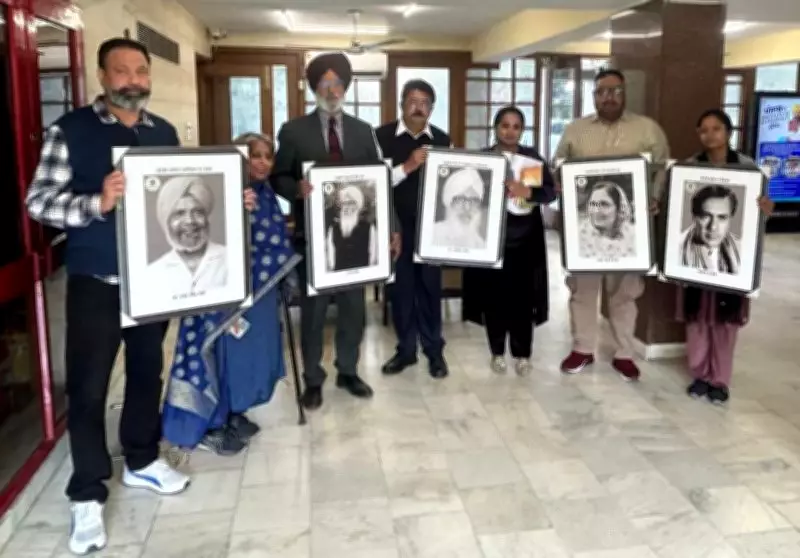
Portraits of 20 Eminent Writers and Scholars Grace Punjab Bhawan Walls in Delhi
In a significant cultural initiative, Punjab Bhawan in New Delhi has unveiled a collection of portraits honoring 20 distinguished writers and scholars from the state. This artistic installation aims to celebrate and preserve the rich literary and intellectual heritage of Punjab, transforming the walls of the government building into a gallery of inspiration and legacy.
A Tribute to Literary and Scholarly Excellence
The portraits feature a diverse array of luminaries, including renowned poets, novelists, historians, and academics who have made substantial contributions to Punjabi literature and scholarship. Among those honored are iconic figures such as Amrita Pritam, a celebrated poet and novelist; Bhai Vir Singh, a prominent writer and theologian; and Puran Singh, a noted poet and scientist. The selection also includes contemporary scholars and writers, ensuring a representation that spans generations and genres.
This project was spearheaded by the Punjab government in collaboration with cultural organizations, with the goal of fostering a deeper appreciation for the state's intellectual traditions. The portraits are displayed prominently in the public areas of Punjab Bhawan, making them accessible to visitors, dignitaries, and officials who frequent the premises.

Enhancing Cultural Identity and Public Engagement
The installation serves multiple purposes beyond mere decoration. It acts as a visual reminder of Punjab's vibrant cultural identity, highlighting the state's contributions to literature and academia on a national platform in Delhi. By showcasing these figures, the initiative seeks to inspire current and future generations to engage with Punjabi literature and scholarly works.
Officials involved in the project have emphasized that this is part of a broader effort to promote cultural awareness and pride. The portraits are accompanied by brief biographical notes, providing context about each individual's life and achievements. This educational aspect enhances the visitor experience, turning the space into an informal learning environment.
Reactions and Future Plans
The unveiling has garnered positive responses from literary circles, cultural enthusiasts, and the general public. Many have praised the move as a meaningful step toward honoring intellectual giants and preserving cultural memory. Some have suggested expanding the collection to include more writers and scholars, or even hosting related events such as literary readings and discussions at Punjab Bhawan.
Looking ahead, there are plans to integrate this initiative with other cultural programs, potentially making Punjab Bhawan a hub for literary activities in Delhi. This could include collaborations with universities, libraries, and cultural institutes to organize exhibitions, seminars, and workshops focused on Punjabi literature and scholarship.
In summary, the display of portraits at Punjab Bhawan is more than an artistic endeavor; it is a celebration of Punjab's enduring intellectual legacy. By bringing these figures into the public eye, the project reinforces the importance of literature and scholarship in shaping cultural identity and fostering community pride.