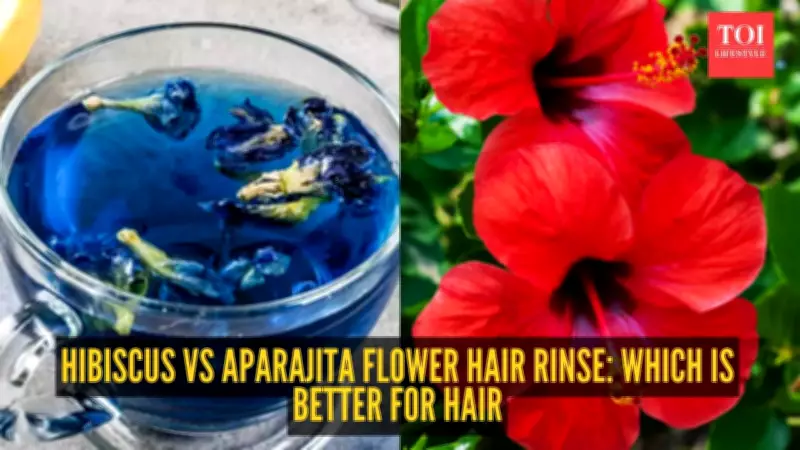
Hibiscus vs Aparajita Flower Hair Rinse: A Comprehensive Guide to Natural Hair Care
In the realm of natural hair care, hibiscus and aparajita flower rinses have emerged as powerful botanical solutions for achieving stronger, healthier, and more vibrant hair. These traditional remedies, backed by their rich nutrient profiles, offer a chemical-free alternative to commercial hair products. This detailed comparison explores the unique benefits, preparation methods, and ideal usage scenarios for both hibiscus and aparajita flower hair rinses.
Hibiscus: The Ultimate Frizz Fighter and Scalp Balancer
Hibiscus, with its vibrant red petals, is a powerhouse of hair-nourishing compounds. Loaded with Vitamin C and essential amino acids, hibiscus actively supports the production of keratin, the fundamental protein that constitutes hair strands. This translates to visibly stronger hair and a revitalized scalp environment.
Beyond strengthening, hibiscus functions as a mild astringent, effectively balancing the scalp's pH level. This balancing act helps control excess sebum production, thereby reducing greasiness and combating dandruff flakes. Regular application of hibiscus rinse can also impart a subtle, natural tint to the hair, which may help in camouflaging premature grey strands.

How to Prepare and Use Hibiscus Hair Rinse
- Take a generous handful of fresh or dried red hibiscus petals. For enhanced benefits, include a few washed hibiscus leaves.
- Boil the petals and leaves in two cups of water for approximately 5 to 10 minutes.
- Once the water achieves a rich pink hue, remove it from heat and allow it to cool completely.
- Strain the liquid to remove all solid particles.
- After shampooing, pour the cooled hibiscus rinse over your hair as a final treatment.
- Gently massage it into your scalp and hair, leave it on for about ten minutes, and then either rinse lightly with cool water or leave it in.
- For convenience, store the leftover rinse in a spray bottle in the refrigerator for a quick, refreshing daily spritz.
Aparajita: The Root-Strengthening and Scalp-Soothing Miracle
Aparajita, also known as the butterfly pea flower or Clitoria ternatea, is distinguished by its mesmerizing blue petals. This flower is a treasure trove of anthocyanins, potent antioxidants that play a crucial role in scalp health. These compounds help dilate the blood vessels in the scalp, significantly improving blood circulation.
Enhanced blood flow ensures a greater supply of oxygen and essential nutrients directly to the hair follicles, promoting healthier hair growth from the roots. The bioflavonoids present in aparajita flowers fortify the hair shaft, substantially reducing breakage and hair fall. Furthermore, its strong anti-inflammatory properties provide immediate relief for itchy, irritated, or sensitive scalps. A notable bonus is the brilliant, glass-like shine it leaves on the hair.
How to Prepare and Use Aparajita Hair Rinse
- Place 10 to 15 dried butterfly pea flowers or two pure aparajita tea bags into a heat-resistant bowl.
- Pour two cups of boiling water over the flowers, cover the bowl, and let it steep for 15 to 20 minutes.
- Once the liquid turns a deep, vibrant blue, allow it to cool to room temperature and then strain it.
- Apply the rinse to clean, shampooed hair, ensuring thorough coverage from roots to tips.
- Massage your scalp gently for a few minutes, leave the rinse on for up to ten minutes, and then rinse out completely with cool water.
The Final Verdict: Choosing Between Red and Blue
Both hibiscus and aparajita flower rinses are exceptionally safe for all hair types and free from harsh chemicals. The choice between them primarily depends on your specific hair concerns and goals.

- Choose Hibiscus Rinse If: You are battling persistent frizz, extreme dryness, unmanageable tangles, or dandruff. Its moisturizing and pH-balancing properties make it ideal for these conditions.
- Choose Aparajita Rinse If: You are experiencing excessive hair shedding, weak hair roots, scalp inflammation, or sensitivity. Its root-strengthening and anti-inflammatory benefits target these issues effectively.
For comprehensive hair care, consider not choosing one over the other. Alternating between hibiscus and aparajita rinses on a weekly basis can provide the best of both worlds. This regimen delivers the intense hydration and frizz control of hibiscus alongside the unparalleled root support and scalp soothing of aparajita, leading to overall improved hair health and vitality.