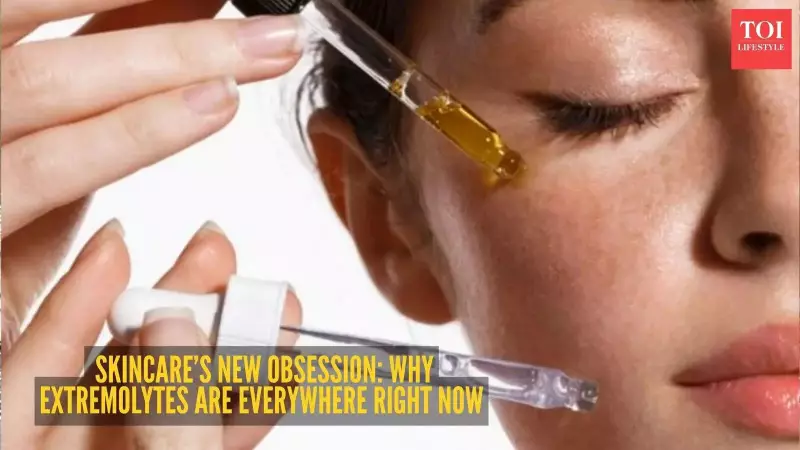
Ectoin: The Skincare Revolution Redefining Hydration in 2026
If you believed your skincare lexicon was exhaustive with staples like Retinol, Vitamin C, and Hyaluronic Acid, prepare for a paradigm shift. This week, a novel contender has stormed into the beauty arena, rapidly ascending search trends and captivating beauty aficionados worldwide. Meet Ectoin (pronounced ek-toe-in), an ingredient heralded by beauty editors as the "intelligent" successor to conventional hydration methods.
The Evolution from Quick Fixes to Lasting Solutions
For decades, Hyaluronic Acid (HA) has reigned supreme as the undisputed monarch of moisturization, permeating serums, creams, and cosmetic formulations. However, as we embrace 2026, the skincare narrative is undergoing a profound transformation. Consumers are no longer content with transient plumping effects; they now prioritize skin longevity—a holistic approach emphasizing barrier resilience over aggressive anti-aging tactics.
This shift is amplified by industry forecasts labeling "Skin Longevity" as the definitive trend of 2026, focusing on fortifying the skin's natural defenses. The catalyst for Ectoin's surge? A teaser from the beloved brand The Ordinary, announcing an upcoming "Rice Lipids & Ectoin Microemulsion" launch. This move has ignited a frenzy among skincare enthusiasts, signaling a collective departure from harsh treatments like retinoids and exfoliants toward a "recovery-centric" regimen where Ectoin shines as a savior for over-stressed skin barriers.

Decoding Ectoin: Nature's Ingenious Extremolyte
Diverging from traditional acids and oils, Ectoin is classified as an extremolyte—a derivative of amino acids originally unearthed in Earth's most unforgiving habitats, such as salt lakes, geysers, and arid deserts. In these extreme conditions, bacteria synthesize Ectoin to form a protective "hydro-shell" around their cells, safeguarding them from desiccation, high salinity, and ultraviolet radiation.
When applied topically, Ectoin replicates this ingenious survival mechanism by stabilizing human cell membranes. It doesn't merely hydrate; it constructs a resilient barrier that locks in moisture and shields skin from environmental aggressors, offering a sophisticated alternative to basic humectants.
Hyaluronic Acid vs. Ectoin: The Sponge Versus the Shield
A common query arises: Should you discard your Hyaluronic Acid serums? Not necessarily, but understanding their distinct roles is crucial. Envision Hyaluronic Acid as a sponge—a humectant that attracts atmospheric water to deliver instant plumping and that coveted "glass skin" glow. Yet, in arid environments or air-conditioned spaces, HA can inadvertently draw moisture from the skin if not properly sealed, leading to potential dryness.
In contrast, Ectoin functions as a shield. It orchestrates a structural framework around water molecules, effectively preventing Transepidermal Water Loss (TEWL) for extended periods—days rather than hours. While HA focuses on volumizing, Ectoin excels in defense. Moreover, it combats "inflammaging"—chronic inflammation that accelerates aging—making it a holy grail for individuals with sensitive skin, eczema, or rosacea.
Strategic Skincare: Layering for Optimal Results
The beauty industry isn't ousting Hyaluronic Acid; instead, it's evolving its application. The most astute approach involves layering both ingredients: employ HA to attract and hydrate, then utilize Ectoin to seal that moisture while providing protection against pollution and daily stressors. If your skin feels taut or dehydrated by midday despite a diligent routine, integrating Ectoin could be the transformative upgrade your skincare arsenal needs.
As we navigate 2026, Ectoin stands poised to redefine hydration, championing a future where skincare is not just about aesthetics but enduring health and resilience. Embrace this innovative ingredient to fortify your skin's barrier and achieve lasting vitality.